DIY Fence Repair vs. Hiring a Pro: 8 Ways to Know Which Fix Is Yours
A leaning post, a snapped rail, a gate that drags. When a fence fails, the first question is whether to grab a drill or call someone. The honest answer on DIY vs hiring a fence repair is that it depends on what broke, how it broke, and what is underground. This list walks through eight repair situations and sorts them into "you can handle this" or "bring in a fence company," with the cost logic behind each call. It is written for Springfield-area properties, where frost, ground movement, and older lot lines change the math more than most national guides admit.
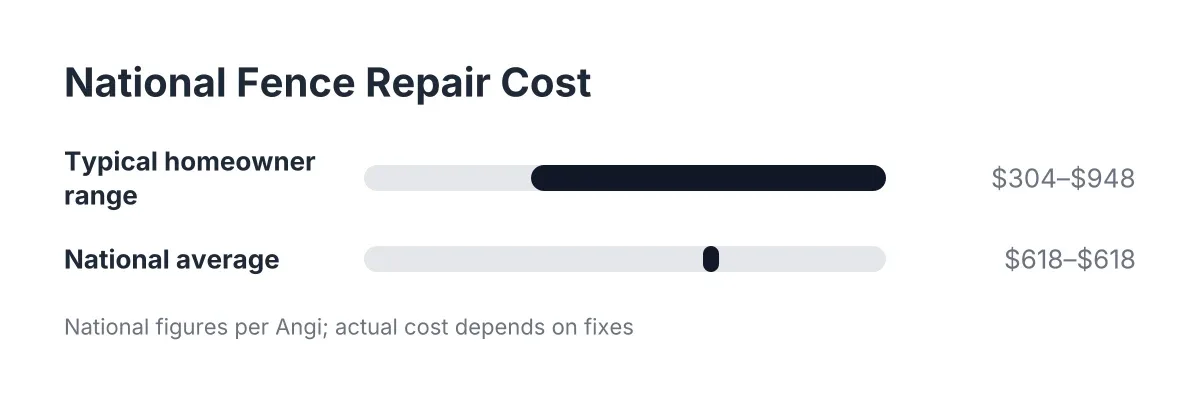
For scale, according to Angi, the national average cost of fence repair is $618, with most homeowners paying between $304 and $948. That range matters because it frames every decision below: some fixes cost less than a weekend of your time, and some DIY attempts cost more than the pro would have.
1. Loose Boards, Pickets, and Hardware: DIY Territory
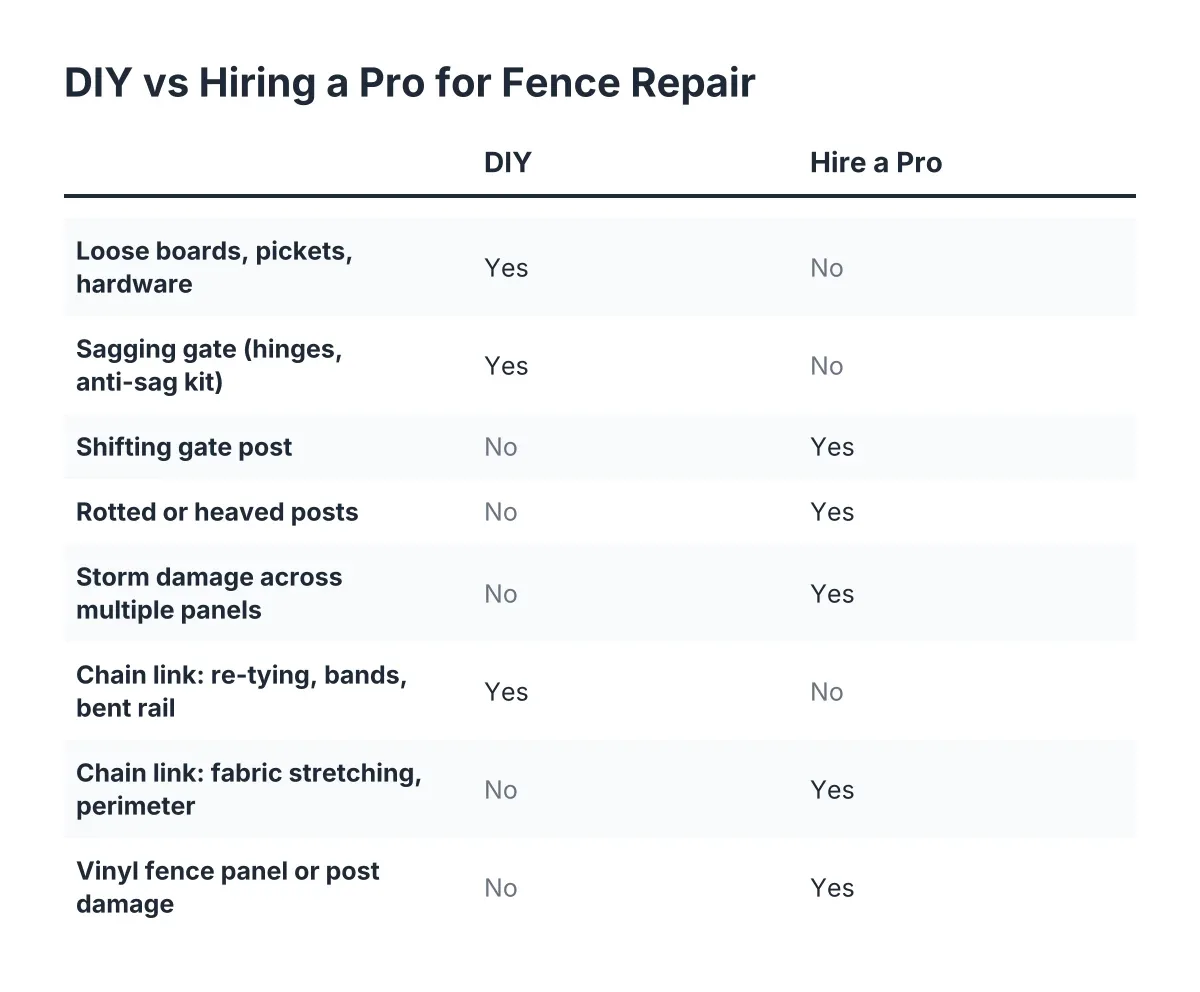
If a wood fence board popped loose or a picket split, this is the clearest DIY win on the list. You need exterior screws, a drill, and an hour. Swap the nail that backed out for a screw, replace the cracked picket, and you are done for the cost of materials.
The same goes for most surface-level hardware: gate latches, hinge screws that stripped, and post caps that blew off in a storm. There is no structural risk here, so there is no reason to pay labor rates for it. If you own a drill and a level, do it yourself.
2. A Sagging Gate: Usually DIY, With One Exception
A dragging gate is often a hardware problem, not a fence problem. Hinges loosen, gates rack out of square, and an anti-sag kit with a turnbuckle cable runs modest money at any hardware store. Tighten the hinges first, add the kit second, and most gates come back into line.
The exception is the gate post itself. If the post the gate hangs on is moving in the ground, no amount of hinge work fixes it. A shifting gate post is a post-setting problem, and that moves it into the hiring column, which the next items explain.
3. Rotted or Heaved Posts: Where DIY Fence Repair Ends and Hiring Begins
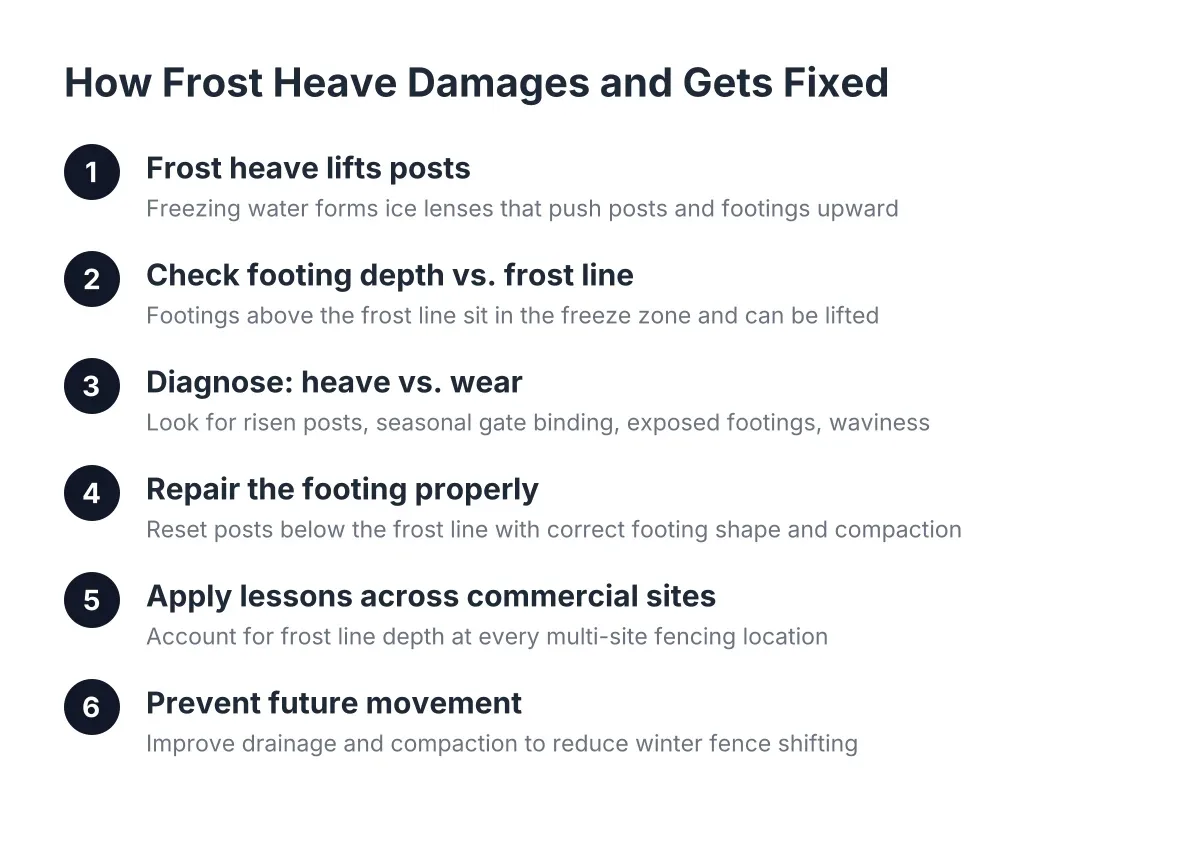
A fence post rotting at ground level, or one that frost has pushed out of plumb, is the dividing line in the whole DIY versus hiring fence repair and hiring decision. Posts carry the entire fence. Fixing one means dealing with the concrete footing below grade, and that is where homeowner projects stall or go wrong.
Here is the part most people do not know. The first instinct is to rip out the old post and its footing entirely, but that is often the hardest and most expensive path. A common pro approach is to cut the rotted wood post off above the deteriorated section and set a new steel post into the original concrete footing. That preserves the footing, stops the sag, and effectively banks the repair cost toward a future full fence replacement. Knowing which approach fits your fence is exactly what you are paying a pro to judge.
In Springfield and across Western Mass, posts also have to be set below the frost line or seasonal ground movement will heave them. A post set too shallow looks fine in July and leans by March. That depth requirement is the single biggest reason post work belongs with a local fence company rather than a Saturday project.
4. Storm Damage Across Multiple Panels: Call a Pro First
One broken board is a repair. A tree limb that took out three panels and bent two posts is a different animal. Multi-panel storm damage usually involves post resetting, panel sourcing, and sometimes a conversation with your insurance company, which will want documentation and a written fence estimate.
Suppose a February ice storm drops a limb across 20 feet of stockade fence on a Springfield lot. In that scenario, the homeowner's real question is not board replacement; it is whether the posts under those panels survived, whether the footings cracked, and whether the surviving sections are worth tying new work into. A pro can answer all three in one site visit. A DIY repair that ignores a cracked footing just fails again next winter.
5. Chain Link Fence Repairs: Split the Difference
Chain link sits in the middle of the DIY-versus-hiring question. Small jobs are manageable: re-tying fabric to the rail with new wire ties, replacing a tension band, or straightening a bent top rail section with a replacement rail. The parts are cheap and the work is forgiving.
However, stretching new fabric is not a one-person job. Chain link mesh has to be pulled tight with a fence stretcher before it ties off, or it sags permanently. For a commercial fence around a shop yard or storage lot, sagging fabric is also a security gap, not just an eyesore. Business owners with a perimeter security fence should treat any fabric replacement or post damage as a hire-it-out job, both for the result and for liability if the fence is doing code or insurance duty.
6. Vinyl Fence Damage: Mostly a Hiring Call
Vinyl fence panels look simple, which fools people. The problem is parts matching. Vinyl profiles vary by manufacturer and product line, so the replacement rail from a big-box store often does not lock into your existing posts. A fence company that installs vinyl can source matching components or tell you plainly when matching is impossible.
There is also a structural wrinkle. In tight spots, such as a run that butts another fence or works around a tree, installers sometimes reinforce a vinyl post with a metal pipe inside the sleeve. If your damaged post was built that way, a DIY swap will not go how the video tutorial promised. Cracks and broken post caps are covered in detail in our vinyl repair guide; full post or panel damage belongs with a pro.
7. When Repeated Repairs Mean Replacement, Not Another Fix
Sometimes the right answer to the DIY-or-hire question is neither; it is fence replacement. According to Angi, a wood fence that is over 10 years old and needs frequent repairs is showing replacement signs. Chasing one failing post at a time on a fence that age is paying twice.
A few signals that you are past the repair stage:
- Multiple posts are soft at ground level, not just one
- The fence leans in more than one section or direction
- Boards are graying, cupping, and shedding fasteners across whole runs
- Each repair seems to expose the next problem
For context on the bigger decision, Angi reports overall fence installation costs average $3,277 nationally, with most homeowners paying between $1,860 and $4,843, and a fence returns about 50% of its cost at resale. Those are national figures, not Springfield quotes, but they help you weigh a fourth repair against starting fresh. If you do replace a wood fence, staining both sides extends its lifespan meaningfully, which stretches that investment.
8. How to Hire for Fence Repair Without Getting a Runaround
If the job landed in the hiring column, the next problem is choosing well. Searching for a fence repair handyman near your Springfield-area address will surface plenty of options, from solo handymen to full fence companies, and the cheap quote is not automatically the smart one. Pricing differences usually reflect construction practices, materials, and expected longevity, not just markup. The lowest bid that skips footings or sets posts shallow gets rebuilt sooner, which costs more over time than paying for solid work once.
Three questions separate real fence repair services from guesswork:
- How will you handle the posts and footings? A good answer names a method, such as cutting a rotted post and setting steel in the existing footing, and explains why it fits your situation.
- Will the new sections match, and where will cut panels go? Pros place shortened or cut sections in less visible spots and keep full panels where you see the fence most.
- Is this worth repairing, or am I close to replacement? An honest provider will tell you when a repair is throwing money at a dying fence.
A fair quote itemizes posts, panels, hardware, and labor so you can compare it against another bid line by line. Vague lump sums make comparison impossible, and comparing two or three estimates is reasonable, not rude.
The Short Version of the DIY Fence Repair vs. Hiring Decision
Keep the rule simple. If the fix lives above ground and involves boards, hardware, or gate adjustment, do it yourself. If it involves posts, footings, frost depth, stretched chain link fabric, matched vinyl components, or an insurance claim, hire it out. Anything touching utilities or a disputed property line should always go to a professional, since the risks there are not about carpentry.
Western Mass Fence Co handles fence repair, fence replacement, and new fence installation for homes and businesses across the Springfield area, in wood, chain link, vinyl, and ornamental aluminum. If your fence landed in the hiring column, or you are not sure which column it is in, reach out for an estimate and a straight answer on whether a repair or a replacement makes more sense for your property.
If you need fence repair, Western Mass Fence Co can help.
Prefer to talk it through? Call (413) 305-1309 — a quick call is usually the fastest way to get a straight answer for your situation.