Wood Fence Repair: 7 Fixes for Rotted Posts, Split Boards, and Loose Nails
If your wood fence is leaning, shedding boards, or wobbling when you push on it, you need fence repair, not necessarily a whole new fence. Most wood fence problems in the Springfield area come down to three things: posts rotting at ground level, boards splitting or falling off, and fasteners working loose after years of freeze-thaw movement. The good news is that each of these has a known fix, and many of them cost far less than a full fence replacement.
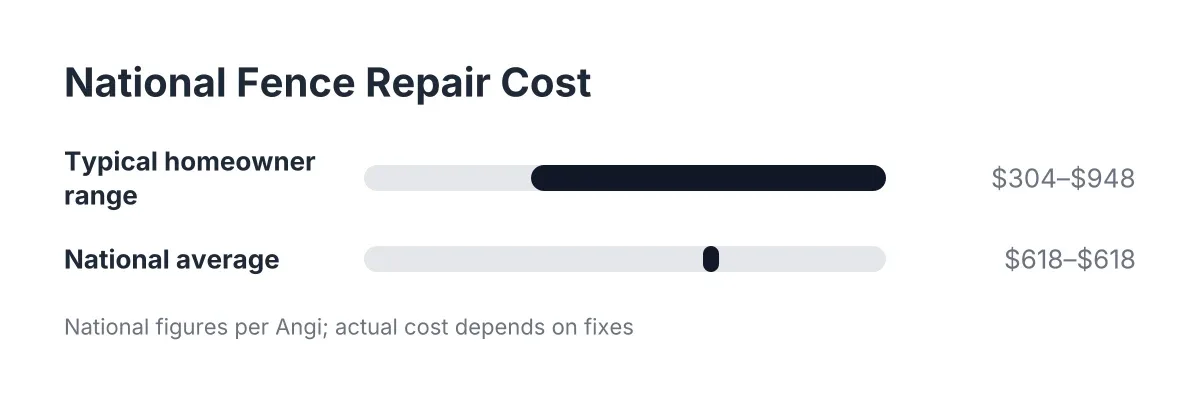
This list walks through the seven most common wood fence fixes, what each one involves, when you can handle it yourself, and when it makes sense to call a local fence company. For a sense of scale, the national average cost of fence repair is $618, with most homeowners paying between $304 and $948, according to Angi. Your actual number depends on which of these fixes your fence needs and how many of them it needs at once.
1. Rotted posts: the repair that decides everything else
Posts are the first thing a fence professional checks, and they should be the first thing you check too. A fence with solid posts and ugly boards is a cheap fix. A fence with pretty boards and rotten posts is a structural problem waiting for the next windstorm.
Here is the frustrating part for homeowners: wood posts often rot at ground level even when the panels above have been stained or repainted on schedule. Moisture sits where the post meets the soil and concrete, and that is where decay starts. Grab each post and push hard. If it moves at the base or you can sink a screwdriver into soft wood near the ground, the post is failing even if everything above looks fine.
Your repair options for a rotted post, roughly from least to most involved:
- Brace or stake a leaning post as a temporary hold. Repair stakes and brace kits can keep a section upright for a season, but they are a stopgap, not a fix.
- Cut and sister the post. Cut the post off above the rotted section and set a new steel post into the original concrete footing. This preserves the footing you already paid for and avoids the heavy work of breaking out old concrete.
- Full post replacement. Pull the old post and footing and set a new one. Sometimes necessary, but not always the smart first move.
Many homeowners assume the rotted post and its concrete footing both have to come out. Often they do not. Reusing a sound footing with a new steel post can cost less, and it gives you a post that will not rot, warp, or twist the way wood does. It also means the money you spend now still counts toward a future full replacement, since steel posts can carry new panels later.
2. Split and broken boards: the easiest fix on the list
Replacing split boards is the most straightforward fence repair on this list. A board splits, a dog chews through a picket, or a falling branch snaps two or three in a row. If the rails and posts behind the boards are sound, a repair crew removes the damaged boards, matches the width and profile as closely as possible, and fastens new ones.
The trade-off to know up front: new boards will not match weathered ones. Fresh pressure-treated or cedar lumber looks lighter and brighter than wood that has been in the sun for years. It fades toward a match over time, or you can stain the whole run for a uniform look. A good local installer will tell you this before the work starts, not after.
For example, say a Springfield homeowner has a 6-foot privacy fence where a February nor'easter dropped a limb and snapped five pickets. In that scenario, the fix is usually a same-visit repair measured in hours, not days, as long as the rail behind those pickets did not crack too.
3. Loose, popped, and rusted nails
Nails back out of wood fences for a predictable reason in New England: the wood expands and contracts through humid summers and freezing winters, and each cycle works the nail a little looser. Eventually boards rattle, sag at one corner, or drop off entirely.
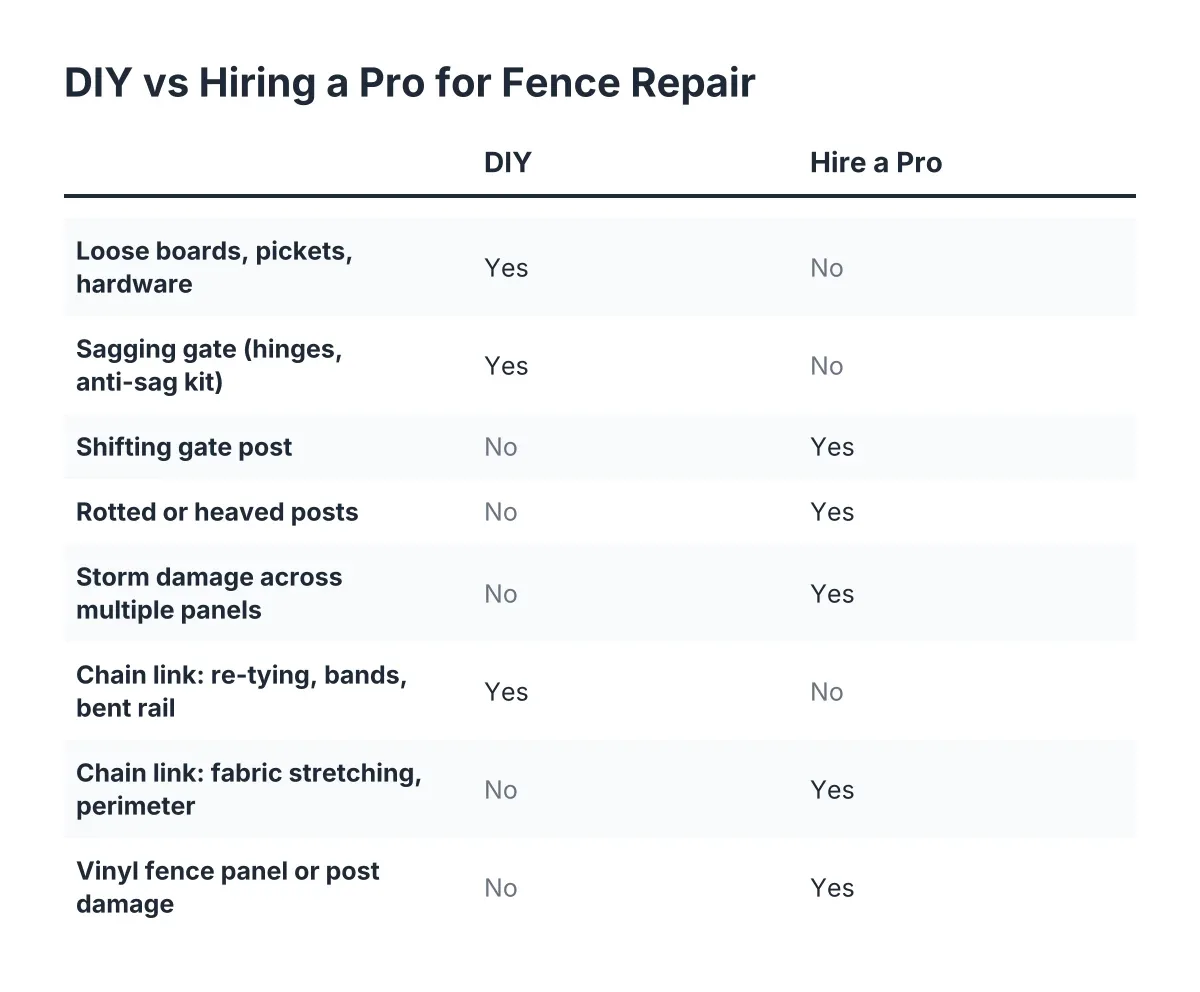
The fix is simple but matters more than it looks. Pull the failed nails and replace them with exterior-grade screws or ring-shank fasteners, which grip through seasonal movement far better than smooth nails. Refastening a whole fence line is tedious weekend work for a homeowner, or a fast line item for a crew that is already on site fixing posts.
One caution: if nails are popping everywhere at once, that is often a symptom, not the disease. Widespread fastener failure usually means the rails are sagging or the posts are shifting, so check those before you spend a Saturday driving screws.
4. Sagging rails and dropped gates
Rails are the horizontal members that carry the boards, and they fail in two ways: they rot where they meet the post, or they sag in the middle of a long span. On better-built fences, rail ends are doweled so they tuck into mortised holes in the posts; when that joint rots or pulls out, the whole panel droops.
Gates are the hardest-working part of any fence, and they show wear first. A dragging gate usually traces back to one of three causes: loose hinge screws, a racked gate frame, or a leaning hinge post. The first two are quick fixes with longer screws or a diagonal brace kit. The third is a post problem, which takes you back to item one on this list.
In addition, gate repairs are a common add-on during a larger repair visit. If a crew is already replacing a post, ask them to true up the gate while they are there. It costs little extra and saves a second trip.
5. Leaning sections after storms and frost heave
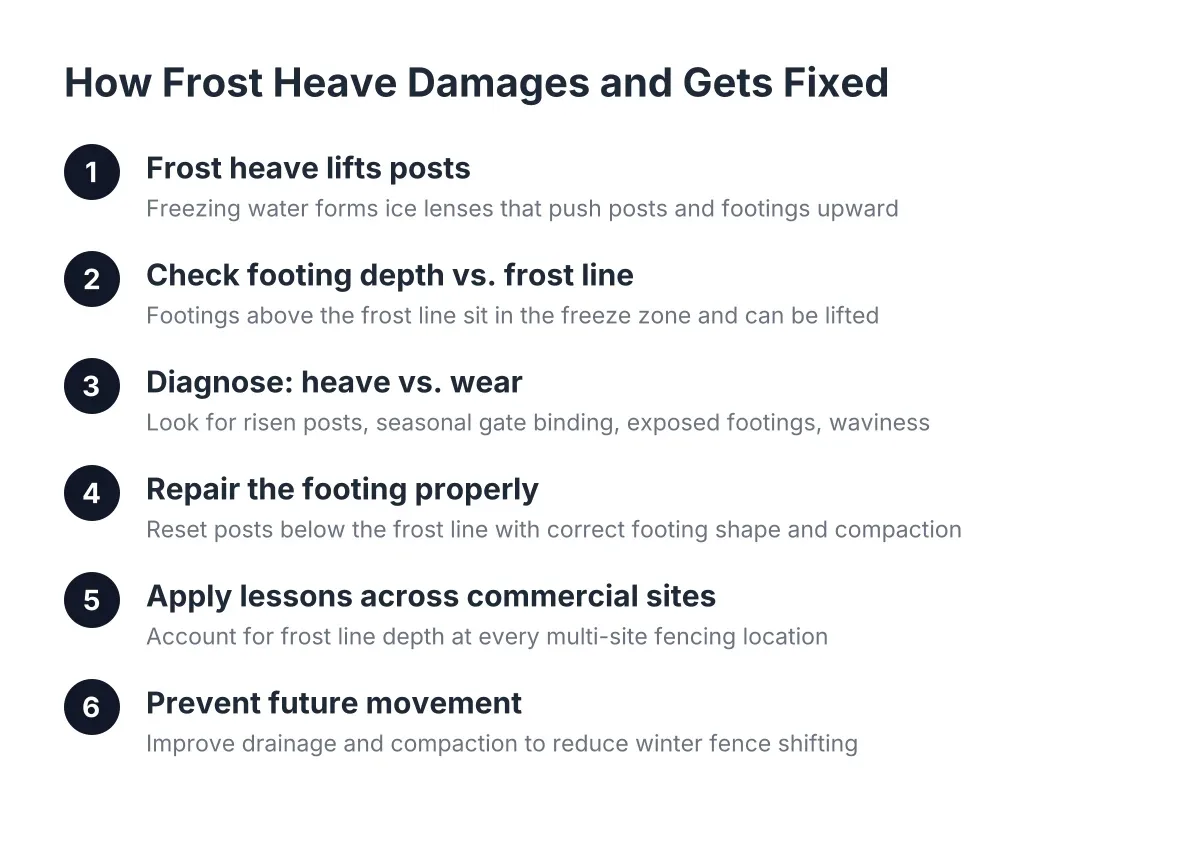
A leaning fence section in Western Massachusetts often is not rot at all; it is the ground itself. Frost pushes shallow-set posts upward and sideways over repeated winters, and saturated spring soil lets wind rock footings loose. Springfield-area properties with older housing stock add another wrinkle: grade changes and tight property lines that were never dead level to begin with.
The repair depends on the cause. A post heaved by frost but still sound can sometimes be reset deeper, below the frost line, with a footing that drains properly. A post snapped below grade needs the cut-and-steel-post treatment or full replacement. One detail worth knowing: concrete packed tight around a wood post can trap moisture against the wood and speed up rot, so how the footing is built matters as much as how deep it goes.
This is the category where a professional eye earns its keep. Telling frost heave from footing failure from root damage is hard from the surface, and guessing wrong means paying for the same repair twice.
6. When repair stops making sense: the replacement line
Repair is usually the right first conversation, but there is a point where you are paying to prop up a fence that is done. According to Angi, a wood fence that is over 10 years old and needs frequent repairs is showing replacement signs. If you are calling someone out every spring, the math shifts.
A rough way to think about it: if more than a third of your posts are failing, or the damage runs the length of the fence rather than one section, get a fence replacement estimate alongside the repair quote and compare cost per foot. For context, overall fence installation averages $3,277 nationally, with most homeowners paying between $1,860 and $4,843, according to Angi. Repairing two posts does not come close to that. Repairing fourteen might.
There is a middle path worth asking about. Interim post repairs that preserve your concrete footings keep the fence standing now, and steel posts set in those footings can carry brand-new panels later. Therefore, a staged repair does not have to be money thrown away before an eventual replacement; it can be a down payment on one.
7. Choosing who does the work: handyman or fence company
Searches for handyman fence repair near me pull up plenty of options, and for small jobs a handyman is a reasonable choice. Swapping a few boards or refastening loose pickets does not demand specialized equipment. The distinction matters once posts, footings, and alignment enter the picture, because that is fence construction, not carpentry.
When you compare quotes, ask each provider three questions:
- Will you inspect the posts, not just the visible damage? A quote that only covers broken boards on a fence with soft posts is a quote for work you will redo.
- How will you handle the footings? Listen for whether they break out concrete by default or evaluate reusing sound footings with steel posts. The answer tells you how they think about your money.
- Is this a repair, or should I see a replacement number too? A fair provider will price both when the fence is borderline and let you decide.
A fair repair quote itemizes the work: how many posts, how many boards, gate adjustments, and haul-away of old material. Be wary of a single lump number with no breakdown, and get two or three quotes before committing, especially on anything beyond a one-section fix.
The bottom line for Springfield-area homeowners
Start at the posts, because they decide whether you are looking at a quick fix or a bigger decision. Boards and fasteners are cheap to repair; posts and footings are where cost, and expertise, concentrate. In this region, frost movement and moisture at ground level drive most wood fence failures, so the fix that lasts is the one that deals with drainage and post material, not just the visible damage.
If your fence took storm damage, is leaning into the neighbor's yard, or has posts you can wiggle by hand, have a local pro walk the line and give you a straight answer on repair versus replacement. Western Mass Fence Co repairs and replaces wood fences across the Springfield area and will tell you plainly which side of that line your fence sits on. Reach out for an estimate and get a real number before the next storm makes the decision for you.
If you need fence repair, Western Mass Fence Co can help.
Prefer to talk it through? Call (413) 305-1309 — a quick call is usually the fastest way to get a straight answer for your situation.