Frost Heave and the Frost Line: Why New England Fences Shift Every Winter
If you manage property in the Springfield area, you have seen it: a fence that stood straight in October leans by March, or a gate that latched fine in the fall will not close by February. The cause is usually frost heave, and the fix starts with understanding the frost line. Frost heave and the frost line explain most of the seasonal fence movement we see across Western Massachusetts, and understanding frost heave fence damage is essential for determining whether a fence repair holds for twenty years or fails again next winter. This guide walks through what is actually happening under your fence, how to tell frost damage from ordinary wear, and what a proper repair looks like when you are responsible for one backyard fence or chain link across five commercial sites.
What Frost Heave Actually Does to a Fence
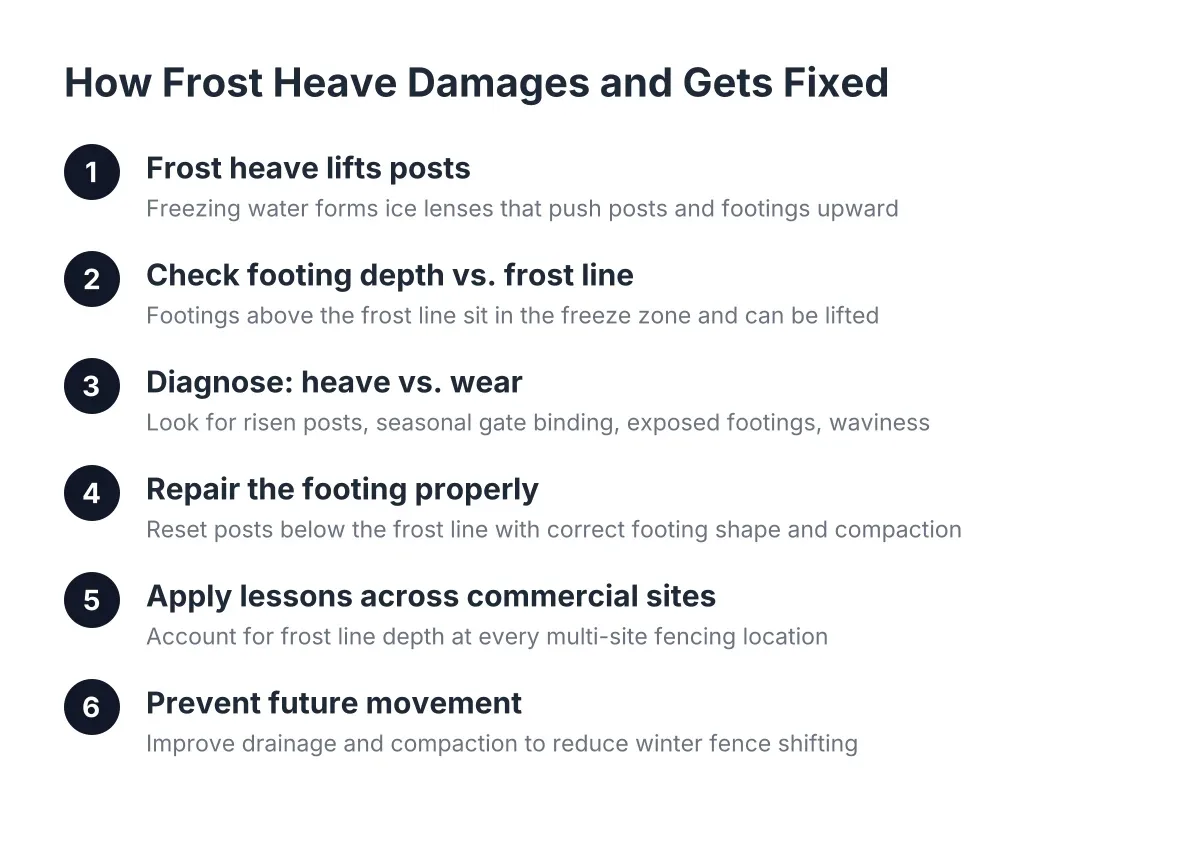
Frost heave is the upward movement of soil when the water in it freezes. Water expands as it turns to ice, and in soils that hold moisture, that expansion pushes everything above it upward. Ice lenses form in the soil, grow as they pull in more water, and lift whatever sits on top of them, including fence posts and their concrete footings.
The lifting itself is only half the problem. When the ground thaws in spring, the soil settles back down, but it rarely settles evenly. A post that got pushed up an inch or two may come back down crooked, or not come all the way back down at all. Repeat that cycle every winter and a fence that started plumb ends up leaning, wavy, or loose in the ground.
Here is the detail that matters for repair decisions: frost does not just push posts up from below. It can also grab the sides of a post or footing and lift it. Frozen soil bonds to the surface of concrete and wood, and when the frozen layer heaves upward, it drags the post with it. Installers call this adfreezing, and it is why even a post with concrete at the bottom can still walk out of the ground over several winters if the footing shape or depth is wrong.
Not every soil heaves the same way. Three conditions have to line up:
- Frost-susceptible soil. Silts and clays hold water and feed ice lens growth. Clean gravel and coarse sand drain fast and heave far less.
- Available water. A high water table, poor drainage, or a downspout dumping next to the fence line keeps the soil wet enough to freeze and expand.
- Freezing temperatures that reach the footing. This is where the frost line comes in.
Springfield-area properties often check all three boxes. Much of the local housing stock sits on soil with real silt and clay content, lots drain unevenly across old grade changes, and our winters deliver long stretches of hard freeze. That combination is why fences here shift seasonally in a way they simply do not in milder regions.
Understanding Frost Heave and Frost Line Depth for Your Fence
The frost line is the maximum depth that ground freezes in a typical winter. Above that line, soil freezes and thaws every year. Below it, the ground stays unfrozen. Any footing that stops above the frost line sits inside the freeze zone, which means the soil beneath it can freeze, expand, and lift the footing from below.
That is the whole logic of deep post setting. When a fence post footing extends below the frost line, the soil under it never freezes, so nothing pushes up from underneath. The footing can still face some sideways grip from frozen soil above, but a properly shaped and compacted footing resists that far better than a shallow plug of concrete sitting entirely in the freeze zone.
In New England, the frost line runs deep compared to most of the country, and local building practice reflects that. A post hole that would be fine in Virginia is a failure waiting to happen in Hampden County. When a fence company quotes a job in the Springfield area, post depth relative to the local frost line should be part of the conversation, not an afterthought.
Shape matters along with depth. A footing that is wider at the top than the bottom gives frozen soil a ledge to push against, like a hand under a mushroom cap. Footings poured straight-sided, or slightly wider at the base, give frost much less to grab. Backfill matters too. Posts set with poor compaction loosen over time under wind and water loads, and a loose post is far easier for frost to move than one locked tight in well-tamped ground.
Recognizing Frost Heave Damage and Distinguishing It From Wear
Frost heave and fence damage shows up as posts that have risen, tilted, or loosened while the fence material itself stays sound. Ordinary wear looks different: rotted wood at the ground line, rusted chain link fabric, cracked vinyl panels, or failed fasteners. Sorting one from the other tells you whether the fix is a footing problem or a materials problem.
Walk the fence line in early spring, after the thaw but before the ground fully dries. Look for these frost signatures:
- Posts sitting higher than their neighbors. Sight down the top of the fence. A post that has jacked up an inch or more above the line next to it has been lifted, not worn out.
- Gates that bind seasonally. If a gate drags in late winter and swings free by June, the gate post is moving with the freeze-thaw cycle. The hardware is fine; the footing is not.
- Concrete footings visible at the surface. A footing that was poured below grade and now shows above the soil has been walking upward over multiple winters.
- Leaning posts with solid wood or steel. If the post itself is sound but out of plumb, suspect ground movement rather than material failure.
- Wavy fence tops on a line that was installed straight. Installers set posts to a string line so the tops run true. A fence that has gone wavy over several winters is telling you the footings are moving at different rates.
Contrast that with wear damage. A wood post that snaps at ground level rotted from moisture, a problem the frost line does not cause. Chain link fabric sagging between solid posts points to stretched or failed ties, not heave. These distinctions matter because a frost problem repaired as a wear problem comes right back. Replace a leaning post with a new one set to the same shallow depth, and next winter will lean it again. Understanding how frost heave causes fence damage prevents wasting money on repairs that do not address the root cause.
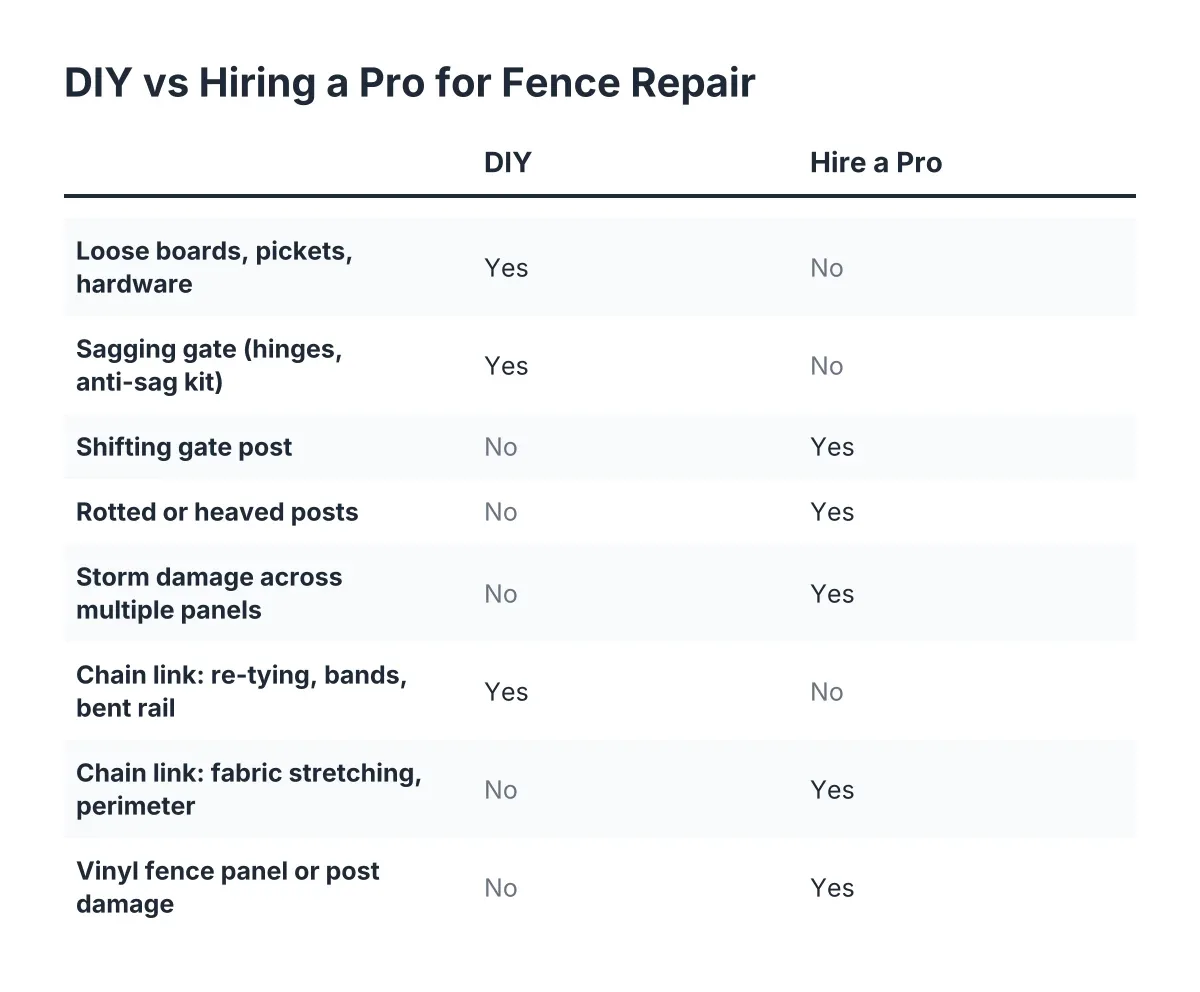
Keep in mind that some symptoms overlap, and soil conditions vary even across a single property. A footing inspection by someone who digs post holes in this soil every week will catch things a surface walk-through misses, so bring in a professional before committing a budget to a fix.
Repairing a Frost-Heaved Fence the Right Way
Fixing a frost-heaved fence means correcting the footing, not just straightening the post. The sequence that holds up in this climate runs in order: diagnose the footing depth, decide whether to reset or replace, excavate below the frost line, set the post with proper backfill and compaction, and re-hang or re-stretch the fence material. Skipping the excavation step is the most common shortcut, and it is the one that fails.
First, confirm what is underground. Some older fences in the Springfield area have posts set in shallow concrete collars; others were driven or dry-set with no concrete at all. How the original installer set the post determines how hard the repair is. One quirk worth knowing: recently concreted posts grip hard and fight removal, while footings that have been in the ground for decades often pop out with less effort than you would expect.
Next comes the depth decision. A post reset to its original shallow depth will heave again; that is not a repair, it is a postponement. The new hole needs to reach below the local frost line, with backfill tamped in firm lifts so the post cannot rock. Thorough tamping is not a detail to rush. Inadequate compaction is the main reason posts loosen under wind and water loads, and a loose post is frost's easiest target.
Drainage deserves a look at the same time. If a downspout, a low spot, or runoff from a parking lot keeps one stretch of fence line saturated, that section will heave harder than the rest no matter how deep the posts go. Sometimes regrading a few feet of soil or redirecting a downspout does as much for fence longevity as the footing work itself.
There are also useful middle-ground options. On a wood fence where the concrete footings are still sound and deep enough, an interim post repair that preserves those footings can keep the fence standing now while leaving the door open for a future full replacement on steel posts. For a repair owner working with a limited budget, that approach effectively lets today's repair spend carry forward instead of being torn out later.
One more point on old footings: ripping out every abandoned concrete footing along a fence line is not always the right call. Old footings left in place can stabilize the surrounding soil and add strength to the new fence line. A good crew evaluates each one rather than defaulting to full removal.
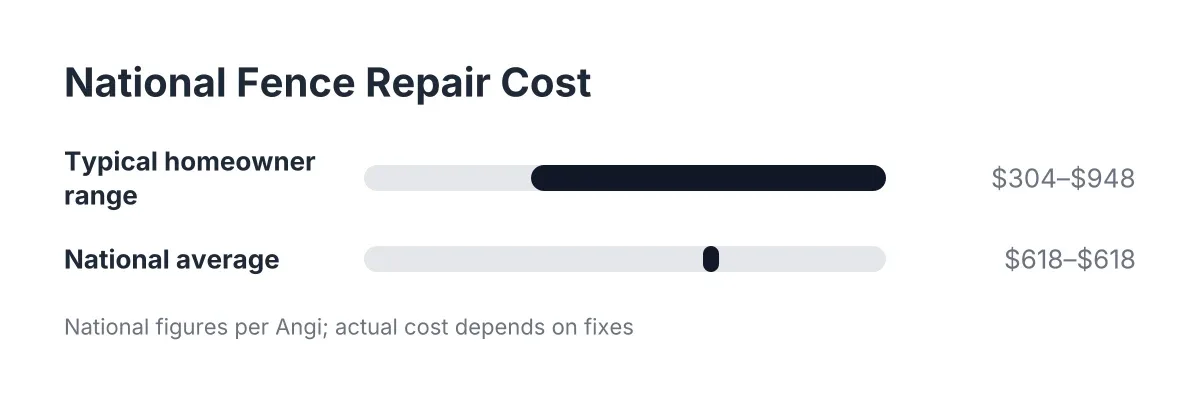
As a budget reference, the national average cost of fence repair is $618, with most homeowners paying between $304 and $948, according to Angi. Frost-related post work in New England can land above a simple board swap because of the excavation involved, but that range is a reasonable starting point for planning. Any real number depends on post count, soil, access, and what the dig turns up.
What Frost Heave and the Frost Line Mean for Multi-Site Commercial Fencing
For a facilities manager, frost heave and frost line issues turn into budget problems: the same chain link fence that passed inspection in the fall fails a security walk-through in March. Commercial fence lines are long, so small per-post movement multiplies. A few lifted posts on a 400-foot perimeter can slack the fabric, open gaps at the bottom rail, and leave a security fence that no longer does its job.
Suppose you manage five properties across the Springfield area, and a tenant at one of them reports a chain link gate that will not latch in February. In that scenario, the smart move is not a one-off gate adjustment. It is a frost-season walk of all five fence lines while the symptoms are visible. Heave damage shows itself in late winter and early spring; by July the soil has settled, posts look closer to plumb, and the evidence is gone until next year. A spring inspection cycle catches footing problems while they are cheap, before fabric tears or a gate post snaps.
Commercial repairs also raise the stakes on doing footings right. Taller chain link and ornamental aluminum fence lines catch more wind, which means loose posts take more load. Gate posts on commercial sites carry heavy gates and constant use, so they deserve the deepest, best-compacted footings on the property. When you get a fence estimate for this kind of work, ask specifically how deep the posts will be set relative to the frost line and how the backfill will be compacted. A contractor who answers in specifics understands this climate; one who waves it off does not.
There is a practical sourcing angle here too. Searching for fence repair near me within 5 mi of each property gets you five different contractors, five different footing standards, and five relationships to manage. A single local fence company that handles both commercial fence installation and repair across the Springfield area can standardize post depth and footing practice across your whole portfolio, which is what actually prevents the March surprises.
Preventing the Next Round of Winter Fence Movement
Prevention comes down to four controllable factors: footing depth below the frost line, footing shape, soil drainage, and compaction. Get those four right at installation or repair time and seasonal movement drops from an annual problem to a non-event. Ignore any one of them and the freeze-thaw cycle will find it.
Depth is the anchor. Every structural post, and especially every gate post, should bear below the frost line so nothing freezes beneath it. Shape is the second line of defense; straight or base-widened footings shed frost grip instead of giving it a ledge. Drainage starves the heave process of water, so keep downspouts, irrigation, and runoff away from the fence line. Compaction locks the post against both wind and the sideways pull of frozen soil.
Material choice plays a supporting role. Wood, chain link, and vinyl all ride on their posts, so no fence material is immune to heave, but they fail differently. A heaved vinyl fence can pop panels out of their rails. A heaved wood fence racks and splits at the fasteners. Chain link tolerates minor movement better than rigid panel systems, which is one reason it remains the default for commercial perimeters here. Whatever the material, the footing underneath decides the lifespan.
Timing matters as well. Fence repair and post-setting work goes smoother before the ground freezes or after it fully thaws; frozen ground slows excavation and can hide the true footing condition. If a fence is failing in January, a temporary brace can hold it safely until spring, when the footing can be dug, evaluated, and reset properly.
Finally, be honest about when repair stops making sense. According to Angi, a wood fence over 10 years old that needs frequent repairs is showing replacement signs, and a fence line where most posts have heaved is usually a candidate for fence replacement rather than post-by-post triage. In that case, the frost line lesson still applies: the new fence only outlasts the old one if the posts go deeper than the problem that killed the first one.
Frost heave is not bad luck, and it is not random. It is physics acting on footings that stop short of the frost line, in soil that holds water, through a New England winter that freezes deep. Any fence in the Springfield area can be built, or repaired, to stand through all of it. The difference is underground, in holes nobody sees after the crew leaves, which is exactly why it pays to work with people who dig them right.
If you need fence repair, Western Mass Fence Co can help.
Prefer to talk it through? Call (413) 305-1309 — a quick call is usually the fastest way to get a straight answer for your situation.