Fence Installation Permits and Regulations in Springfield, MA: 8 Things to Check First
Before you set a single post, it pays to understand fence installation permits and regulations for Springfield-area properties. Most residential fences in Massachusetts do not need a building permit, but understanding the fence permit requirements regarding height limits, property lines, pool rules, and spite fence laws can all affect your project. Whether you are a new homeowner planning a full perimeter fence or you just watched a storm flatten a section and need it replaced fast, the eight items below cover what to check before the work starts, and when to let a fence company handle the paperwork questions for you.
One note up front: zoning rules vary by city and town, and they change. Treat this as a practical checklist, then confirm the specifics with your local building department or your installer before the crew shows up.
1. Know When Massachusetts Requires a Building Permit for a Fence
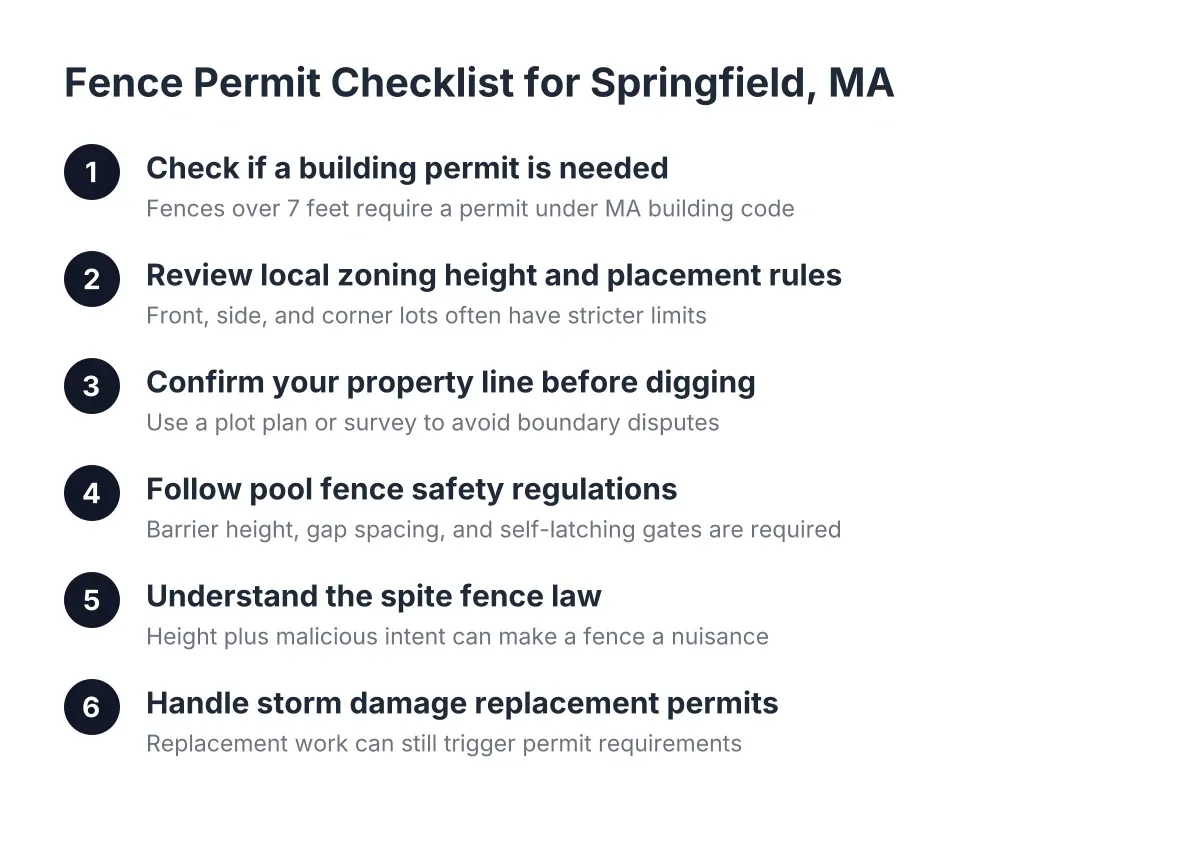
Massachusetts has a clear starting line here. Under the Massachusetts State Building Code (780 CMR), installing a fence over 7 feet tall requires a building permit, while fences 7 feet or less do not, according to Town of Duxbury, MA. Most residential fences, including standard 6-foot privacy fences, fall under that threshold.
However, the building code is only one layer. Local zoning bylaws in Springfield and surrounding towns can set their own height limits for front yards, side yards, and corner lots, and those limits are often lower than 7 feet. A fence that needs no building permit can still violate zoning if it is too tall for its location on the lot.
Therefore, the smart first move is a quick call to your city or town building department. Describe the fence height, the material, and where it sits on the property. Five minutes on the phone can save you from rebuilding a section later.
2. How Permit Requirements and Zoning Shape Fence Height and Placement
Zoning rules in the Springfield area generally care about two things: how tall the fence is and where it sits. Front yards typically face stricter height limits than backyards, because tall fences near the street can block sightlines for drivers and pedestrians. Corner lots often have additional restrictions near intersections for the same reason.
For example, a common pattern across Massachusetts towns is allowing taller privacy fencing in the rear yard while limiting front yard fences to a lower, more open style. If you are a new homeowner planning a full perimeter fence, this often means mixing materials: a 6-foot vinyl fence or wood fence in back, and a shorter picket or ornamental aluminum fence out front.
In addition, some districts treat commercial fence projects differently from residential fence projects. A business securing a lot with chain link fence may face different height allowances and screening requirements than a homeowner two streets over.
3. Confirm Your Property Line Before Anyone Digs
No permit protects you from a fence built on the neighbor's land. Older New England housing stock, which fills much of the Springfield area, often comes with property lines that do not match where the old fence, hedge, or stone wall sits today. Decades of informal boundaries make assumptions risky.
First, pull out your plot plan or the survey from your closing documents. If the markers are unclear or the stakes are missing, a licensed surveyor can mark the corners. That cost is small compared to tearing out and resetting a fence line that drifted a foot onto the neighbor's side.
A good installer will also talk through setback choices with you. Some homeowners set the fence a few inches inside the line so they can maintain both sides without stepping onto the neighbor's property. Others build right on the line with the neighbor's written agreement. Either works; guessing does not.
4. Pool Fences Follow Their Own Safety Regulations
If your fence project involves a pool, the rules get stricter and non-negotiable. Massachusetts building code includes barrier requirements for swimming pools, covering minimum fence height, gap spacing, and self-closing, self-latching gates. These safety regulations exist to keep small children out of the water, and inspectors take them seriously.
This matters most for new homeowners, since pool installs are one of the most common triggers for a full fence installation. Suppose you closed on a Springfield-area home last spring and a pool is going in this summer. In that scenario, the pool contractor, the fence installer, and the building department all need to be working from the same barrier requirements before anyone pours concrete.
As a result, tell your fence contractor about the pool at the estimate stage, not after layout. Gate hardware, picket spacing, and fence height all change when a pool barrier is involved, and those choices affect your fence cost.
5. Massachusetts Spite Fence Law: Height Plus Intent
Massachusetts law includes what is commonly called a spite fence provision. In plain terms, a tall fence built primarily to annoy a neighbor, rather than for privacy, security, or pets, can be treated as a private nuisance. Height alone does not trigger it; the combination of excessive height and malicious intent does.
For most homeowners this never comes up. A standard 6-foot privacy fence installed for a dog, a new baby, or backyard privacy is an ordinary, legitimate use. The law matters mainly in neighbor disputes where a fence appears aimed at blocking light or views out of spite.
The practical takeaway: keep the project about your needs, talk to the neighbor before install day, and document your reasons if the relationship is already tense. If a dispute is brewing, a conversation with a local attorney is worth more than anything a fence installer can tell you.
6. Storm Damage Replacement and Fence Permit Requirements
Yes, fence permit requirements and regulations still apply when you replace a storm-damaged fence, though like-for-like replacement at the same height and location rarely triggers new requirements. The 7-foot building permit threshold and local zoning limits do not pause because a tree took out three sections. What changes is that an existing, compliant fence usually makes replacement straightforward.
Say a windstorm drops a limb across your chain link fence and a 20-foot run is flat in the yard with the dog eyeing the gap. Replacing that run in kind, at the same height on the same line, is typically treated as repair or maintenance rather than new construction. However, if you use the moment to upgrade from 4-foot chain link to a 6-foot vinyl privacy fence, you are effectively installing a new fence, and the regulations apply to the new design.
Two more notes for the storm-damaged homeowner. Photograph the damage before cleanup if insurance might be involved, and do not let urgency push you into skipping the property line check; a rushed rebuild in the wrong spot is the most expensive kind of fast.
7. What a Good Fence Contractor Handles, and What Stays on You
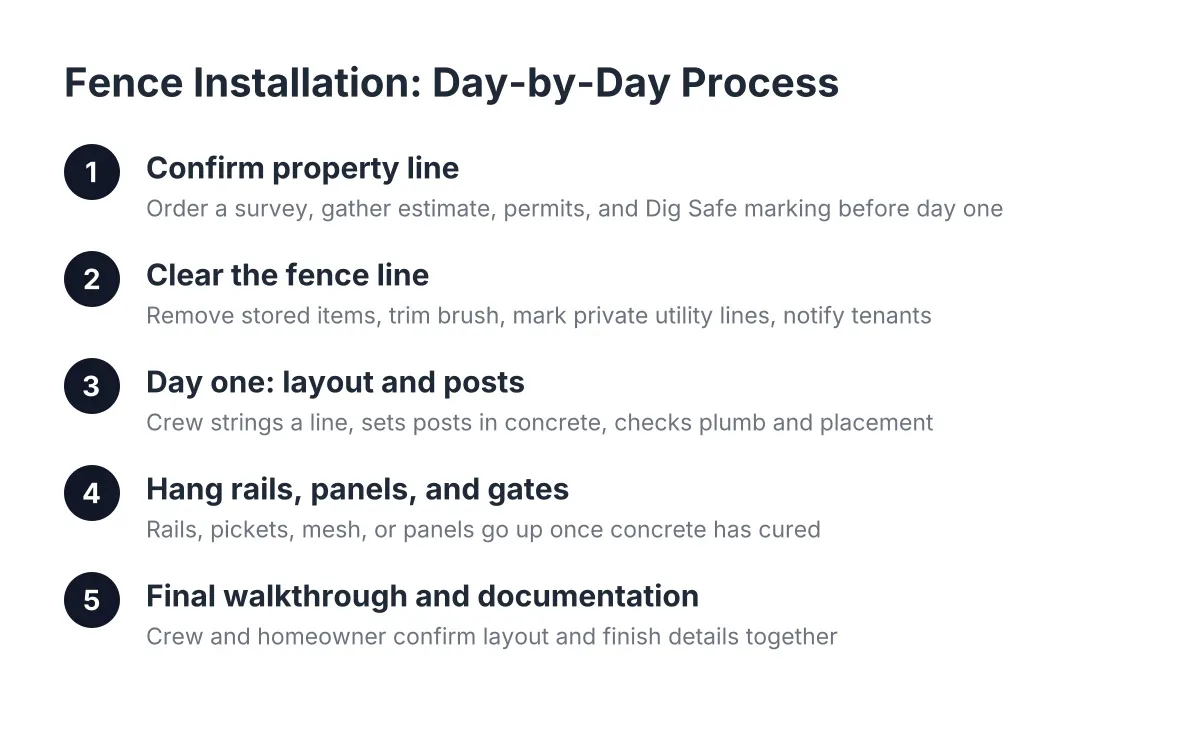
Searching for fence quotes near me will surface plenty of installers, but scope varies, so know who owns what. A full-service fence company should handle layout, utility line marking through Dig Safe before any digging, proper post setting, and advice on how local rules affect your design. Posts set with concrete or structural foam footings, not just tamped dirt, are the baseline for a fence that survives Western Massachusetts frost cycles.
That said, some responsibilities usually stay with the homeowner:
- Confirming the property line, or hiring a surveyor if the corners are unclear
- Checking HOA covenants or deed restrictions, which are private rules outside any permit office
- Talking with neighbors about shared lines, finished-side orientation, and gates
- Pulling any required permit, unless the contractor includes it in the contract
On that last point, ask directly at the estimate stage: who pulls the permit if one is needed? Get the answer in writing. A contractor who waves off the question entirely is a warning sign, whether you called a wood fence company near me search result or a chain link fence company near me listing.
8. How Permits and Regulations Affect Your Fence Cost and Timeline
Permit and regulation questions rarely dominate your budget, but they do shape it. For context, overall fence installation costs average $3,277 nationally, with most homeowners paying between $1,860 and $4,843, according to Angi. Where your project lands in or beyond that range depends on material, length, terrain, and how much design adjustment local rules force.
For example, a corner lot with front yard height limits may need two fence styles instead of one, which adds material transitions and labor. A pool barrier adds self-latching gate hardware. A survey, if needed, adds its own line item. None of these are reasons to skip the rules; they are reasons to settle the rules before you lock in a fence estimate, so the quote reflects the fence you can actually build.
Timeline works the same way. Confirming zoning, marking utilities, and resolving property lines happen before install day, so build that lead time into your plan, especially in spring 2026 when Springfield-area installers book up fast after winter.
Quick Pre-Install Checklist for Springfield-Area Properties
Here is the short version to run through before any posts go in:
- Measure your planned fence height; over 7 feet means a building permit under the state code.
- Call your local building department to confirm zoning height and setback rules for your lot.
- Verify the property line with your plot plan or a surveyor.
- Flag any pool on the property so barrier regulations shape the design from the start.
- Check HOA or deed restrictions separately; permits do not cover private covenants.
- Confirm who pulls any required permit, you or the contractor, in writing.
- Make sure Dig Safe utility marking happens before digging.
Sorting out fence installation permits and regulations up front is not glamorous, but it is the difference between a one-and-done project and a fence you rebuild twice. If you are in the Springfield area and want straight answers on how local rules, your property lines, and your material choice fit together, Western Mass Fence Co can walk your lot, explain the cost factors, and put together an estimate for wood, chain link, vinyl, or ornamental aluminum fence installation. Reach out when you are ready to talk through the project.
If you need fence installation in Springfield, MA, Western Mass Fence Co can help.
Prefer to talk it through? Call (413) 305-1309 — a quick call is usually the fastest way to get a straight answer for your situation.