Signs Your Fence Needs Repair vs. Full Replacement: 8 Ways to Tell
A leaning post, a gate that drags, a panel the last storm knocked loose. The hard part is not noticing the damage. The hard part is reading the signs your fence needs attention—distinguishing between situations that call for fence repair versus replacement. Fix the wrong fence and you throw money at a structure that fails again next winter. Replace one that only needed a new post and you spend thousands you did not have to.
Here is the honest version of that call, the way a local installer would make it standing at your fence line. Eight signs, and for each one, whether it points to repair or replacement. Most Springfield-area fences, wood, chain link, or vinyl, show some mix of these. The pattern across the whole run is what decides it, not any single bad panel.
One ground rule before the list: in New England, the fence usually fails from the bottom up. Frost heave, ground movement, and moisture at grade kill posts long before the panels wear out. So most of these signs start at the posts, because that is where the decision actually gets made.
Signs That Point to Fence Repair Versus Replacement
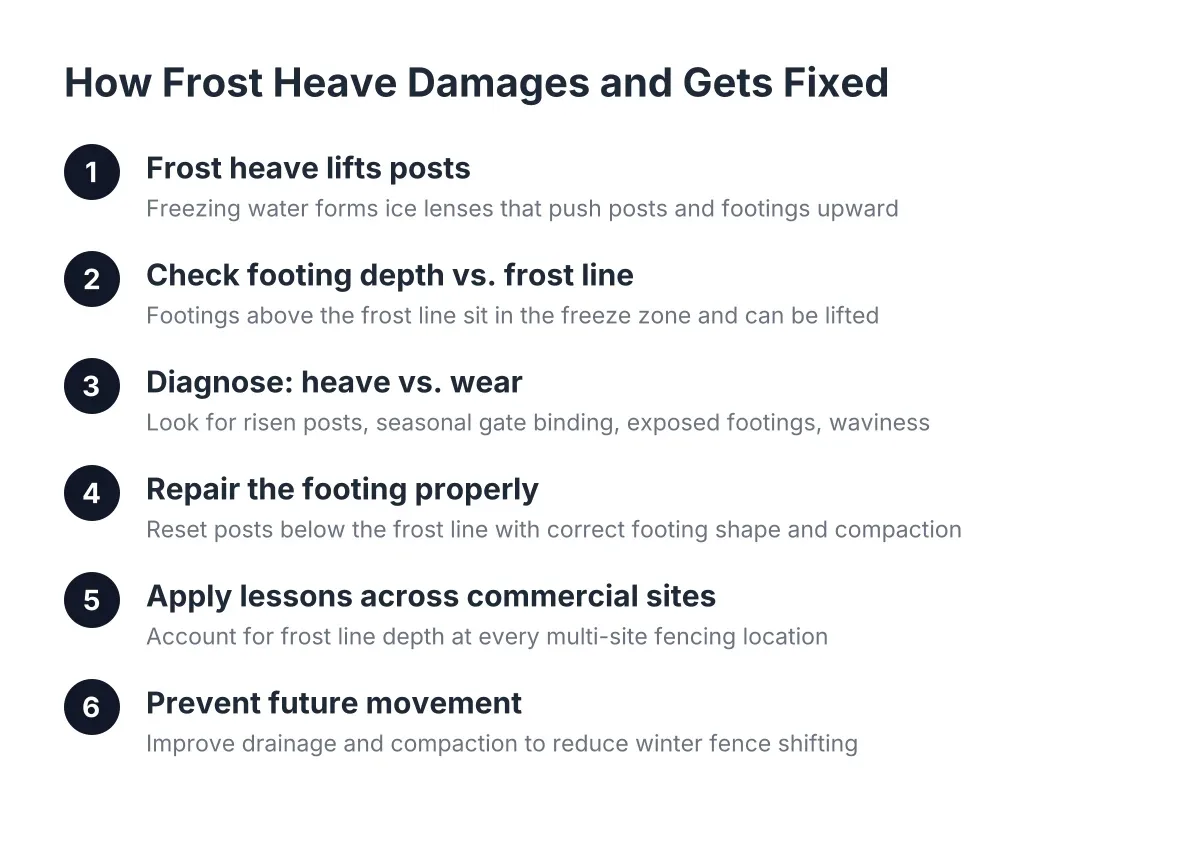
A leaning fence almost always means post failure, not panel failure. Wood posts rot at ground level, where moisture sits against the grain, even when the panels above have been repainted and look fine. Chain link posts lean when frost heave shifts a shallow footing, which is a common story in Springfield-area soil.
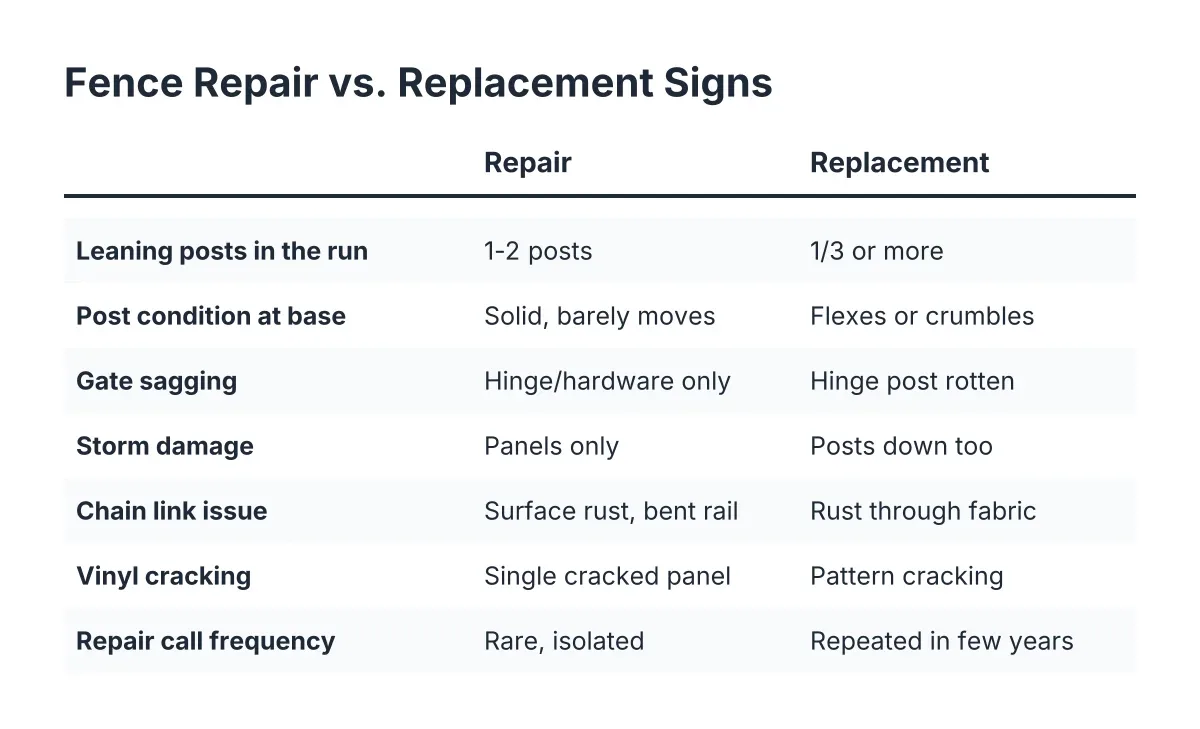
Here is the repair-or-replace test: count the leaners. One or two leaning posts in an otherwise solid run is a repair. A new post, or a steel post set into the existing concrete footing, and the fence stands straight again. If a third or more of the posts are moving, the whole run is on the same clock, and replacement usually beats chasing failures one at a time.
Rot at the Base: When Posts Determine Fence Repair or Replacement
This one fools a lot of homeowners. The panels got stained or painted every few years, so the fence looks maintained. However, the posts below grade never got that protection, and they rot quietly until a windstorm finds the weak spot.
Push on each post. Solid means it barely moves. If a post flexes at the ground line or you can crumble wood with your thumb, that post is done. The useful part: a rotted post does not always require digging out the old concrete footing. Cutting the post above the rot and setting a steel post into the original footing is often a practical interim repair that keeps the fence standing while you plan a full fence replacement on your own schedule, rather than the storm's.
3. A sagging or dragging gate
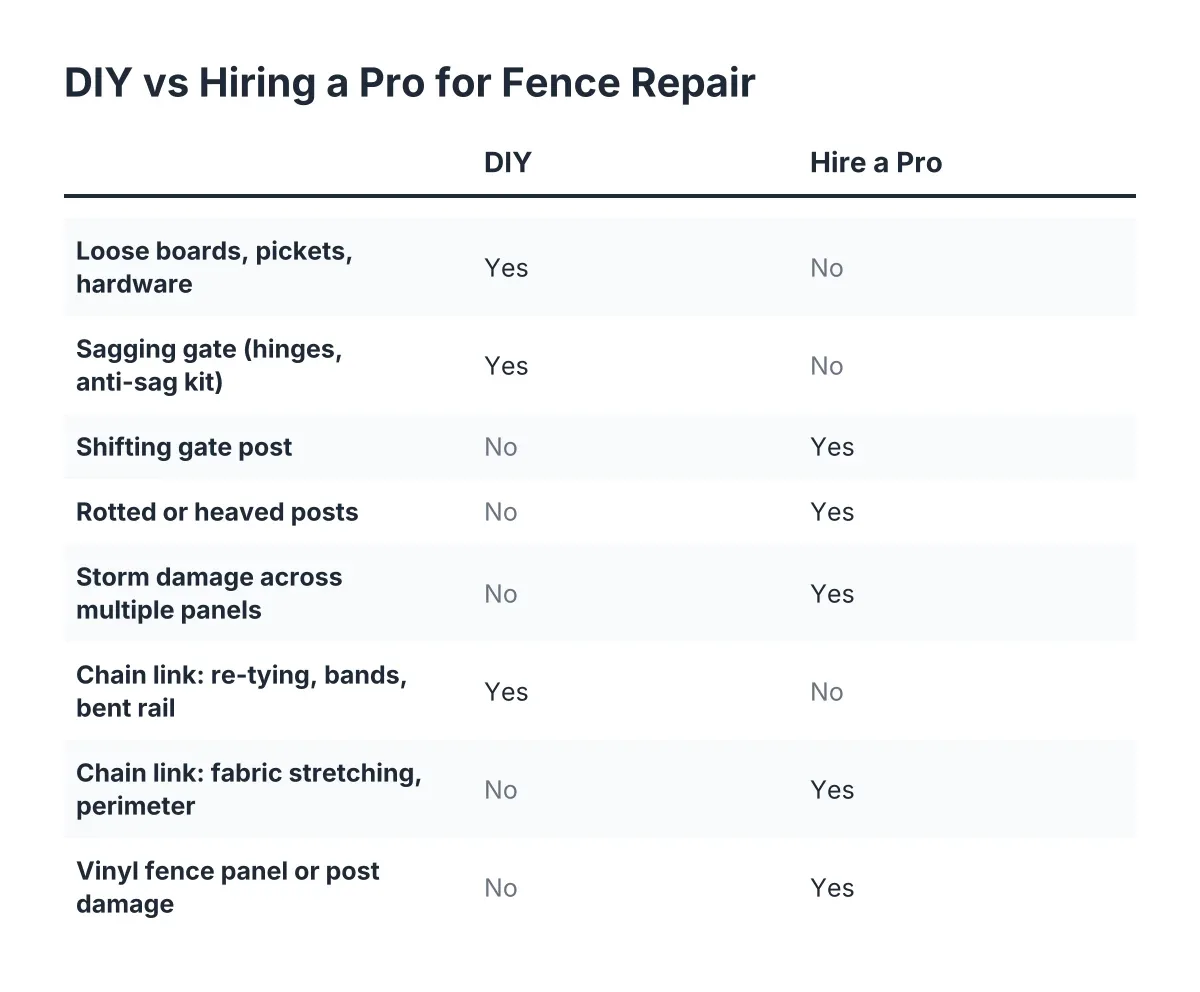
Gates fail first because they take the most abuse. Every open and close puts leverage on the hinge post, and over the years the post tips or the hardware loosens. A dragging gate on an otherwise solid fence is one of the easiest repair calls there is: new hardware, a rehung gate, or a reinforced hinge post.
Therefore, do not let a bad gate talk you into a full replacement. The reverse is also true. If the gate sags because the hinge post itself is rotten or heaved, check the rest of the posts before you fix just the gate. The post that holds the gate rarely fails alone.
4. Storm damage: broken panels versus a broken structure
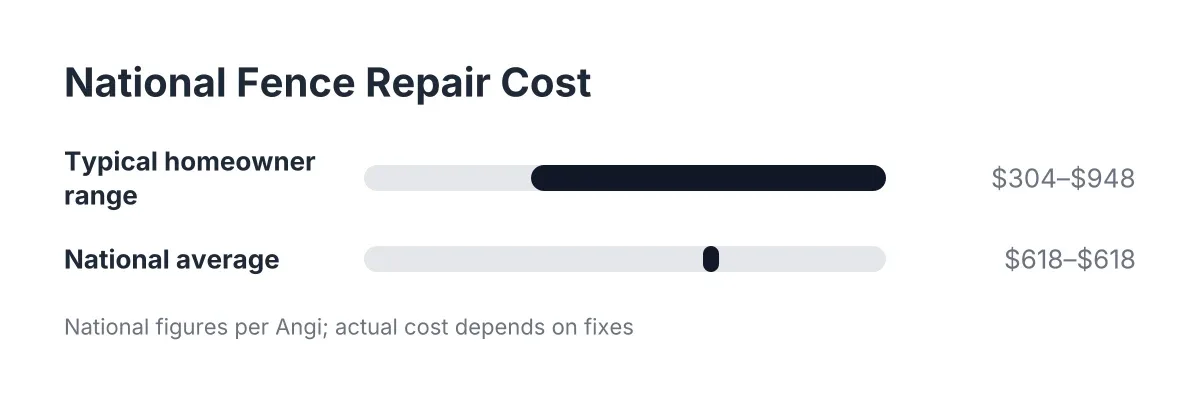
After a nor'easter or a heavy wind event, the question is what actually broke. A panel or two blown out of an otherwise sound fence is a straightforward fence repair, and it is worth handling promptly, since open sections invite exactly the problems a fence exists to stop. According to Angi, the national average cost of fence repair is $618, with most homeowners paying between $304 and $948, which puts a few panels well below the cost of starting over.
However, if the storm took out posts along with panels, or laid a whole section flat, the wind did not cause the failure. It revealed it. Sound posts do not go down in typical New England weather. When they do, treat the storm as a free inspection report on the rest of the run.
5. Chain link that is rusted, bent, or pulling away from the rail
For a commercial fence, the signs read differently than wood. Surface rust on galvanized chain link is cosmetic. Fabric pulled loose from the top rail, bent or missing rails, or a sagging bottom edge that someone or something can slip under is a security problem, not a looks problem.
For example, say the owner of a small storage yard off Route 20 notices the back corner of the chain link sagging where a plow pushed snow against it all winter. In that scenario, re-stretching the fabric and replacing one bent rail restores the perimeter for a fraction of replacement cost. If the rust has eaten through the fabric itself, or the line posts wobble in their footings, patching one corner just moves the weak point, and a replacement estimate is worth getting before an insurance or liability issue forces the decision.
6. Cracked or brittle vinyl, especially after a cold snap
Vinyl fence panels do not rot, but they do get brittle with age and UV exposure, and New England winters are hard on them. A single cracked panel, often from an impact, a snowblower, a falling limb, a well-aimed soccer ball, is a repair if matching panels are still available for your fence line.
The replacement signal is pattern cracking: multiple panels going chalky, yellowed, or splitting on their own in cold weather. At that point the material itself has aged out, matching new panels to old becomes a losing game, and section-by-section repair costs stack up against a clean vinyl fence installation.
7. More than one repair call in the last few years
Age plus frequency is the tiebreaker when individual signs are ambiguous. According to Angi, wood fences last about 15 years on average, with some lasting up to 20 depending on wood type and maintenance, and a wood fence over 10 years old that needs frequent repairs is showing classic replacement signs.
Think of it as a simple ledger. Each repair on a fence in its first decade buys you years. Each repair on a fence past the 15-year mark buys you months. Once you are paying for the second or third fix in a short stretch, that money is better applied toward fence replacement, ideally with details that reset the clock, like steel posts and stain on both faces of a wood fence, which extends its life well beyond a bare installation.
8. The fence is in the wrong place, or nobody knows whose it is
This is the sign nobody writes about, and for a lot of Springfield-area homeowners it is the real trigger. A new neighbor questions where the old fence sits. A realtor flags a boundary issue before a sale. The neighbor's dog keeps crossing a line nobody can actually point to. In those cases, the fence's condition is beside the point; its location is the problem.
Repairing a fence that may sit on the wrong side of the property line locks in the dispute. If there is any real question about the line, resolve the location before spending a dollar on repair, because a fence rebuilt in the wrong spot can end up torn out twice. A fence company can set posts precisely to marked points, but marking the legal boundary itself is surveyor's work; on older New England lots with odd setbacks and grade changes, a survey before fence installation is cheap insurance against a much more expensive argument. That is a limitation worth being straight about: no installer should be the one deciding where your property line is.
Reading the signs your fence needs replaced, not patched
Pull the eight signs together and the decision usually sorts itself. Repair makes sense when the damage is isolated, the posts are mostly sound, and the fence is young enough that a fix buys real years. Replacement makes sense when the failures are structural, widespread, or repeating, or when the fence location itself is in dispute.
A quick summary of how the signs sort:
- Lean toward repair: one or two leaning posts, a dragging gate, a few storm-broken panels, a single cracked vinyl panel, surface rust on chain link, a fence under 10 years old.
- Lean toward replacement: rot or movement in a third or more of the posts, pattern cracking in aging vinyl, rusted-through chain link fabric, repeated repairs on a fence past 15 years, or a boundary question that means the fence may need to move.
- Get professional eyes either way: post failures after a storm, anything involving the property line, or a commercial fence tied to security or code requirements.
One honest caveat: price alone is a bad compass here. The cheapest fix or the cheapest fence rarely stays cheap, because construction quality, post setting, and materials drive how long the work lasts, and a fence rebuilt in five years costs more than one built right once. As of 2026, with material costs still varying by fence type, the smarter question is not what the repair costs today but what the fence costs per year of service you get from it. Read the signs, count the posts, and decide whether you are buying years or buying months.
If you need fence repair, Western Mass Fence Co can help.
Prefer to talk it through? Call (413) 305-1309 — a quick call is usually the fastest way to get a straight answer for your situation.