Wrought Iron Fence Rust Prevention: Coatings and Maintenance That Work
If you own an ornamental metal fence in the Springfield area, wrought iron fence rust is not a question of if, it is a question of when. Understanding iron fence rust prevention starts with knowing that bare iron and oxygen do not get along, and New England adds road salt, wet snow sitting against the bottom rail, and humid summers to the mix. The good news is that rust is manageable. With the right coating and a short yearly routine, an iron fence can outlast every wood fence on the block. This guide walks through the prevention process step by step, from inspection to coating choice to the long-term schedule, so you know exactly what the work involves and roughly where the money goes.
One note before we start. Western Mass Fence Co installs ornamental aluminum fencing rather than true wrought iron, partly because aluminum does not rust at all. But plenty of Springfield-area homes still have iron fences and gates worth keeping, and the maintenance steps below apply whether you do the work yourself or decide the fence is far enough gone to replace.
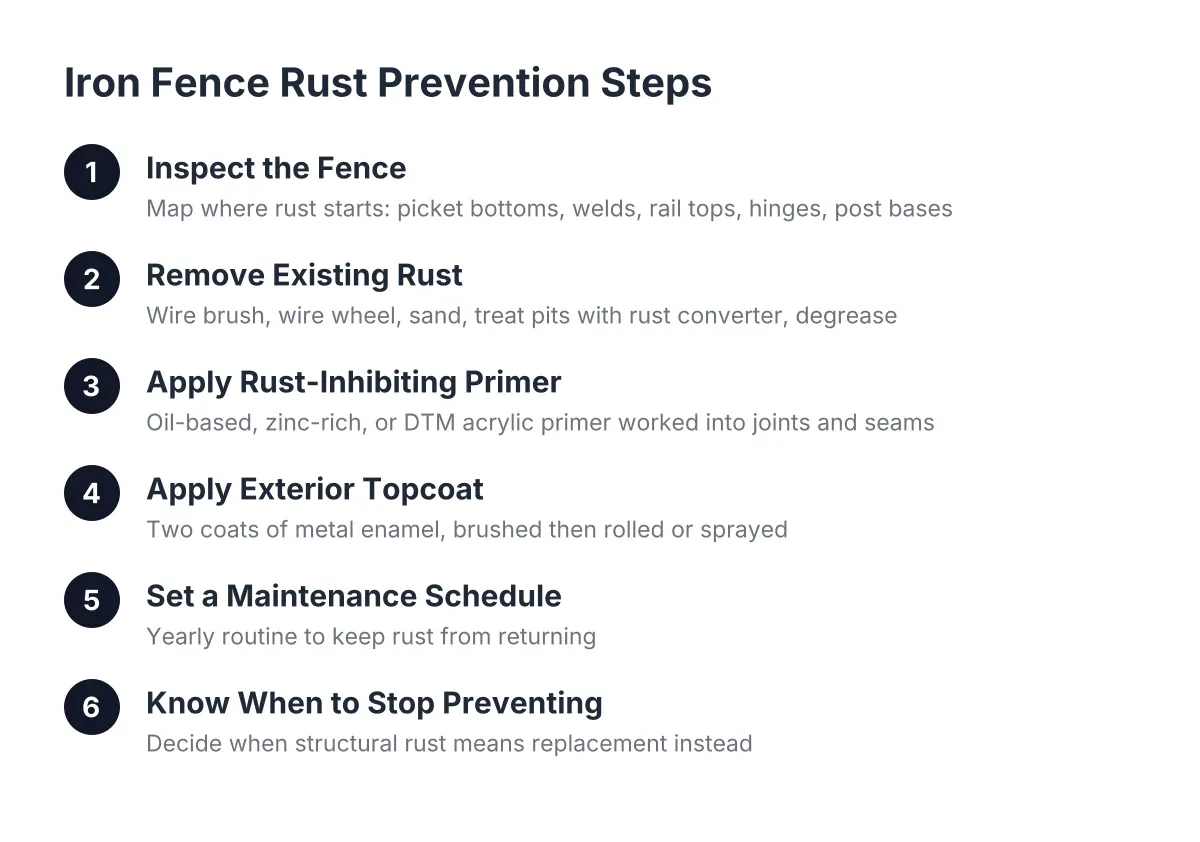
Step 1: Inspect the Fence and Map Where Rust Starts
Walk the full fence line and look closely at the spots where water sits, because that is where wrought iron fence rust begins. On almost every iron fence, trouble shows up in the same places first:
- The bottoms of pickets, where snow piles up and splashback from rain keeps the metal wet
- Welds and joints, where the original coating was thinnest
- Horizontal rail tops, where water pools instead of running off
- Gate hinges and latches, where moving parts wear the paint away
- Post bases at the concrete or ground line
Mark each problem spot with painter's tape or chalk. Then sort what you find into three categories: surface rust (orange staining, paint still mostly intact), flaking rust (paint bubbling and lifting, scale underneath), and structural rust (metal thinned, holes, or a picket you can bend by hand).
Surface and flaking rust are maintenance problems you can fix. Structural rust is a repair or replacement conversation. If a gate post wobbles or a rail has rusted through, a fence company should look at it before you spend a weekend painting a fence that is past saving.
Step 2: Remove Existing Rust Down to Sound Metal
Coatings fail when they go over active rust, so removal is the step that decides whether your paint job lasts two years or ten. Do this work in dry weather, ideally spring or early fall in the Springfield area, when the metal is not freezing cold and humidity is moderate.
Work through the fence section by section:
- Scrape loose, flaking rust and failing paint with a wire brush or paint scraper.
- Follow with a wire wheel or flap disc on a drill or angle grinder for stubborn scale, especially around welds and picket bottoms.
- Sand the transition zones where old paint meets bare metal so the new coating feathers in smoothly.
- Treat pitted areas you cannot fully grind out with a rust converter, which chemically changes remaining oxide into a stable, paintable surface.
- Wipe everything down with a degreaser or mineral spirits and let it dry completely.
For wrought iron gate rust removal around hinges, take the gate off its pins if you can. You will get better access to the hinge barrels, and you can grease the pins before rehanging. Wear safety glasses and gloves for all of this; rust flakes off a wire wheel at speed.
You do not need to strip the whole fence to bare metal. Sound, well-adhered paint can stay. The goal is no loose rust, no loose paint, and a clean surface the primer can grab.
Step 3: Prime With a Rust-Inhibiting Metal Primer
Primer is where most DIY jobs on rust on a wrought iron fence go wrong. Standard spray paint over cleaned metal looks fine for a season and then bubbles. Iron needs a primer built for the job.
Your main options in 2026 are:
- Rust-inhibitive oil-based primer. The traditional choice for iron, good adhesion, and forgiving over small amounts of residual oxidation.
- Zinc-rich primer. Gives sacrificial protection, meaning the zinc corrodes before the iron does. Best for fences near roads that see winter salt spray.
- Direct-to-metal (DTM) acrylic primer. Easier cleanup and lower odor, and solid performance when the surface prep is thorough.
Apply primer to every bare spot and every treated area, and prime the whole fence if more than a third of the old finish failed. Brush primer into joints, weld seams, and the underside of rails; spraying alone skips the crevices where rust restarts. One full coat, dried per the label, before any topcoat.
Step 4: Choose and Apply a Topcoat Built for Exterior Iron
The topcoat is your weather barrier, and on an iron fence it earns its keep every winter. Two coats of a quality exterior metal enamel beat one heavy coat every time.
The common choices break down like this:
- Oil-based alkyd enamel. The classic glossy black iron finish, hard shell, strong moisture resistance, slower drying.
- DTM acrylic enamel. More flexible, which helps as the metal expands and contracts through freeze-thaw swings, and it resists fading.
- Two-part epoxy or urethane systems. The most durable option, common on commercial fence work, but less forgiving to apply and usually a professional job.
Brush the first coat so paint works into every corner, then roll or spray the second for an even finish. Pay extra attention to picket bottoms, rail tops, and post bases, the same spots you flagged in Step 1. Allow full cure time before letting the dog or the kids lean on it.
Iron Fence Rust Prevention Costs Compared to Full Replacement
As a rough illustration, say a homeowner in Forest Park has 60 feet of iron fence with moderate flaking rust. Supplies for a full DIY treatment, wire wheels, converter, primer, and two topcoats, might run a few hundred dollars plus two or three weekends of labor. Hiring the prep and painting out costs more, and sits in the same general territory as typical fence repair spending; the national average cost of fence repair is $618, with most homeowners paying between $304 and $948, according to Angi. Either number is small next to full fence replacement, which is the eventual price of ignoring rust until posts and rails fail.
Step 5: Set a Maintenance Schedule That Keeps Rust From Returning
Prevention from here on is a short, repeatable routine, not a project. A well-coated wrought iron fence in this climate needs attention on roughly this cycle:
- Twice a year: rinse off road salt, dirt, and organic debris, especially after the last snow melts.
- Every spring: walk the line, look for chips, scratches, and bubbling, and spot-prime and touch up the same day you find them. A chip caught early is a five-minute fix; ignored, it becomes next year's flaking section.
- Every year: oil gate hinges and latches, and check that gates still swing without scraping, since wrought iron gates rust fastest where parts rub.
- Every 5 to 10 years: expect a full repaint, sooner on the street side of a fence that catches plow spray.
In addition, fix the conditions that feed rust. Trim shrubs and vines off the fence so air can dry it. Regrade or redirect downspouts if water ponds against post bases. Keep sprinklers from hitting the metal daily.
Step 6: Know When Prevention Stops Making Sense
There is a point where maintaining an old iron fence costs more than it returns. If pickets snap during cleaning, if rails have rusted through at multiple joints, or if posts have rotted off at the ground line, you are patching a structure, not maintaining a finish. Wrought iron railing rust repair on a few feet of damaged section is reasonable; rebuilding half the fence picket by picket usually is not.
At that stage, many Springfield-area homeowners replace iron with ornamental aluminum fence installation. Aluminum gives the same classic picket-and-rail look without any rust risk, which means no wire wheels, no primers, and no repaint cycle. The honest trade-off: aluminum is lighter than iron, so it does not match iron's heft for security applications, and a quality aluminum fence is a bigger upfront fence cost than repainting what you have. For most residential fence projects where the iron is already failing, the math over 20 years favors replacement.
What drives the cost either way is the same set of factors any fence estimate turns on: linear footage, gate count, grade changes across the yard, and how hard the old fence is to remove. A straight, flat 60-foot run prices differently per foot than a sloped corner lot with two gates. Knowing those cost factors before you make calls puts you in a better spot on every quote you collect.
The Short Version
Rust prevention on an iron fence comes down to six moves: inspect for the early signs, remove rust to sound metal, prime with a product made for iron, topcoat twice, touch up every spring, and recognize when the fence is past the point of saving. Do the first five consistently and you may never face the sixth. Skip them for a few New England winters and the fence will make the decision for you.
If you need fence installation, Western Mass Fence Co can help.
Prefer to talk it through? Call (413) 305-1309 — a quick call is usually the fastest way to get a straight answer for your situation.