Wrought Iron vs. Wood Fence: Which Fits Your Springfield, MA Property Better?
If you are weighing an iron vs wood fence decision for your Springfield-area property, you are usually choosing between two different jobs: marking a line and keeping the peace, or blocking a view and holding up to New England weather. Iron (and its modern stand-in, ornamental aluminum) does the first job well. Wood does the second. This list walks through seven practical comparisons so you can pick the right material the first time, whether you are a homeowner settling a property line question or a business owner fencing a commercial lot in 2026.
One note before the list. True wrought iron is heavy, hand-worked steel, and most of what gets installed today is either welded steel or ornamental aluminum built to look like it. We install ornamental aluminum for exactly this reason: it gives you the iron look without the rust maintenance. Everything below applies whether you end up with traditional iron or the aluminum version.
1. Iron Versus Wood Fence: Property Line Disputes
An open ornamental iron fence marks a boundary clearly without walling anyone off, which keeps things civil when a neighbor relationship is already tense. A solid wood privacy fence does more than mark the line; it stops the dog, the kids, and the sightline all at once.
Say a homeowner in Springfield has a new neighbor questioning where the old fence sat, plus a dog that keeps wandering over. In that scenario, a 6-foot solid wood fence set correctly on the surveyed line solves the dog, the privacy, and the ambiguity in one project. Iron makes sense instead when the issue is purely "where is the line," not "I need to stop seeing into your yard."
Either way, placement matters more than material. If the line is genuinely in dispute, a survey before fence installation is money well spent compared to tearing out and resetting a fence that landed on the wrong side. A fence company can work from survey pins and document where posts were set, but we are not surveyors; when a boundary is contested, get the survey or talk to an attorney first.
2. Privacy: Comparing Iron and Wood Fence Designs
Iron pickets alone give you zero privacy. That is the single biggest reason homeowners searching for a wrought iron privacy fence end up disappointed; the classic open-picket design is built to be seen through.
There are workarounds. Wrought iron fence wood inserts, privacy slats, and privacy screens can close the gaps between pickets, and some fabricators build hybrid panels with iron frames and wood infill. A rod iron wood fence hybrid like this looks sharp, but you are paying for two materials and two kinds of upkeep.
For most Springfield-area yards where privacy is the driver, a straight wood fence is the simpler answer:
- Solid stockade or board-on-board wood blocks the view completely at a lower cost per foot than an iron-and-wood hybrid.
- Shadow box wood styles let wind pass through, which matters on exposed lots where a fully solid fence catches gusts like a sail.
- Wood inserts added to an existing iron fence can work, but they add weight and maintenance the original fence was not designed for.
If you already own an iron fence and want privacy, slats or screens are the budget route. If you are starting from scratch and privacy is the goal, start with wood.
3. Cost: What Iron and Wood Actually Run, and Why
Is a wrought iron fence expensive? Compared to wood, yes, foot for foot. Iron and ornamental metal sit at the higher end of residential fence pricing because the material costs more and the panels take more labor to fabricate and hang. Wood is the more affordable way to cover long runs, which is why it dominates backyard property lines across Springfield.
For context, overall fence installation costs average $3,277 nationally, with most homeowners paying between $1,860 and $4,843, according to Angi. An iron or ornamental project of the same length typically lands above a comparable wood project, while a basic chain link fence lands below both.
However, the iron vs wood fence cost question is not just the install price. Pricing reflects construction style, materials, expected longevity, and appearance, not just raw lumber or metal. A custom board-on-board wood fence with trim can cost more than a standard ornamental aluminum run, because it genuinely uses more material and more labor. Get a written fence estimate for both options on your actual footage before you assume iron is out of reach.
4. Lifespan and Maintenance: Iron Outlasts Wood, but Not for Free
Wood fences last about 15 years on average, with some lasting up to 20 years depending on wood type and maintenance, according to Angi. Angi also notes that a wood fence over 10 years old needing frequent repairs is usually signaling replacement time. Iron and ornamental aluminum routinely outlast that window when kept up.
The catch is what "kept up" means for each material:
- Wood: stain or seal both sides, not just the street side. Staining both faces extends the fence's life and protects the investment, and it is the step most homeowners skip.
- Wood posts: warping, rot, and twisting at the posts are the usual failure points, often before the pickets themselves give out.
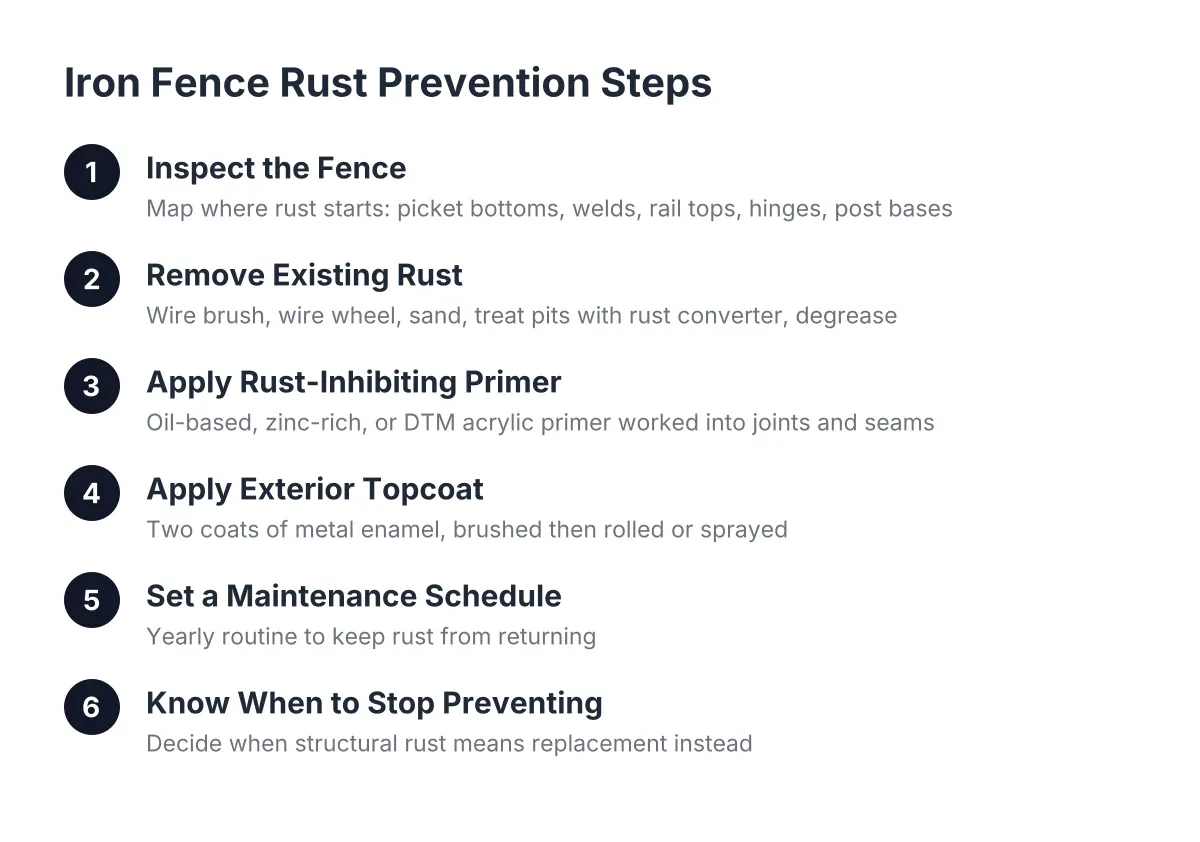
- Iron: scrape and repaint rust spots before they spread, especially at welds and the base of posts where snow sits.
- Ornamental aluminum: powder-coated aluminum does not rust, which is why it has largely replaced true iron for residential fence work in wet climates like ours.
If you want the iron look with the least maintenance, aluminum is the honest recommendation for Western Mass weather.
5. Springfield Frost and Grade: How Each Fence Handles the Ground Here
Springfield-area soil freezes, heaves, and moves every winter, and that works on fence posts year after year. Both materials depend entirely on posts set below frost depth in properly placed footings; skip that, and the straightest fence in the neighborhood leans by its third spring.
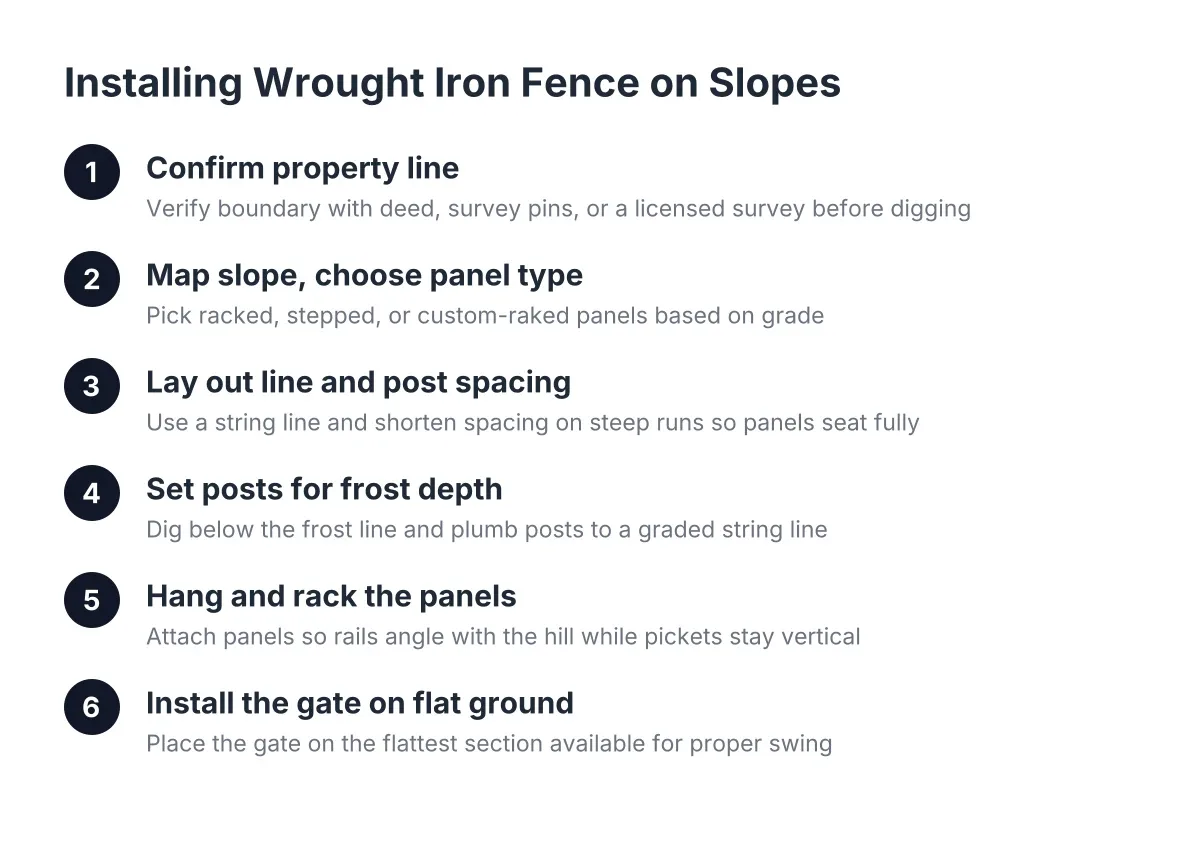
Rigid iron and aluminum panels are less forgiving on sloped yards. They step down a hill in level sections, which leaves triangular gaps at grade unless the installer racks the panels or custom-fits them. Wood pickets can follow the ground almost continuously, which is a real advantage on the older Springfield lots where grade changes and odd property lines are the norm rather than the exception.
For example, suppose a homeowner on a sloped corner lot wants an iron-style fence along the front and privacy in back. A typical crew would rack ornamental aluminum panels down the front grade and run a wood fence on the back line, matching each material to the ground it sits on.
6. Security and Commercial Lots: Where Iron Pulls Ahead
For a small commercial or light-industrial property, ornamental iron-style fencing does two jobs wood cannot. The vertical pickets offer no footholds for climbing, and the open design keeps the lot visible from the street, which matters for both security cameras and police drive-bys. Wood hides your property line; it also hides whoever climbed over it.
Commercial fence projects around Springfield usually come down to ornamental aluminum when appearance matters, such as a daycare, office frontage, or storefront lot, and chain link fence when budget and height are the drivers, such as a storage yard or auto shop. Picket spacing is not just cosmetic either; daycare and pool-adjacent installs have code requirements on gaps and heights that a commercial fence installer should flag during the estimate, not after the posts are set.
Gates deserve attention here too. A wrought iron fence gate on a commercial drive takes daily abuse, so hinge quality, latch hardware, and post footing size matter more at the gate than anywhere else on the run.
7. Buying It: Panels, Installers, and What the Process Looks Like
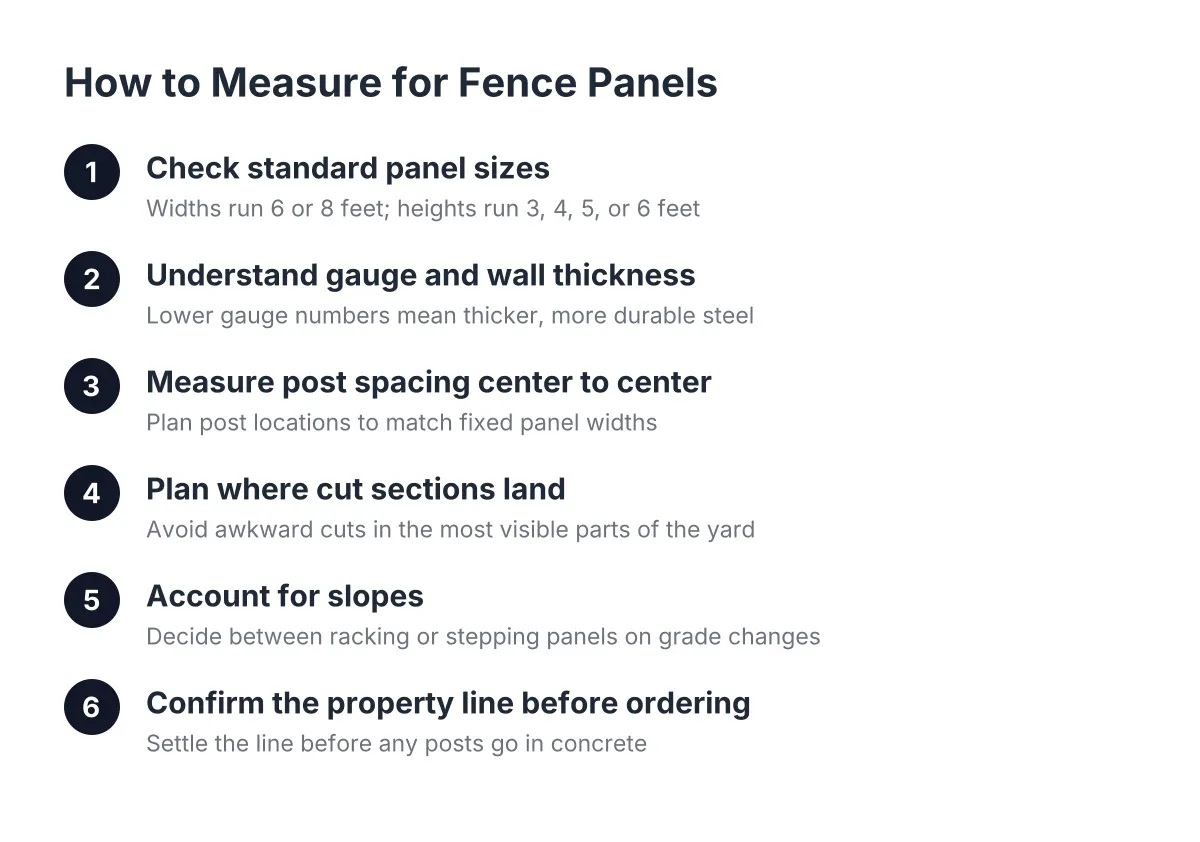
If you have been searching for wrought iron fence panels near me, you have two paths: buy panels and set them yourself, or hire a local fence company to handle layout, footings, and installation. Prefabricated panels come in standard widths and heights, and the install cost rides on linear footage, gate count, terrain, and how many posts need digging below frost depth.
A straightforward installation process in the Springfield area looks like this:
- Site visit and written fence estimate, with material options priced side by side.
- Property line confirmation, from survey pins, existing markers, or a new survey if the line is disputed.
- Utility locates before any digging.
- Post setting below frost depth, then panel or picket installation and gate hanging.
- Final walkthrough, including documentation of where the fence sits relative to the line.
That second step is where boundary-dispute situations get resolved or made worse. An installer who will set posts "wherever you point" is handing you a future tear-out. Ask how they confirm placement before you sign anything.
The Bottom Line for Springfield-Area Properties
Choose iron or ornamental aluminum when visibility, security, curb appeal, or low long-term maintenance leads your list. Choose wood when privacy, budget per foot, or a sloped lot leads it. The hybrid wrought iron wood fence designs, iron frames with wood infill or wood slats in iron panels, cover the middle ground but cost more and ask for two kinds of upkeep.
One more number worth knowing before you commit: installing a fence returns around 50% of the project cost on average, according to Angi. Treat the fence as something you are buying for privacy, security, or a settled property line first, and resale value second. Get both materials quoted on your actual footage, confirm the line before anyone digs, and the fence you pick will be the one you only install once.
If you need fence installation in Springfield, MA, Western Mass Fence Co can help.
Prefer to talk it through? Call (413) 305-1309 — a quick call is usually the fastest way to get a straight answer for your situation.