Wood Fence Installation Pros and Cons for Springfield-Area Homes
If a storm just flattened a section of your fence, or you're pricing a new one before the old one gives out, wood is probably the first material on your list. It's the classic choice for residential fence installation across the Springfield area, and for good reason. But wood isn't the right answer for every yard, every budget, or every timeline. Here are seven pros and cons worth weighing before you commit, plus practical notes on cost factors, repair versus replacement, and how to pick an installer.
1. Pro: Wood gives you privacy and looks right on New England properties
A solid wood privacy fence blocks sightlines completely, which chain link can't do and vinyl does at a higher material cost. On older Springfield-area streets, a wood fence tends to match the housing stock in a way a bright white vinyl panel sometimes doesn't. For a homeowner whose dog nearly escaped through a storm-flattened section, a six-foot wood privacy fence restores both security and the feeling that your yard is yours again.
Privacy fence installation is also flexible. Wood can be cut and adjusted on site, so it handles the odd lot lines and grade changes common in older New England neighborhoods better than rigid pre-made panels.
2. Con: Wood posts are the weak point, especially with our frost cycles
Wood fence posts are prone to rotting, warping, and twisting over time. The seasonal frost and ground movement in Western Mass work against them; posts that weren't set deep enough heave, lean, and eventually fail. When a windstorm takes out a fence section, the post at ground level is often where the break happened, not the panel itself.
This matters for the repair-or-replace question. If the posts are sound and one panel is down, you're likely looking at a repair. If several posts are soft at the base, patching one section now may just delay a larger fence replacement later.
3. Pro: Wood is usually the lower upfront cost for residential fence installation
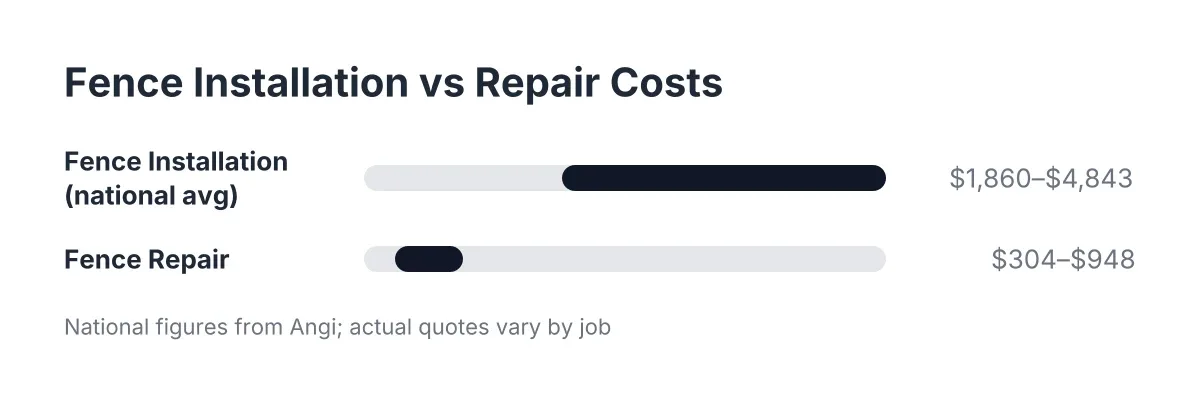
Among privacy fence options, wood typically carries a lower cost per foot than vinyl for comparable height and coverage. For context, Angi reports that overall fence installation costs average $3,277 nationally, with most homeowners paying between $1,860 and $4,843. Your actual fence estimate depends on length, height, terrain, access, and how many gates you need, so treat national numbers as a rough reference, not a quote.
Keep in mind that price differences between bids reflect more than materials and labor. Construction practices, building style, and expected longevity all show up in the number. The cheapest bid on a wood fence often means shallower posts or thinner pickets, and a fence that needs rebuilding sooner can cost more over ten years than the better installation did upfront.
4. Con: Wood demands maintenance that vinyl and chain link don't
A wood fence needs periodic staining or sealing to hold up. Skip it, and sun and moisture shorten the fence's life considerably. Staining both sides of a wood fence, not just the side facing your yard, makes a real difference in how long it lasts and what you get back from the investment.
By comparison, a vinyl fence needs occasional washing, and a chain link fence needs close to nothing. According to Angi, a wood fence that's over 10 years old and needs frequent repairs is generally showing replacement signs. If you know you won't keep up with staining, that timeline shrinks, and vinyl or ornamental aluminum may be the smarter long-term choice.
5. Pro: Wood is the most repairable material after storm damage
When a tree limb crushes two panels of a wood fence, a crew can often replace just those panels and leave the rest alone. Vinyl sections can be swapped too, but matching an older vinyl profile is sometimes harder, and a bent chain link top rail usually means replacing the full section. Angi puts the national average cost of fence repair at $618, with most homeowners paying between $304 and $948, which is a fraction of full fence replacement.
There's also a middle path worth knowing about. If a wood post has deteriorated but the concrete footing is intact, an interim post repair can keep the fence standing without digging out the footing. That buys time, and the money spent effectively carries forward toward an eventual full replacement done right.
Suppose a homeowner in Ludlow loses three panels to a February ice storm. If the posts on either side are solid, that's likely a one-day repair. If the posts snapped at grade because of rot, the honest recommendation might be replacing that whole run, and a good installer will explain which situation you're in rather than defaulting to the bigger job.
6. Con: Custom wood styles cost more than they look like they should
Board-on-board, shadow box variations, horizontal designs, and decorative trim all read as "just wood" to most homeowners, so the higher bids can feel like padding. They're not. These styles genuinely take more lumber and more labor than a standard flat privacy fence, and the fence estimate reflects that.
A few other wood conventions affect how the finished fence looks and what it costs:
- On stockade-style fences, the finished picket side typically faces the neighbor or street, with the rail side facing your yard.
- When a layout mixes full and cut panels, a careful installer puts the shortened sections in less visible spots so the prominent runs look clean.
- Gates, slopes, rock, and tight access all add labor, which is why two quotes for the same footage can differ.
If budget is the deciding factor, a standard vertical privacy fence in pressure-treated pine delivers the function at the lowest wood price point. Save the custom styles for the stretch of fence people actually see.
7. Pro: Wood handles Springfield-area lot quirks better than panelized systems
Older properties around Springfield often come with uneven grades, mature trees near the line, and property boundaries that don't run straight. Wood is forgiving here. Panels can be stepped or racked to follow a slope, and pickets can be scribed around obstacles. Rigid systems handle slopes too, but wood gives an installer more room to adapt on site without special orders.
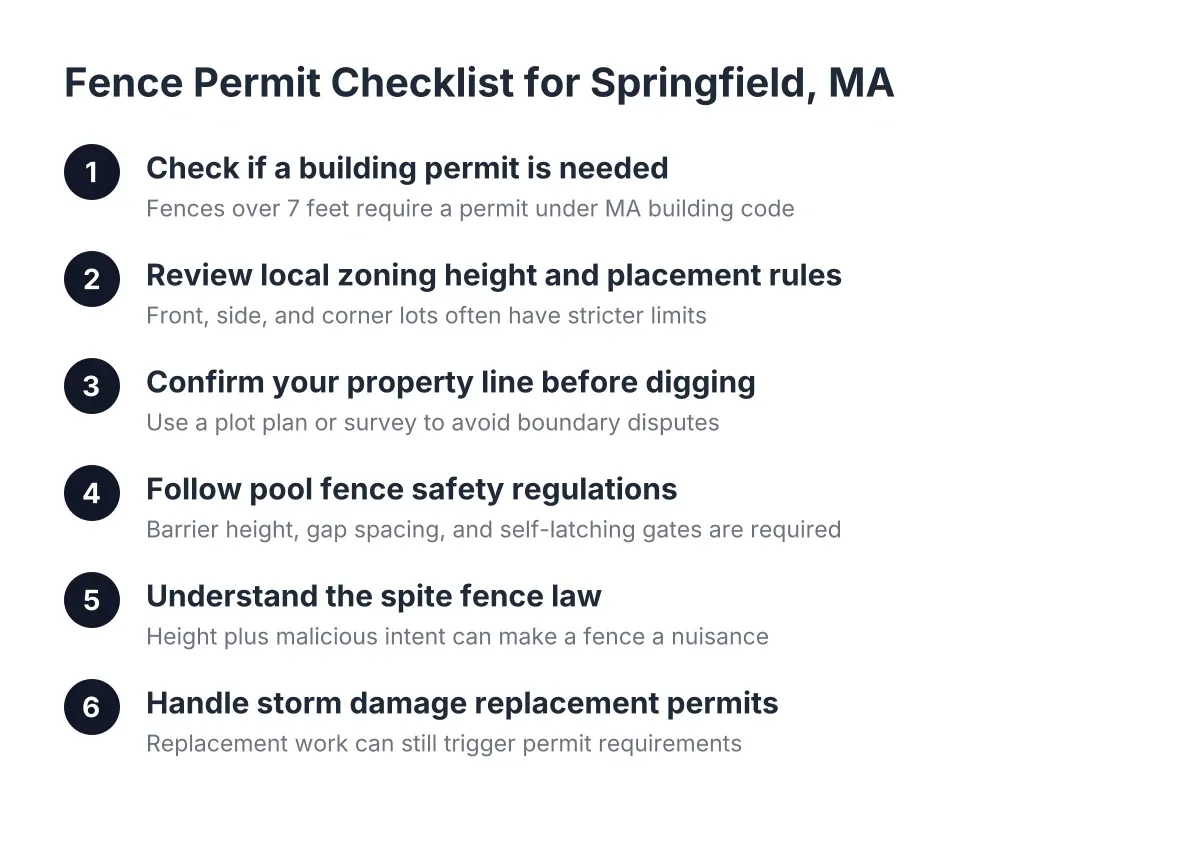
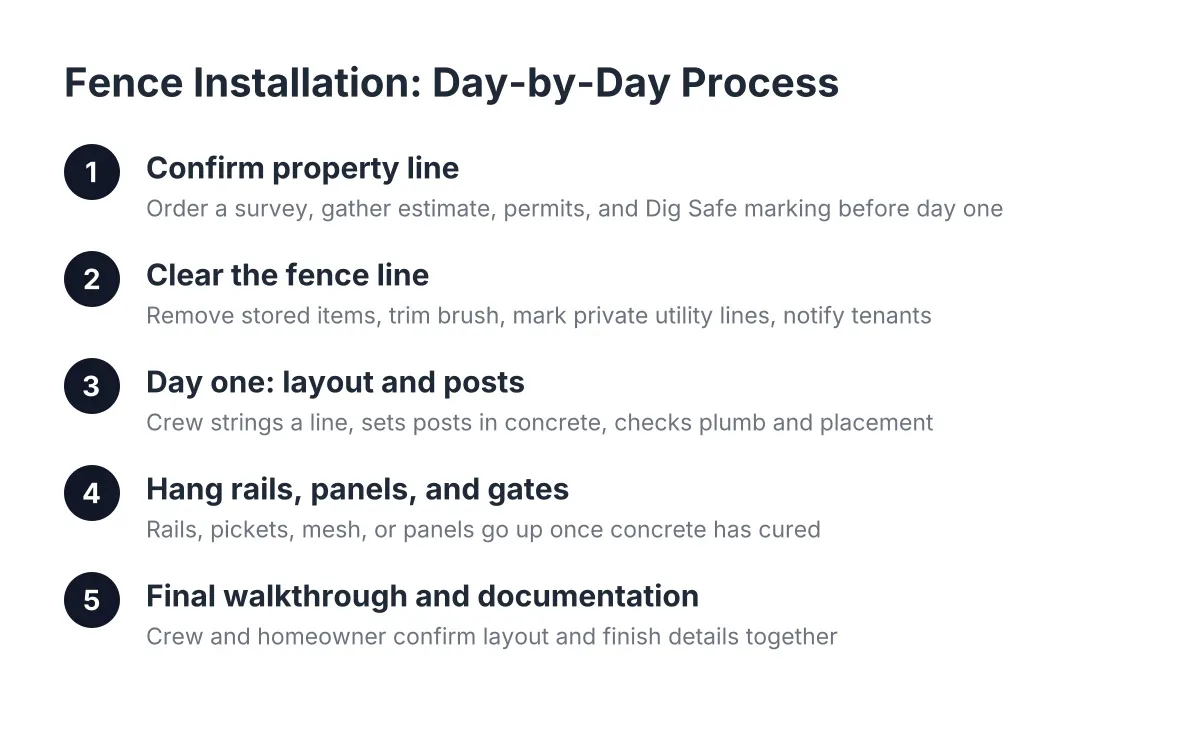
One caution: fences near property lines are a frequent source of neighbor disputes. If you're unsure where your line sits, confirm it before any residential fence installation begins; moving a fence after the fact is expensive. Also note that under the Massachusetts State Building Code (780 CMR), a fence over 7 feet requires a building permit, while fences 7 feet or less do not, according to the Town of Duxbury, MA. Most residential privacy fences come in under that height, but check with your local building department for any town-specific rules.
Deciding between wood fence repair and full fence replacement
Use the posts as your guide. Sound posts with damaged panels usually means repair. Rotted or snapped posts across multiple sections, a fence past the ten-year mark needing constant fixes, or widespread leaning all point toward replacement. Angi's data on fence repair costs averaging in the hundreds, against installation averaging in the thousands, shows why it's worth getting an honest assessment before assuming you need the full job.
If insurance may be involved after storm or vehicle damage, photograph everything before any work starts and ask your insurer what documentation they need. A written fence estimate that separates repair from replacement pricing helps that conversation. Be wary of anyone who pushes a full replacement without explaining why a repair won't hold; be equally wary of a cheap patch on posts that are clearly failing.
How to choose a residential fence installation company
Look for a local fence company that will walk the line with you, explain what's driving the cost per foot, and put the scope in writing. A fair quote for a wood fence should spell out post depth and setting method, lumber species and grade, picket style, gate hardware, old fence removal and haul-away, and whether cleanup is included. Vague one-line quotes are where surprises hide.
Three questions worth asking before you hire:
- How deep do you set posts, and how do you account for frost in this area?
- Is this a repair or a replacement situation, and why?
- What exactly is included in the price, and what would be extra?
DIY is realistic for small jobs like re-screwing a loose picket or replacing a single board. Post setting, grade changes, long runs, and anything involving a property line dispute are worth leaving to a pro; the same goes for any damage that creates an immediate safety gap for kids or pets. And if your situation involves unusual soil, retaining walls, or utility easements, get a professional assessment before committing to a layout.
Wood remains the strongest all-around value for Springfield-area privacy fencing if you'll maintain it. If maintenance is a dealbreaker, vinyl or ornamental aluminum trades higher upfront cost for less upkeep. Either way, the right move after storm damage is a straight assessment of what failed and why. Western Mass Fence Co installs and replaces wood, chain link, and vinyl fencing across the Springfield area and can look at your fence, tell you whether it's a repair or a replacement, and give you a written estimate so you can decide without guesswork.
If you need wood fence installation, Western Mass Fence Co can help.
Prefer to talk it through? Call (413) 305-1309 — a quick call is usually the fastest way to get a straight answer for your situation.