Galvanized vs. Vinyl-Coated Chain Link: Weather and Maintenance Tradeoffs
If you are pricing out a chain link project in the Springfield area, the first fork in the road is galvanized or vinyl coated chain link. Both start with the same steel. One leaves the zinc coating exposed, and the other wraps it in a layer of colored vinyl. That one difference changes how the fence weathers New England winters, how it looks against your yard, and what it costs per foot. Here is a straight comparison so you can pick the right one the first time.
This matters more around here than in milder climates. Springfield-area fences deal with freeze-thaw cycles, road salt near driveways and sidewalks, and wet springs that keep the bottom of the fence damp for weeks. The coating question is really a weather question.
What Galvanized Chain Link Is
Galvanized chain link is steel wire dipped in molten zinc. The zinc layer is the protection; it corrodes slowly so the steel underneath does not. The result is the familiar silver-gray fence you see around ballfields, commercial lots, and plenty of backyards across Springfield.
Galvanized fencing is the workhorse option. It costs less per foot than any coated version, it handles impact without the coating question, and when it finally does wear, it wears gradually. You will see dulling and eventually surface rust at cut ends, fittings, and spots where the zinc has worn thin, usually many years down the road.
The tradeoff is appearance. A silver fence reads as functional, not decorative. On a rental property that is often fine. Along the back line of a residential lot where you look at it from the kitchen window, some owners want something that blends in more.
What Vinyl Coated Chain Link Is
Vinyl coated chain link starts as galvanized steel wire, then gets a bonded layer of colored PVC over the zinc. So when people ask what a vinyl coated chain link fence is, the honest answer is that it is a galvanized fence wearing a jacket. You get two layers of protection instead of one.
Color is the obvious difference. Black is the most common choice for residential fence work because it visually disappears against trees and shrubs. Green does the same against a hedge line. Some suppliers offer brown, and a blue chain link fence shows up occasionally around pools or commercial properties, though black and green dominate around Springfield.
The vinyl layer also changes how the fence feels. The coating is smoother on hands, which matters if kids climb on it, and it will not leave the gray residue bare galvanized wire sometimes does.
Galvanized vs. Vinyl Coated Chain Link in New England Weather
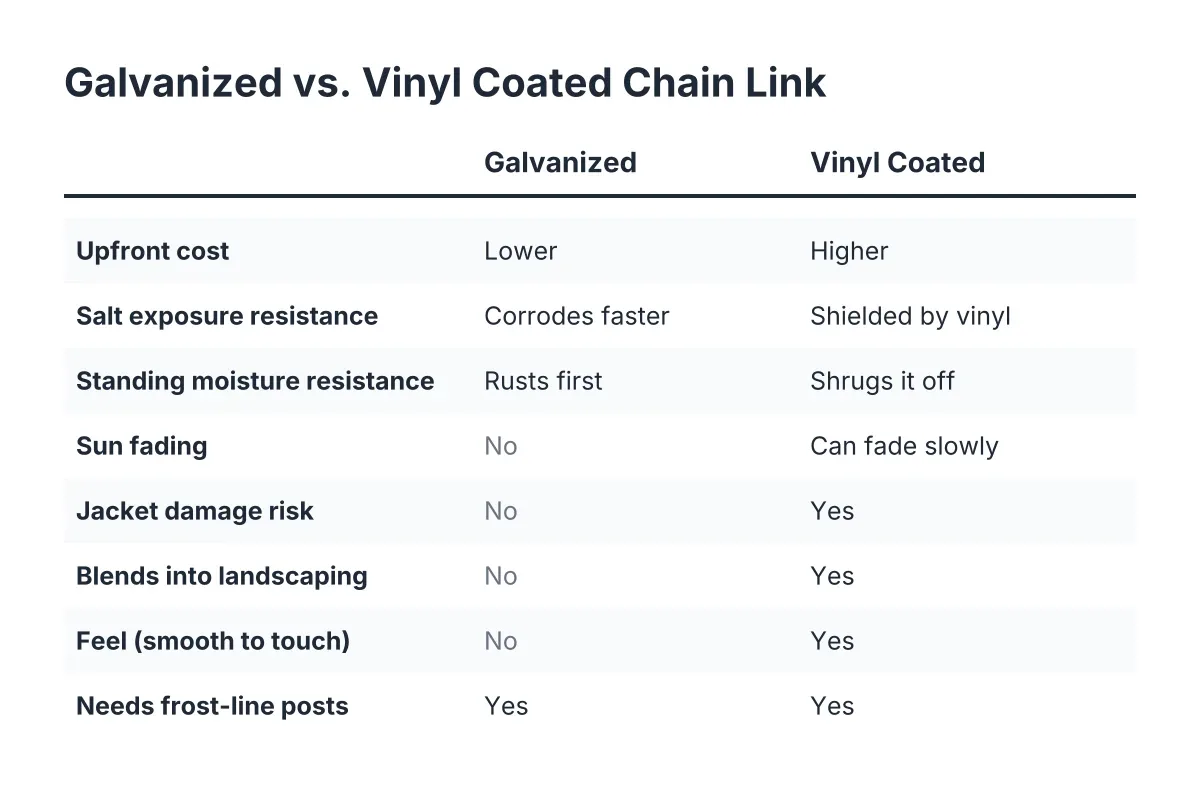
In Springfield-area weather, vinyl coated chain link generally outlasts bare galvanized because the PVC layer blocks moisture and road salt from ever reaching the zinc. Galvanized fencing still holds up for a long time; it just starts its slow corrosion clock the day it goes in. The coated version keeps that clock paused until the vinyl itself is compromised.
Here is how the two handle the specific conditions this region throws at a fence:
- Salt exposure. Fences along a plowed driveway, a sidewalk, or a street catch salt spray every winter. Salt accelerates zinc corrosion on bare galvanized wire. Vinyl coating shields the zinc entirely, so coated fabric near pavement is usually the smarter buy.
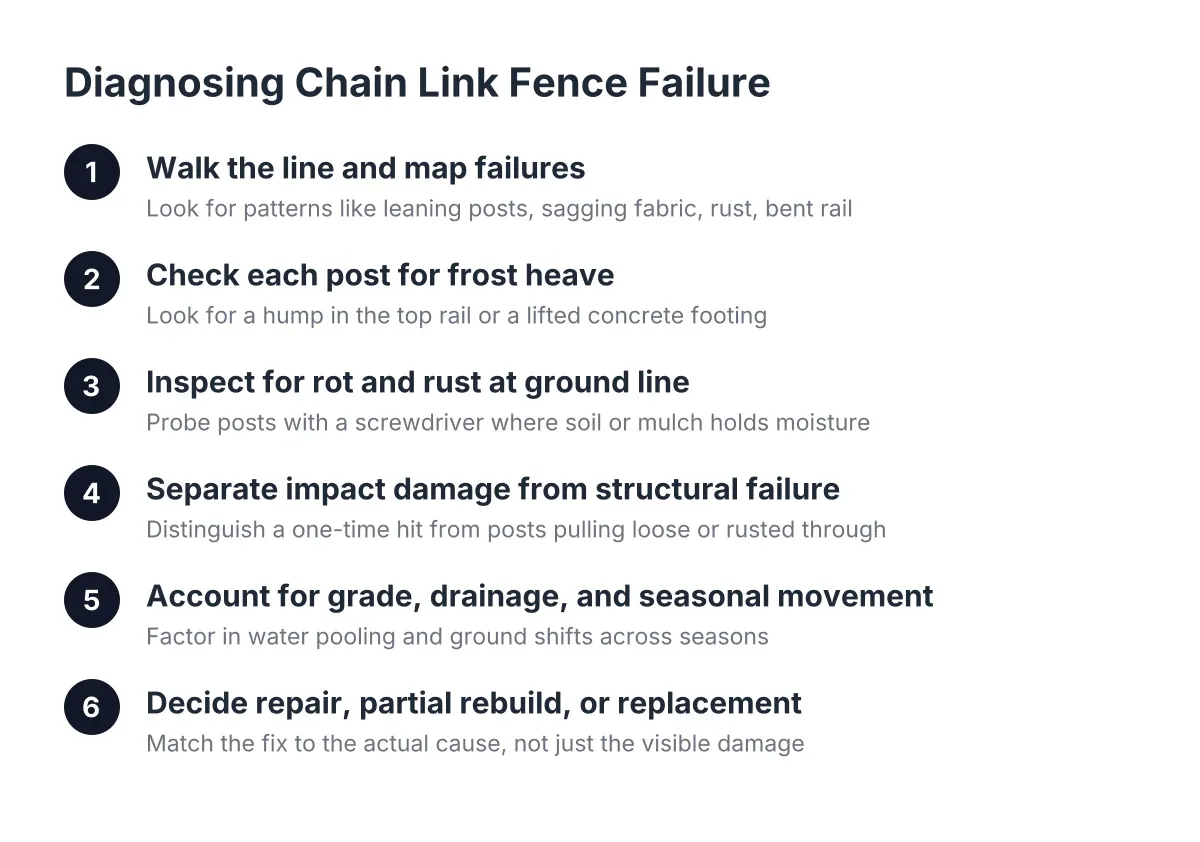
- Standing moisture. Low spots where snowmelt pools keep the bottom foot of a fence wet into April. That is where bare galvanized shows rust first. Coated fabric shrugs it off as long as the vinyl stays intact.
- Freeze-thaw and ground movement. Frost heave is a post-setting problem, not a coating problem. Both fence types depend on posts set below the frost line. No coating saves a fence with shallow posts.
- Sun exposure. Vinyl can fade slowly over many years in full sun, especially lighter colors. Galvanized does not fade; it just dulls.
The one weakness of the coated version is damage to the jacket itself. If a mower, a snowblower, or a falling branch gouges the vinyl, moisture can creep under the coating at that spot. The galvanized layer underneath still protects the steel there, but a damaged patch on a coated fence is more visible than wear on a plain galvanized one.
Maintenance: What Each One Asks of You Over Time
Neither fence asks for much, which is why chain link is popular with landlords in the first place. But the maintenance profiles differ in small ways that add up over a couple of decades.
Galvanized maintenance
Expect to do close to nothing for years. Eventually you may see surface rust at fittings, tension bands, and the cut ends of the fabric. You can wire-brush and spray those spots with a cold-galvanizing paint to slow things down. Fence repair on galvanized is simple because replacement fabric and parts match everything else out there.
Vinyl coated maintenance
Also close to nothing, with one habit worth building: look over the coating once a year. Check the bottom edge where trimmers hit, gate areas that get the most contact, and anywhere a branch came down. Small nicks are cosmetic; the galvanized layer underneath still does its job. Larger gouges near the ground are worth touching up or watching.
For a multi-unit landlord, that difference is practical. Suppose you own a three-family in Springfield and a two-family in a neighboring town, and you are standardizing on one fence spec across the portfolio. Black vinyl coated fabric means every property looks tended, tenants complain less about a "rusty" fence, and your annual walkthrough doubles as the coating check. Galvanized saves money up front on a back lot nobody sees. Many owners end up mixing: coated on street-facing runs, galvanized behind the building.
Cost and Appearance Tradeoffs
Vinyl coated chain link costs more per foot than galvanized because you are paying for the extra coating process, and often for color-matched posts, rails, and fittings to go with it. The gap is not enormous on a short run, but across 200 feet of fence line it is real money. Exact numbers depend on height, gauge, gate count, and terrain, so treat any figure you see online as a starting point and get a local fence estimate for your actual property.
For context on the broader category, overall fence installation costs average $3,277 nationally, with most homeowners paying between $1,860 and $4,843, according to Angi. Chain link tends to sit at the affordable end of that range, which is a big part of its appeal for rental properties and large lots.
Appearance is where the coated version earns its premium. A black chain link fence along a wooded Springfield-area property line fades into the background in a way silver wire never will. If the fence is going up because of a boundary situation with a neighbor, that matters more than people expect. A fence that looks deliberate and finished tends to land better next door than one that reads as purely defensive.
Which One Fits a Property Line Situation
For a boundary dispute, the coating choice is secondary; placement is the decision that cannot be wrong. Say a homeowner in Springfield has a neighbor's dog crossing into the yard, the old fence line is ambiguous, and nobody agrees on where the line sits. In that scenario, the smart sequence is: confirm the boundary first, then pick the fabric.
- Find your property pins or your plot plan. If neither exists or the line is contested, a survey is the only document that settles it. A fence company can install to a known line, but it cannot legally establish one.
- Set the fence on your side of the confirmed line, not straddling it, so there is no shared-ownership question later.
- Keep documentation of where the posts went relative to the pins. That paperwork is what ends the back-and-forth.
- Then choose coating. Black vinyl coated fabric is the common pick for a residential fence on a visible line because it looks intentional and neighborly. Galvanized works fine where cost rules and visibility does not.
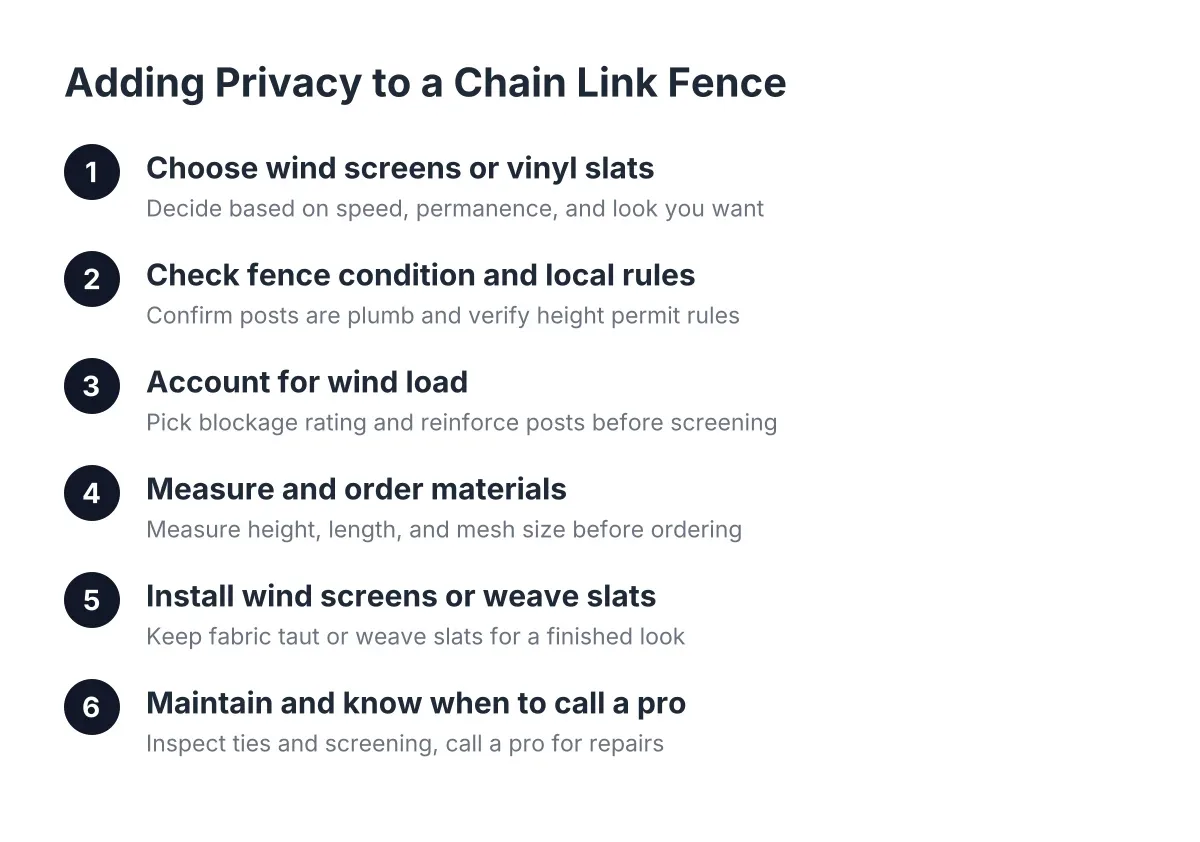
Tearing out a fence set on the wrong line costs far more than a survey, so when the boundary is genuinely disputed, spend on the survey before you spend on the fence. That is a limitation worth being honest about: no installer, ours included, can resolve a legal boundary question for you, and a contested line may need a surveyor or an attorney before any posts go in.
How to Choose Between Galvanized and Vinyl Coated
Searching for a chain link fence near me will surface plenty of installers, but the material decision is yours, and it comes down to four questions:
- Will you see it daily? Street-facing or window-facing runs favor vinyl coated. Hidden utility runs favor galvanized.
- Is it near salt or standing water? Coated fabric earns its cost along driveways, sidewalks, and low wet spots.
- Is this one property or several? Landlords standardizing across units often pick one coated color for consistency and simpler repairs over the years.
- Is budget the controlling factor? Galvanized delivers the same containment and the same security for less per foot. There is no shame in the silver fence; it has guarded New England yards for generations.
As of 2026, both options remain widely stocked by suppliers, so lead times rarely force the choice. Either way, the fence only performs as well as its installation. Posts set below the frost line, fabric stretched tight, and gates hung square matter more to longevity than the coating ever will. Get the line right, get the posts right, and either version of this fence will outlast the dispute that prompted it.
If you need chain link fence installation, Western Mass Fence Co can help.
Prefer to talk it through? Call (413) 305-1309 — a quick call is usually the fastest way to get a straight answer for your situation.