Chain Link Fence Terms Explained: A Plain-English Glossary
If you're pricing a fence for the first time, the quotes can read like another language. This chain link fence glossary breaks down the terms Springfield-area homeowners run into when comparing estimates, so you can read a quote line by line, ask the right questions, and spot a thin spec before you sign. Every entry starts with a plain definition, then tells you why the term matters to your project and your fence cost. No sales pitch, just the vocabulary you need.
- Fabric (Mesh): the woven wire itself
- Gauge: wire thickness, lower is thicker
- Mesh Size: the diamond opening width
- Galvanized: zinc coating that fights rust
- Vinyl-Coated: color coating over the wire
- Terminal Post: the heavy posts at ends and corners
- Line Post: the posts between terminals
- Top Rail: the horizontal pipe along the top
- Tension Bar: flat bar woven into the fabric at ends
- Tension Band: clamps holding the bar to the post
- Post Cap: the fitting that tops each post
- Footing: the concrete around each post
- Frost Line: how deep the ground freezes
- Stretching: pulling the fabric tight
- Contour vs. Stepped Installation: how a fence handles slopes
- Gate Hardware: hinges, latches, and drop rods
- Cost Per Foot: how fence pricing is quoted
- Privacy Slats: inserts that block the view
Chain Link Fence Glossary: The Parts of the Fence
Most of the jargon in a chain link fence glossary describes hardware, so start here. Once you know what each piece does, a parts list stops looking like alphabet soup.
Fabric (Mesh)
Fabric is the woven wire mesh that makes up the body of a chain link fence; installers also call it mesh or chain link fabric. It arrives in rolls and gets stretched between posts during installation. The fabric is what you're mostly paying for in materials, so its thickness and coating drive a big share of your fence cost. When an estimate lists fabric specs, that line tells you how heavy-duty the fence actually is.
Gauge
Gauge is the measurement of wire thickness in chain link fabric, and the rule is backwards: a lower gauge number means thicker, stronger wire. Residential fence projects usually use a lighter gauge than commercial fence projects, which need wire that stands up to more abuse. Two quotes with different prices may simply be quoting different gauges. Always compare gauge to gauge before deciding one fence company is cheaper than another.
Mesh Size
Mesh size means the width of the diamond-shaped opening in chain link fabric, measured between the wires. Smaller diamonds use more wire, which makes the fence stiffer, harder to climb, and more expensive. Larger diamonds cost less and work fine for marking a yard or containing a dog. If a quote lists mesh size, it is telling you how tight and secure the weave will be.
Galvanized
Galvanized means the steel wire has a zinc coating that protects it from rust. It is the classic silver-colored chain link finish and the baseline for most quotes. The coating matters here in New England, where road salt and wet winters eat unprotected steel. For a closer look at how finishes hold up, see galvanized vs. vinyl-coated chain link.
Vinyl-Coated
Vinyl-coated chain link is galvanized wire with a bonded layer of colored vinyl over it, usually black, green, or brown. The coating adds a second barrier against rust and helps the fence blend into landscaping instead of standing out. It costs more per foot than plain galvanized, so it shows up as a line-item upgrade on an estimate. Many homeowners choose it for front yards where looks matter.
Terminal Post
A terminal post is the heavier post set at the ends, corners, and gate openings of a fence, where the fabric gets anchored and pulled tight. Terminal posts take the full pulling force of the stretched fabric, so they are thicker and set in larger concrete footings than the posts in between. A layout with lots of corners needs more terminal posts, and that raises cost. Count the corners on your property line and you can predict part of your fence estimate.
Line Post
A line post is one of the intermediate posts spaced between terminal posts to hold the fence upright along its run. Line posts carry less strain than terminals, so they are lighter and cheaper. Post spacing affects how rigid the finished fence feels and how many holes get dug. If one quote spaces posts farther apart than another, the material savings come with a floppier fence.
Top Rail
A top rail is the horizontal pipe that runs along the top of a chain link fence, connecting the posts and giving the fabric its upper edge. It keeps the fence line straight and stops the top of the fabric from sagging. Most residential fence installs include it as standard. Some budget or temporary setups swap it for a tension wire, so check which one your quote includes.
Tension Bar
A tension bar is a flat vertical bar woven through the end of the chain link fabric so the mesh can be anchored to a terminal post. Without it, you would be pulling on individual wires and the fabric would deform. It is a small part with a big job: it spreads the stretching force evenly down the full height of the fence. Missing or skipped tension bars are a sign of rushed work.
Tension Band
A tension band is the metal clamp that wraps around a terminal post and bolts to the tension bar, locking the stretched fabric in place. Several bands run down each terminal post, spaced along its height. They are cheap parts, but loose or missing bands let the fabric pull away from the post over time. On an older fence, failed bands are a common repair item.
Post Cap
A post cap is the fitting that covers the open top of a fence post. Caps keep rain and snowmelt out of the hollow post, which matters because water that freezes inside a post can split it or rust it from the inside. Loop caps on line posts also hold the top rail in place. They are inexpensive, and a quote without them is cutting a corner you will notice in a few winters.
How the Chain Link Fence Glossary Applies to Installation
Footing
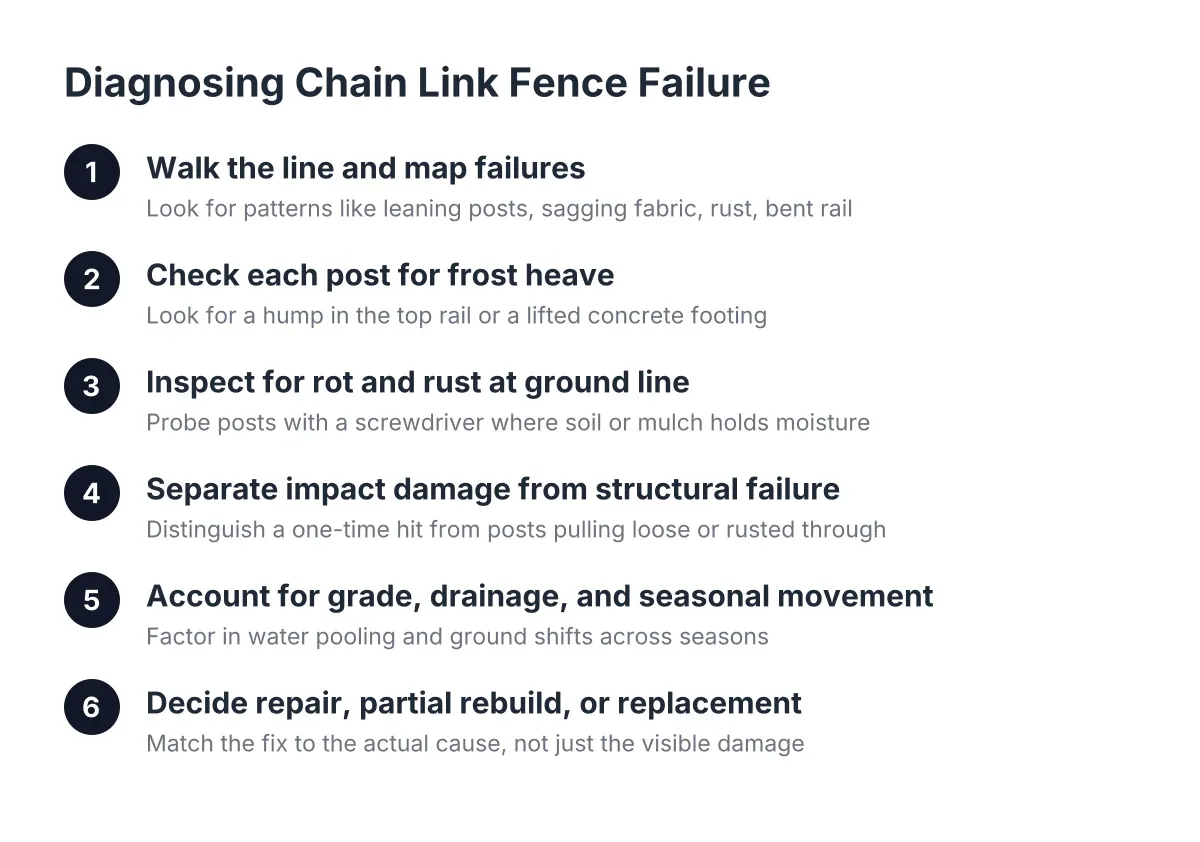
A footing is the concrete poured around the base of a fence post to hold it solid in the ground. Footing depth and width decide whether your fence stays plumb or starts leaning after a few seasons. In the Springfield area, footings must reach below the depth where the ground freezes, or frost will push the posts up. Ask any fence company how deep they set posts; the answer tells you a lot about their work.
Frost Line
The frost line is the depth to which the ground freezes in winter. Posts set above it get lifted by frost heave, the push of freezing, expanding soil, and the fence slowly goes crooked. This is a bigger deal in Massachusetts than in milder climates, and it is a main reason Springfield winters shorten the life of a poorly set fence. A local installer who talks about frost depth unprompted is thinking about your fence ten years out.
Stretching
Stretching means pulling the chain link fabric tight between terminal posts before anchoring it, usually with a come-along or fence puller. Proper stretching is what separates a crisp, drum-tight fence from a saggy one. Fabric that was stretched poorly bellies out, rattles in wind, and sags under snow load. You cannot see stretching on a quote, but you can ask how the crew does it.
Contour vs. Stepped Installation
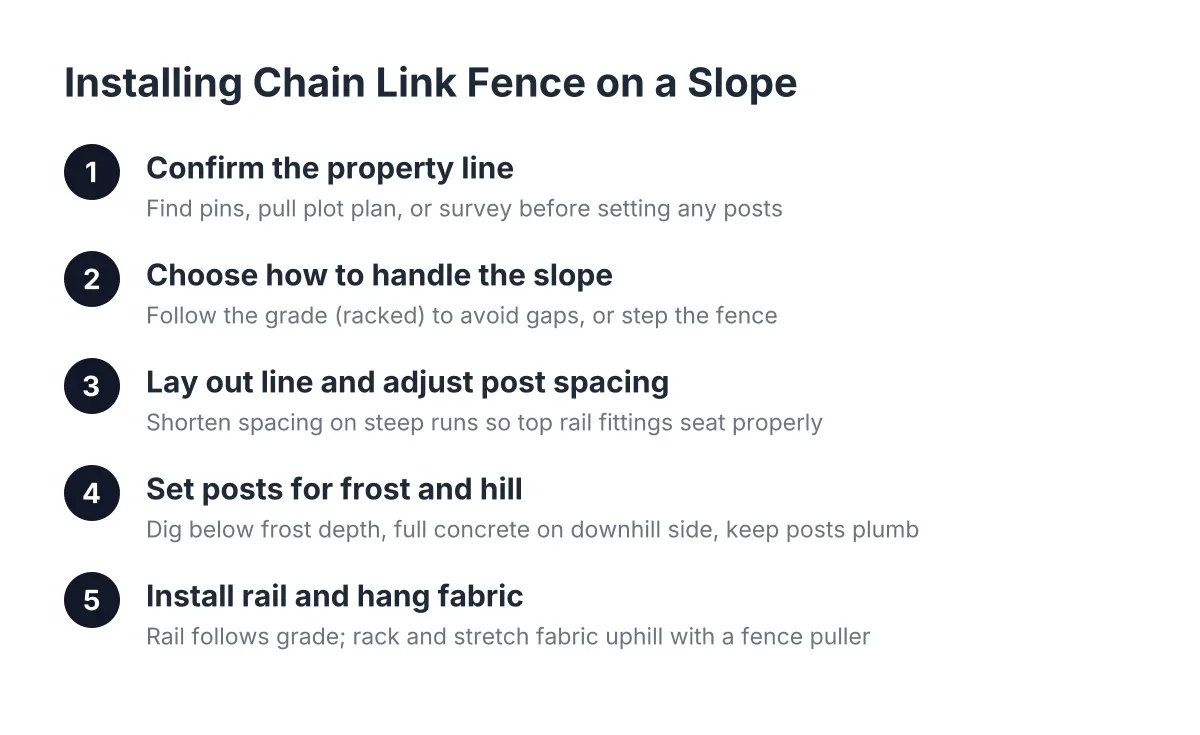
Contour installation means the fence follows the slope of the ground, while stepped installation keeps each section level and drops in steps like a staircase. Chain link usually follows the contour, since the flexible fabric bends with grade changes that would stop a rigid panel fence. Many older Springfield-area lots have real grade changes, so this choice affects both the look and the gaps under your fence. Here is how installing chain link on a slope actually works.
Gate Hardware
Gate hardware means the hinges, latches, and drop rods that make a gate swing, close, and lock. Gates are the hardest-working part of any fence and the first place problems show up, so hardware quality matters more here than anywhere else. A double drive gate for vehicle access needs a drop rod to pin one leaf to the ground. Each gate adds its own line to your fence estimate, so decide how many you need before you ask for pricing.
Pricing and Paperwork
Cost Per Foot
Cost per foot is the standard way fence pricing gets quoted: the total installed price divided by the length of the fence line. It bundles materials, labor, and footings into one comparable number. But the number only means something when the specs match, since height, gauge, coating, and gate count all move it. Our chain link fence cost guide walks through the factors that push the per-foot number up or down.
Privacy Slats
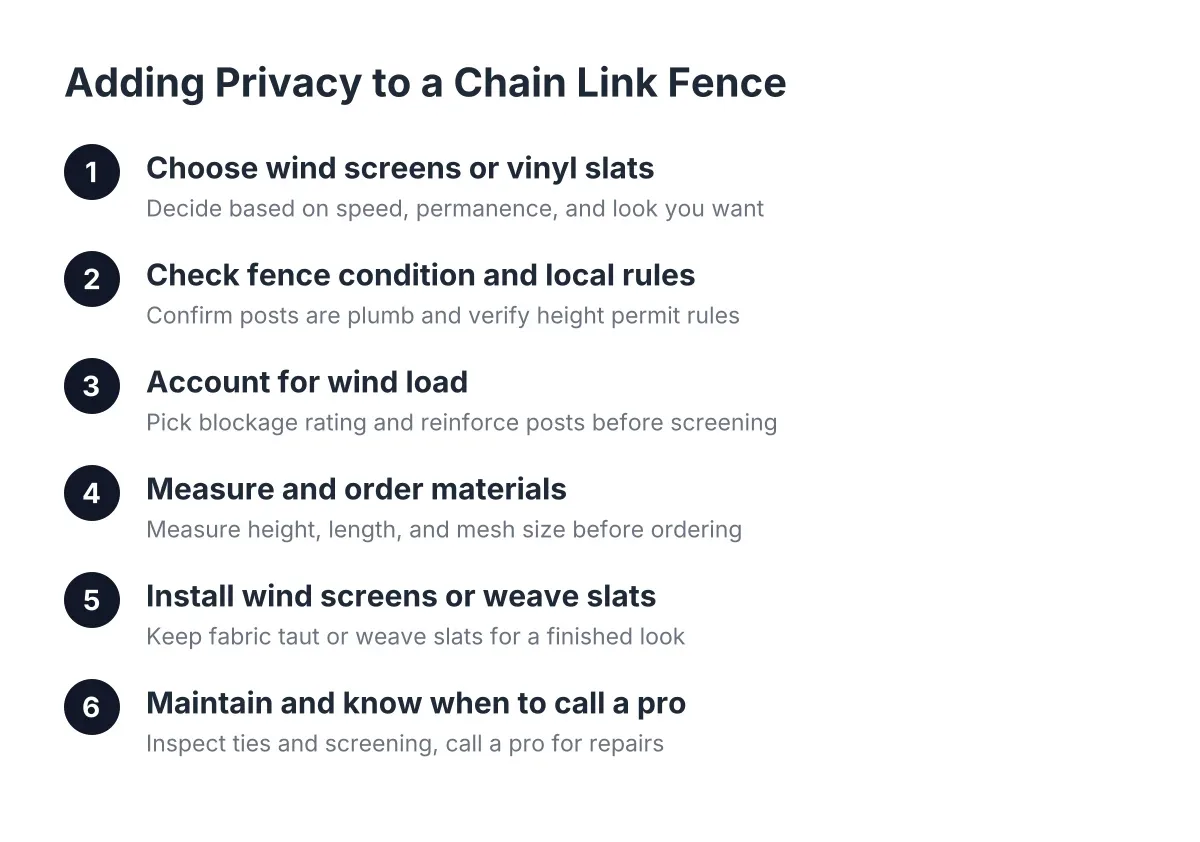
Privacy slats are strips of plastic or aluminum woven vertically through chain link fabric to block the view through the diamonds. They turn an open fence into a semi-private screen without replacing it, which makes them a common add-on for yards and commercial lots. Slats add material and labor cost per foot and catch more wind, which puts extra load on posts. If privacy is the whole goal, compare slatted chain link against a wood fence or vinyl fence before deciding.
Using These Terms
What this chain link fence glossary gives you is the ability to read a fence estimate the way an installer does: gauge, coating, post spacing, footing depth, and gate count, line by line. When two quotes differ, you can now ask why instead of guessing. If you are comparing options for a Springfield-area property, bring these terms to the conversation and any honest fence company will meet you there.
If you need chain link fence installation, Western Mass Fence Co can help.
Prefer to talk it through? Call (413) 305-1309 — a quick call is usually the fastest way to get a straight answer for your situation.