Vinyl Fence Repair: How to Fix Cracks, Warping, and Broken Post Caps
Vinyl fence repair for cracks, warped panels, and broken post caps is one of the more forgiving fixes a property owner can take on, if you handle it in the right order. Vinyl does not rot like wood, but it does crack from impact, warp from heat and poor support, and lose post caps to weather and loose glue. This guide walks through vinyl fence crack repair step by step, shows you which fixes you can do yourself, and flags the point where a vinyl fence problem stops being a patch job and becomes a panel or post replacement.
If you own rental properties around Springfield, this matters twice over. A cracked vinyl fence at a rental unit is the kind of thing a tenant reports once, you forget about, and then a code notice or a turnover inspection makes urgent. Catching it at the crack stage keeps the cost in handyman territory instead of fence replacement territory.
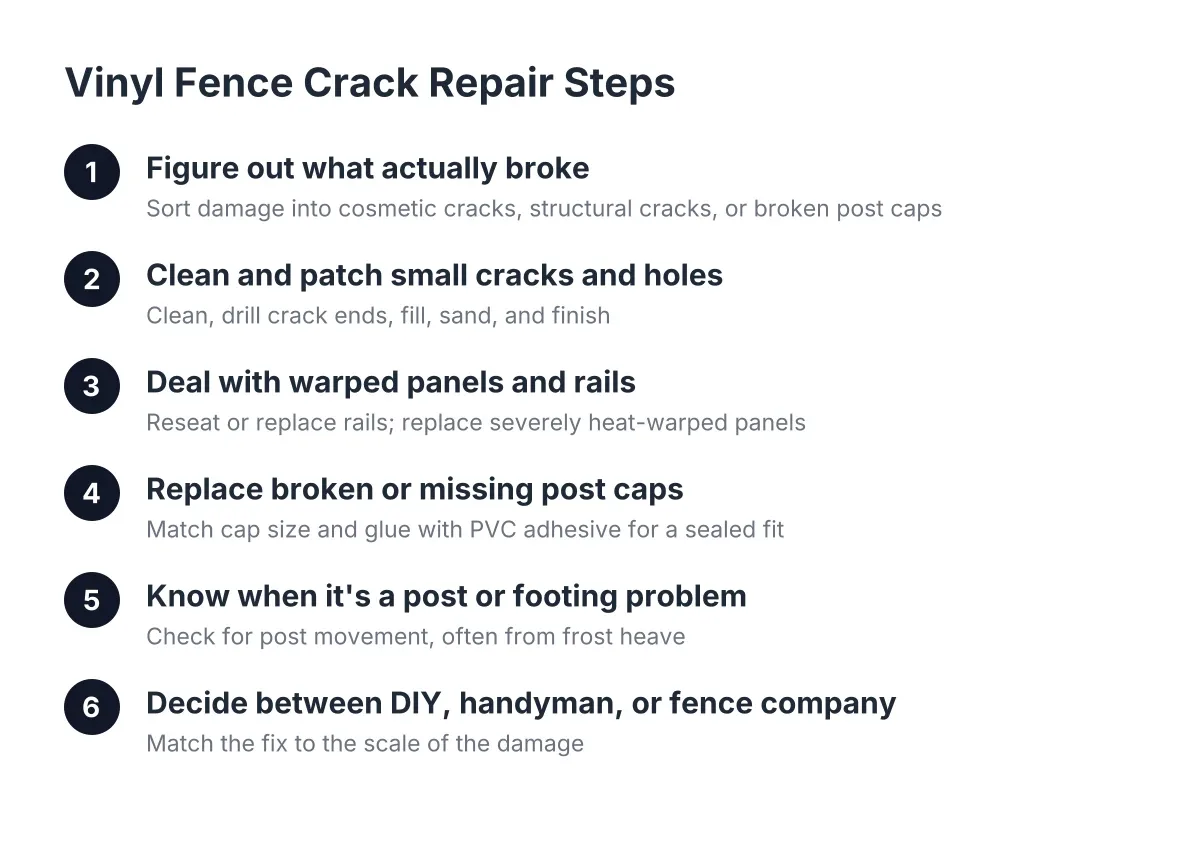
Step 1: Figure Out What Actually Broke
Before buying a vinyl fence crack repair kit or calling anyone, walk the fence line and sort the damage into three buckets:
- Cosmetic cracks and holes. Hairline cracks, small punctures from a string trimmer or thrown rock, and chips in a panel face. These are patchable.
- Structural cracks. Cracks that run through a rail, split a post, or spread when you push on the panel. These usually mean replacing that component.
- Missing or broken post caps. Caps blow off, crack in cold weather, or get knocked loose. Cheap fix, but skip it and water sits inside the post all winter.
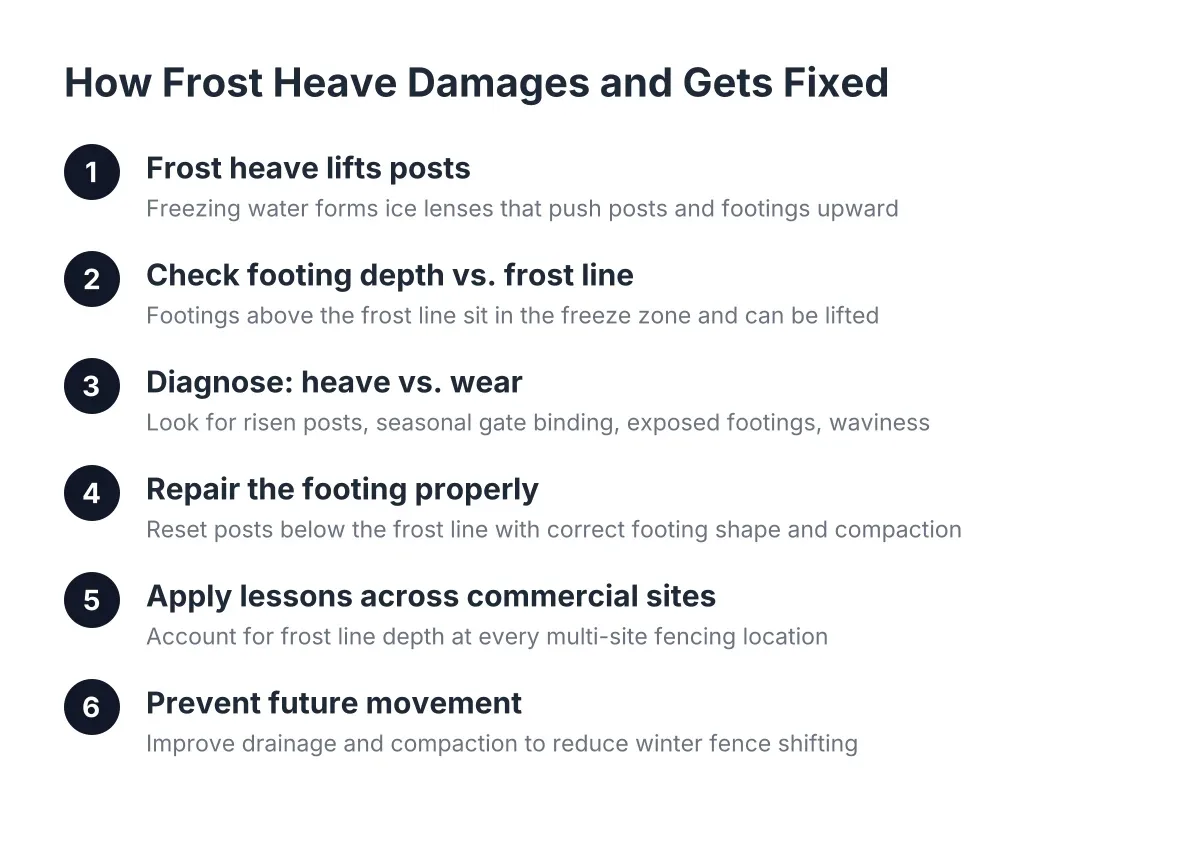
Push on each post near the damage. The posts are the foundation of a vinyl fence system; they carry the structural load, and the panels just hang between them. If a post moves at the base, no amount of panel patching will keep that section standing. That is a different repair, and in the Springfield area it often traces back to frost heave working on the footing rather than anything wrong with the vinyl itself.
Repairing Vinyl Fence Cracks: When It Works and When It Does Not
A vinyl fence crack is repairable when it sits in the flat face of a panel or picket, measures a few inches or less, and the surrounding material is still rigid. A crack is not worth patching when it runs through a rail or post, sits at a joint, or flexes under hand pressure. Patch the first kind; replace the second.
There is a practical reason for that line. A patched panel face carries no load, so the repair only has to look decent and keep water out. A rail or post carries the fence. Additionally, a patch on a load-bearing crack will reopen with the first heavy snow load or a gate slam, and you will have paid for the repair twice.
Step 2: Clean and Patch Small Cracks and Holes
For cosmetic damage, here is how to fix a cracked vinyl fence face:
- Clean the area. Wash with soap and water, rinse, and let it dry completely. Adhesive will not bond to dirty or damp vinyl.
- Stop the crack from spreading. Drill a small hole at each end of the crack. This relieves the stress point so the crack cannot keep running.
- Fill the crack. Use a vinyl fence crack repair kit or a PVC-compatible adhesive filler. For holes, expanding foam behind the panel face gives the filler something to sit against; shave it flush once cured.
- Sand and finish. Sand the patch smooth with fine-grit paper, then apply a color-matched coating if the kit includes one.
Set realistic expectations on appearance. A patch on white vinyl in direct sun will show faintly up close, especially on an older fence that has yellowed slightly. On a rental property most owners accept that; on the street-facing run of an owner-occupied home, you may prefer to swap the whole picket or panel section instead.
The same method covers how to fix a hole in a vinyl fence, with one caution. A hole bigger than your palm usually means the panel face has lost too much material to patch cleanly, and a replacement picket or panel section is the better spend.
Step 3: Deal With Warped Panels and Rails
Warping has two common causes, and the fix depends on which one you have. Heat warping shows up as a gentle bow across a panel that gets full afternoon sun, often where a dark surface nearby, like a driveway or dark mulch, reflects heat onto the fence. Structural sag shows up as rails dipping between posts, usually because a rail cracked, a rail end slipped out of its post opening, or the post spacing was stretched too far at installation.
For a sagging rail, pull the panel, check the rail ends, and reseat or replace the rail. Vinyl rails are cut to length to fit snugly between posts and secured with screws made for the job, so a replacement rail from the same fence line or manufacturer should drop in. Mixing brands rarely works; rail profiles and post openings vary enough that a near-match will rattle or refuse to seat.
Heat-warped panels are the trade-off case. Mild bowing sometimes relaxes in cooler weather, and there is no reliable patch for it. If the bow is severe or permanent, replacement is the honest answer, and it is worth asking whether that section needs a mid-panel support or different spacing so the new panel does not repeat the failure.
Step 4: Replace Broken or Missing Post Caps
Post caps are the five-minute repair that saves you the five-hundred-dollar one. An open post top collects rain, and around Springfield that water freezes, expands, and works on the post from the inside through every freeze-thaw cycle of the winter.
Match the cap to your post size first; common vinyl posts come in a few standard widths, so measure the outside dimension before ordering. Then install it the way installers do: run a bead of PVC glue around the inside rim of the cap and press it onto the post. That creates a sealed, permanent attachment that wind will not lift. A cap just pressed on dry is the one you find in the neighbor's yard after the first nor'easter.
While you are up there, glance down the fence line. Rail openings in the posts should line up straight down the run. A post whose openings have rotated out of line has shifted in its footing, which is an early warning worth acting on before a panel drops.
Step 5: Know When a Crack Is Really a Post or Footing Problem
Suppose you own a three-unit property in Springfield and a tenant reports a cracked vinyl panel after a windstorm. You go patch it, and a month later the same panel has a new crack. In that scenario, the panel is not the problem. A loose or heaved post is flexing the whole section, and the panel is cracking at its stress points every time the wind loads it.
Post and footing work is where DIY vinyl fence repair for cracks ends for most owners. Resetting a vinyl post means digging out or breaking a concrete footing, getting the new post plumb with its rail openings aligned exactly along the fence line, and pouring concrete that will survive New England frost. Corner and end posts add another wrinkle; they are built thicker than line posts for strength, so they are not interchangeable with the spares in your garage. Tight spots, like a post butting against a neighboring fence or squeezed near a tree, sometimes call for a metal pipe reinforcement with the vinyl post sleeved over it, which is not a stock-parts fix.
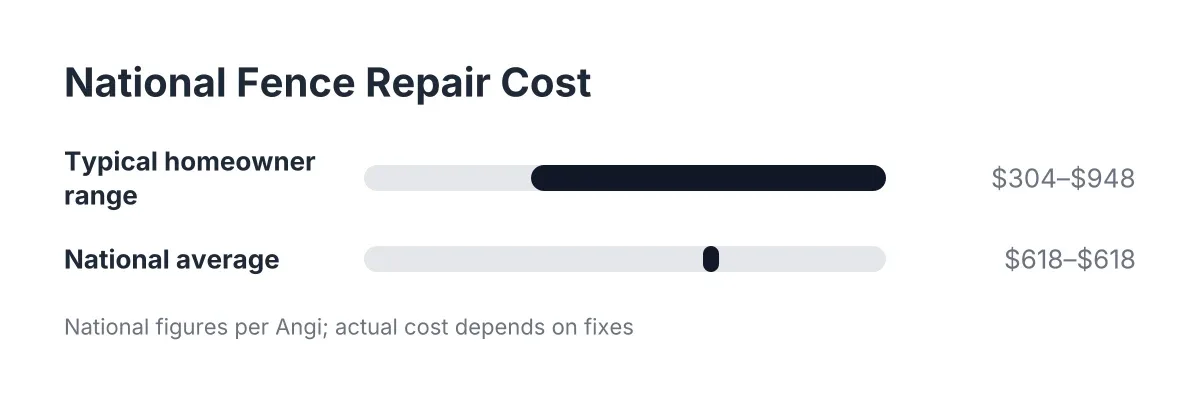
This is also where cost perspective helps. According to Angi, the national average cost of fence repair is $618, with most homeowners paying between $304 and $948, while full fence installation averages $3,277 nationally. Those are national figures, not Springfield quotes, and your number depends on what broke and how many sections are involved. The takeaway is the gap between the two: a timely repair runs a fraction of what replacement does, which is why landlords who walk their fence lines once a year tend to spend less per property over time.
Step 6: Decide Between DIY, a Handyman, and a Fence Company
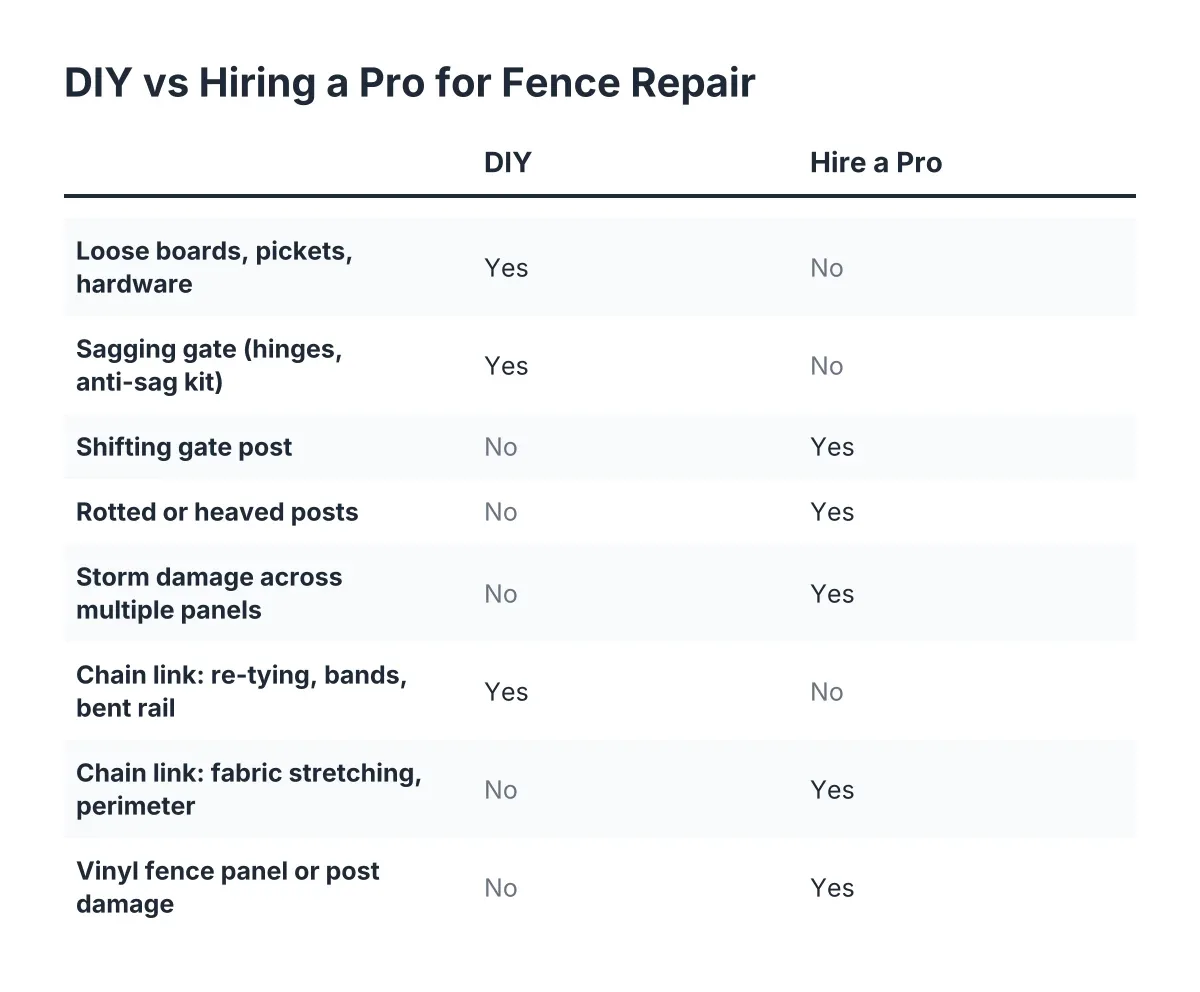
Searching for fence repair near me will surface everything from solo handymen to full fence companies, and the right call depends on the failure, not the price list. A fair way to split it:
- DIY: small cracks, holes, post caps, and reseating a slipped rail. Low risk, cheap parts, hard to make worse.
- Handyman: swapping a single matching panel or picket when the posts are solid and the parts are on hand.
- Fence company: anything involving posts, footings, gates, multiple damaged sections, or matching discontinued vinyl profiles. Also the right call when you are weighing repair against replacement and want straight numbers on both, including cost per foot if replacement is on the table.
For a multi-property owner, there is one more factor: repeatability. If you own several Springfield-area rentals with vinyl or chain link fence between them, a local fence company that has already seen your properties can quote the next repair faster and keep materials consistent across units, which matters when units turn over on different schedules.
One honest limitation: no repair makes aging vinyl new. If a fence is brittle enough that it cracks every winter in multiple spots, patching has become a subscription, and it is worth pricing a fence replacement so the next crack is a decision instead of a surprise.
Quick Reference: Vinyl Fence Crack Repair at a Glance
- Hairline crack or small hole in a panel face: drill stop holes, fill with a vinyl fence crack repair kit, sand, done.
- Crack in a rail or post: replace the component; patches on load-bearing parts fail.
- Warped panel from heat: no reliable patch; replace if severe and address the heat source.
- Missing post cap: glue a matching cap on with PVC glue inside the rim before winter.
- Loose or leaning post: footing problem; bring in a pro before more panels crack.
- Repeated cracks across the fence: get repair and replacement priced side by side.
Handled in that order, vinyl fence crack repair for cracks and caps stays a Saturday project, and the bigger structural problems get caught while they are still one post instead of a whole run.
If you need fence repair, Western Mass Fence Co can help.
Prefer to talk it through? Call (413) 305-1309 — a quick call is usually the fastest way to get a straight answer for your situation.