Wrought Iron Fence Design Styles: Victorian, Modern, and Custom Patterns Explained
If you manage commercial properties or rental units around Springfield, picking a wrought iron fence style is not a decorating decision. It affects your fence cost per foot, your maintenance schedule across every site, and how a property reads from the street to tenants and insurers. This guide walks you through choosing a design step by step, from classic Victorian patterns to clean modern lines, and shows where ornamental aluminum makes more sense than true iron for a multi-property portfolio.
One note before the steps: most "wrought iron" fencing installed today is ornamental metal fencing, usually steel or aluminum, built to look like traditional iron. True hand-forged wrought iron still exists, but it is custom work at custom prices. The design decisions below apply either way.
Step 1: Decide What the Fence Has to Do Before Picking a Look
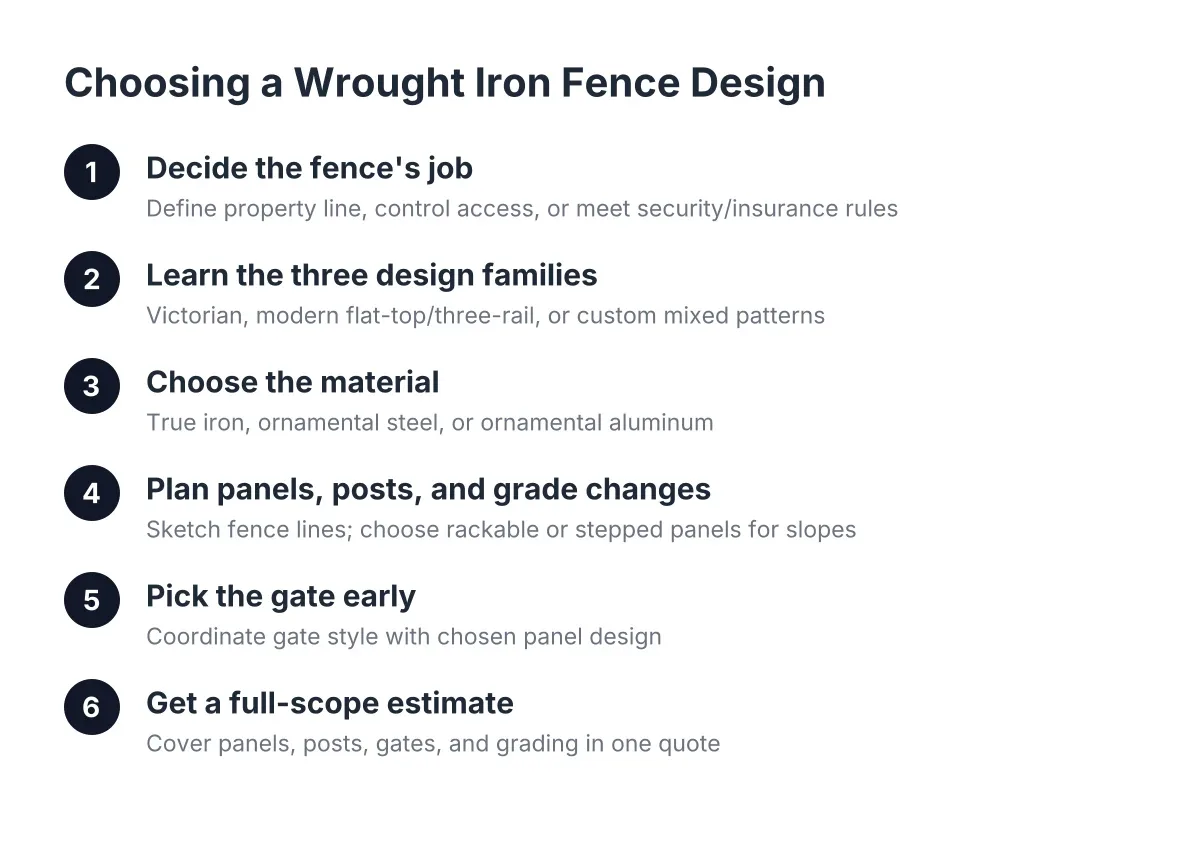
Start with function, then style. An ornamental fence at a commercial site usually has to do one of three jobs: define the property line, control foot traffic and access, or meet a security or insurance requirement for height and construction. Each job narrows your design options before you ever look at a catalog.
For example, say you own a six-unit building in Springfield and your insurer wants a barrier along the parking area. A flat-top ornamental panel at a standard commercial height handles that. However, if the goal is keeping people from climbing over, you will want a design with extended pickets or finials above the top rail, which changes both the look and the price.
Write down the job first. It keeps you from paying for decorative details one property needs and five do not.
Step 2: Learn the Three Main Wrought Iron Fence Design Families
Wrought iron fence designs fall into three broad families: traditional Victorian, flat-top modern, and custom patterns. Victorian styles use finials, scrollwork, and pressed spear points for a classic New England look. Modern styles run clean horizontal rails with plain vertical pickets. Custom patterns mix elements, rings, baskets, or alternating picket heights, for a one-off appearance.
Victorian and Classic Patterns
Victorian designs are what most people picture when they hear wrought iron fence: spear-point pickets, decorative finials, and sometimes scroll accents between rails. They suit the older housing stock common across the Springfield area, especially multi-family Victorians and brick commercial buildings where a plain fence would look out of place.
The trade-off is cost and cleaning. Every finial and scroll is extra material and extra labor, and ornate patterns collect more debris and take longer to touch up if coatings chip.
Modern Flat-Top and Three-Rail Styles
Flat-top panels put the pickets below or flush with the top rail. The look is clean and the panels are easier to produce, which usually makes them the budget-friendly end of ornamental fencing. Three-rail versions add a mid rail for rigidity, which matters on longer commercial runs and on properties where the fence will take abuse from carts, bikes, or snow piles.
For a landlord standardizing across several rentals, flat-top panels are the practical default. They match almost any building style, and replacing a damaged panel later is straightforward because the design is not unusual.
Custom and Mixed Patterns
Custom patterns, such as alternating picket heights, ring accents, or arched panel tops, genuinely cost more because they take more material and more labor, not because installers pad the quote. The same logic applies here that applies to custom wood fence styles: anything beyond a standard flat panel adds fabrication time. Reserve custom work for the street-facing section of a flagship property and run standard panels everywhere else.
Step 3: Choose Between True Iron, Steel, and Ornamental Aluminum
Material matters more than pattern for long-term cost. In the Springfield area, with its freeze-thaw cycles, road salt, and wet springs, coating failure and rust are the main enemies of ferrous metal fencing.
Here is how the options compare for a multi-property owner:
- True wrought iron: Hand-forged, heavy, and the most expensive option. Appropriate for historic restoration work, rarely the right call for rental or commercial sites.
- Ornamental steel: Strong and iron-like in appearance. Needs a quality powder coat, and any scratch that reaches bare metal can rust, so plan on periodic touch-up.
- Ornamental aluminum: The same classic look without rust. Lighter, lower maintenance, and the common choice for residential fence and commercial fence projects where nobody is on site to repaint every few years.
Therefore, if your goal is one dependable spec you can repeat across five properties without babysitting maintenance, ornamental aluminum fence installation is usually the answer. It delivers the wrought iron look with far less upkeep in New England weather.
Step 4: Plan Panels, Posts, and Grade Changes on Paper
Ornamental fencing installs in prefabricated panels, typically with posts set between each one. Before anyone quotes you, sketch each fence line and note where the ground rises or falls. Springfield-area lots often have grade changes, old retaining walls, and odd property lines, and those details drive layout decisions.
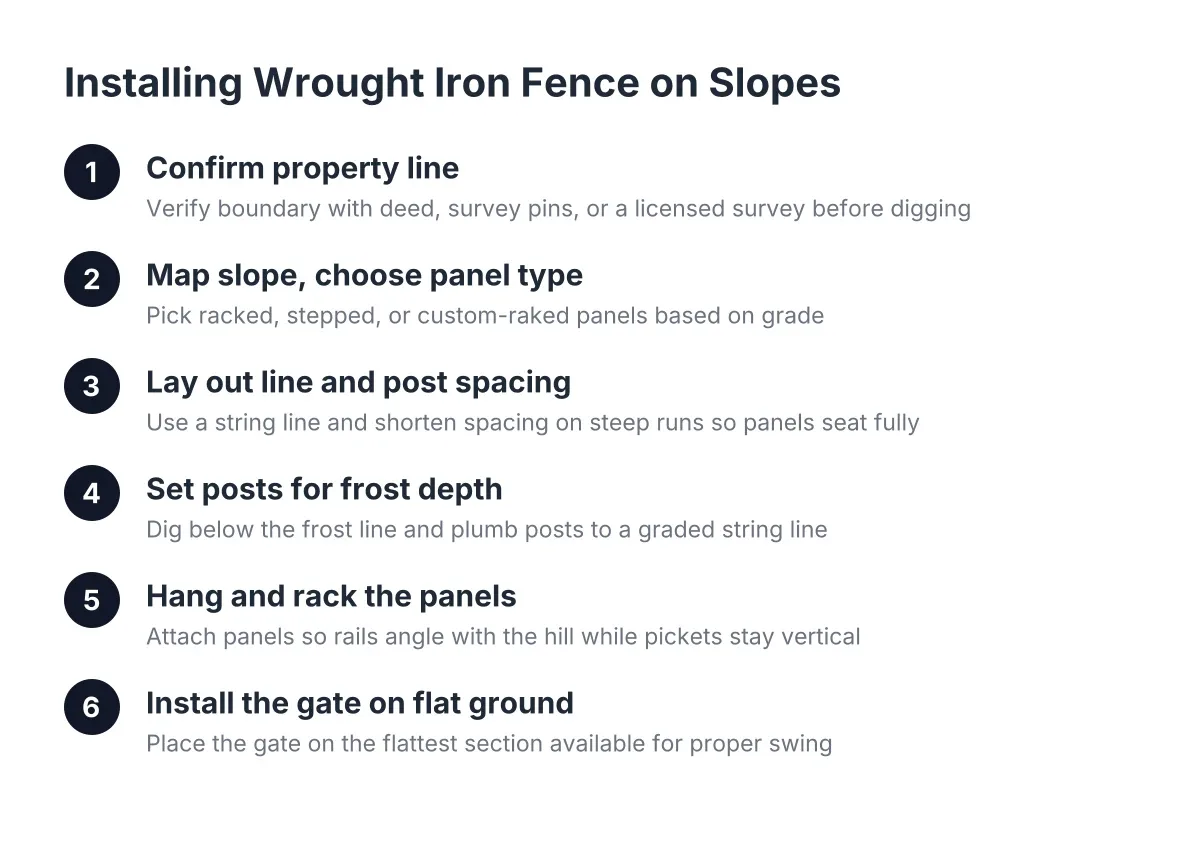
Panels handle slopes one of two ways. Rackable panels pivot to follow the grade, keeping the bottom rail parallel to the ground. Stepped panels stay level and drop in increments, which leaves triangular gaps under the fence on slopes. Stepping looks formal on a Victorian design; racking works better where you need to close gaps for pets or security.
In addition, think about where cut or shortened panels will land. A careful installer places full panels along the most visible stretches and tucks cut sections into corners or behind buildings, so the finished job reads clean from the street.
Step 5: Pick Your Wrought Iron Fence Gate Early
Gates are the hardest-working part of any fence and the first thing to fail when they are an afterthought. Decide gate locations, widths, and swing direction while you are still choosing panel designs, because the gate should match the fence pattern and the hardware has to suit the use.
A walk gate at a rental entry needs a self-closing hinge and a latch tenants cannot break in a season. A drive gate for a commercial lot needs wider posts, often set deeper and in more concrete, to carry the weight without sagging. Matching a wrought iron fence gate to a custom panel pattern is fabrication work, so order it with the fence, not after.
Step 6: Get a Fence Estimate That Covers the Full Scope
A proper quote for ornamental fence installation should itemize the work, not hand you one number. As of 2026, expect a legitimate fence estimate to spell out:
- Linear footage, panel style, height, and material
- Post count, footing depth, and concrete, which matters in this region because posts must be set below frost depth to survive seasonal ground movement
- Gates, hardware, and any custom fabrication
- Removal and haul-away of the old fence if this is a fence replacement
- Site factors such as slopes, ledge, tight access, or landscaping to work around
For budget context, Angi reports overall fence installation costs average $3,277 nationally, with most homeowners paying between $1,860 and $4,843. Ornamental metal typically runs above entry-level chain link fence pricing and varies with height, pattern, and site conditions, so treat per-foot numbers as ranges until someone has walked the property. If you are quoting several properties at once, ask the fence company to price them together; consistent specs across sites make budgeting and future fence repair simpler.
Step 7: Know What to Handle Yourself and When to Call a Pro
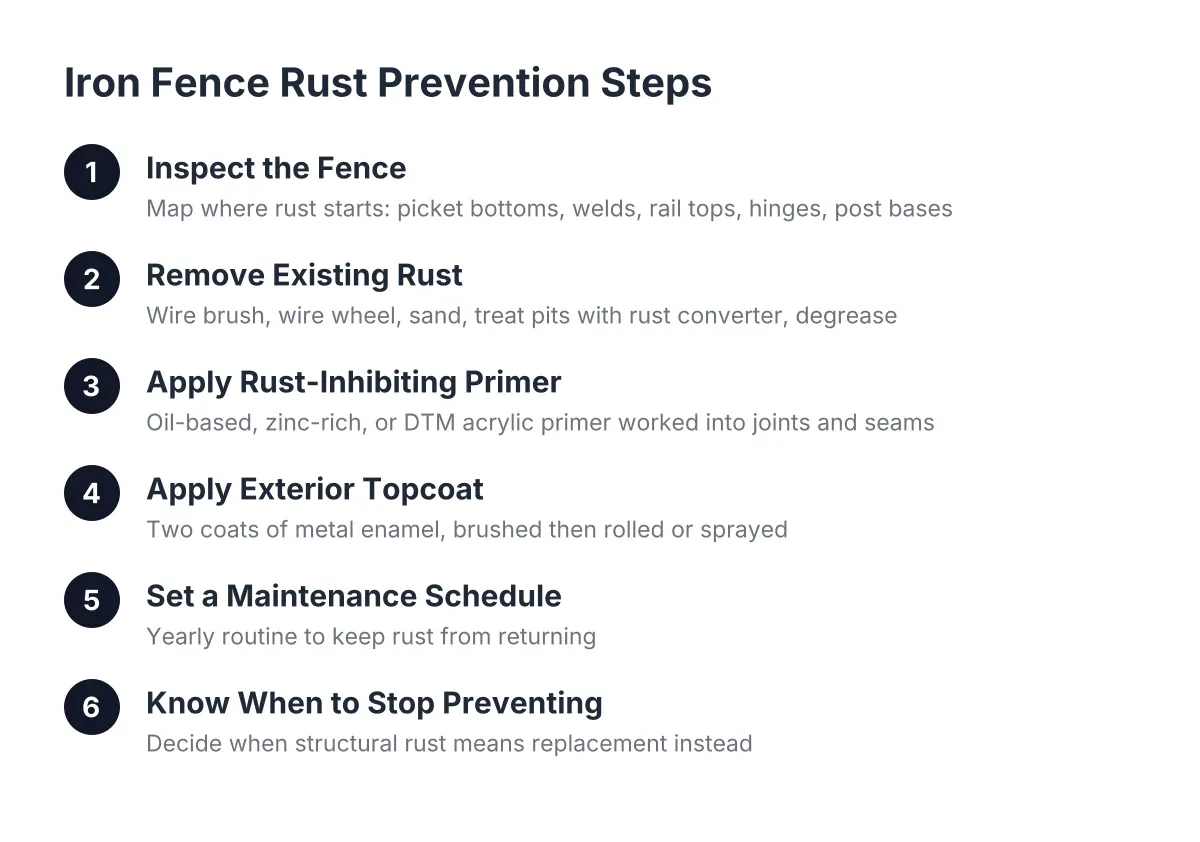
You can handle the planning steps on your own: confirming property lines, checking local fencing rules and any permit requirements with your municipality, and choosing style and height. Light upkeep, such as washing panels and touching up small coating chips on steel, is also reasonable DIY.
However, installation of ornamental metal fencing is not a good DIY project for most property owners. Posts need to be set plumb, aligned over long runs, and footed below frost depth, and panel systems are unforgiving of layout errors. Call a professional immediately if you see leaning posts, a sagging gate, or rust at the base of steel pickets; those problems get more expensive the longer they sit. Also note that historic districts and some commercial zoning in the area can restrict fence height and style, so verify requirements before ordering custom panels.
Step 8: Standardize the Spec Across Your Properties
Once the first install is done, document it: panel style, height, color, material, gate hardware, and the installer who did the work. Suppose a tenant backs into a panel at one of your other buildings next year. With a standardized spec, the repair is a phone call and a panel swap instead of a new design decision.
This is where working with one local fence company across your portfolio pays off. They already know your spec, your sites, and your grade quirks, and a second fence installation goes faster than the first.
If you are planning ornamental fencing for a Springfield-area property, or standardizing fence work across several, Western Mass Fence Co can walk the sites, talk through design options honestly, and put together an estimate that holds up for budgeting. Reach out when you are ready to get a quote on the calendar.
If you need fence installation, Western Mass Fence Co can help.
Prefer to talk it through? Call (413) 305-1309 — a quick call is usually the fastest way to get a straight answer for your situation.