Chain Link vs. Vinyl vs. Wood Fence: Which Is Cheapest Upfront in 2026?
If you need a fence on a property line and you want it done once, the first question is usually price. Comparing chain link, vinyl, and wood fencing comes down to a simple pattern: chain link almost always costs the least upfront, wood sits in the middle, and vinyl costs the most on day one. The cheapest fence material for most Springfield-area residential projects follows this order, but the gaps between the three shift based on height, style, and your yard.
This guide walks through the comparison step by step, the way an installer would walk a property line with you. It is written for the homeowner who has already decided a fence is going in, maybe because a neighbor's dog keeps crossing into the yard or a new neighbor questioned where the old fence sits, and now needs to pick a material without blowing the budget or putting posts in the wrong spot.
For reference, Angi puts the national average for fence installation at $3,277, with most homeowners paying between $1,860 and $4,843. Where your project lands inside or outside that range depends heavily on which of the three materials you choose and how your lot behaves.
Step 1: Understanding the Cheapest Fence Material Options
Start with the honest baseline. For the same length of fence line, the cost per foot typically ranks like this:
- Chain link fence: lowest upfront cost. The material is light, the framework is simple, and installation moves fast. Galvanized chain link is the budget floor; black vinyl-coated chain link costs more but still usually undercuts wood.
- Wood fence: middle of the range. A standard flat-face privacy fence in pressure-treated pine is the most common mid-priced option. Cedar costs more than pine, and custom styles push the price up further.
- Vinyl fence: highest upfront cost. The panels and posts cost more as material, and the posts act as the foundation of the whole system, so they have to be set carefully. You pay more on day one in exchange for no staining or sealing later.
So is vinyl fence cheaper than chain link? No, not upfront, and usually not by a small margin. If the only goal is the least expensive barrier that legally and physically marks a line, chain link wins. If the goal includes privacy, wood is typically the cheapest way to get a solid six-foot screen, because chain link needs privacy slats or screening added to block sightlines, and that add-on erodes its price advantage.
Step 2: Match the Material to the Problem You Are Solving
Cheapest upfront only matters if the fence actually fixes your problem. Walk through what triggered this project before you lock in a material.
When Chain Link Is the Right Cheap Answer
A chain link fence solves containment problems at the lowest cost. If the issue is a dog, kids, or a pool code requirement, and you do not care whether the neighbor can see through it, chain link is hard to beat. It handles New England winters well, the galvanized framework shrugs off moisture, and repairs to the mesh are straightforward.
However, chain link does nothing for privacy and little for a dispute where sightlines are the irritation. A see-through fence on a contested line marks the boundary but does not end the staring contest.
When Wood Earns Its Higher Price
A wood fence is usually the cheapest path to full privacy. A six-foot solid panel fence blocks the view, muffles some noise, and reads as a clear, permanent boundary. For a property line conflict, that visual finality matters; the line stops being a conversation.
Keep style in check if budget is the driver. Board-on-board, shadow box variations, horizontal designs, and trim details genuinely cost more because they take more picket material and more labor for the same length of fence, not because installers pad the quote. A standard flat privacy fence is the value play in wood.
One trade-off to weigh: wood needs upkeep. According to Angi, wood fences last about 15 years on average, with some reaching 20 years depending on wood type and maintenance. Angi also notes that a wood fence over 10 years old needing frequent repairs is showing replacement signs. When comparing the cheapest fence material for long-term value, the upfront cost in wood is not cheapest per year of service unless you maintain it.
When Vinyl's Premium Pays Off
Vinyl costs the most at installation, but it resists rot and fading in ways wood cannot, and it never needs staining or sealing. For a homeowner planning to stay put for a decade or more, the math on fence material costs changes when you spread the price over the fence's life. Vinyl is still PVC, so it is not indestructible, and it can burn in extreme heat, but in normal Springfield-area conditions it holds its look with almost no attention.
Step 3: Price All Three Against Your Actual Yard, Not a National Chart
Generic comparisons assume a flat, open, surveyed lot. Springfield-area properties rarely cooperate. Before you trust any chain link, vinyl, or wood comparison, adjust for the conditions that move your fence estimate:
- Grade changes. Older New England lots often slope. Panelized fencing like vinyl has to be stepped or racked on slopes, which adds labor. Chain link follows grade more forgivingly.
- Frost and ground movement. Posts here must be set below the frost line or seasonal heave will push them out of plumb. That depth requirement applies to every material, but it matters most for vinyl, where the posts carry the entire system.
- Obstacles and access. Mature trees, old stone, tight side yards, and remnants of previous fences all slow a crew down, and labor is a large share of cost per foot.
- Tear-out. If an old fence has to come down first, removal and disposal get added to the fence replacement price regardless of what goes back up.
For example, suppose a homeowner in a 1940s Springfield neighborhood wants 120 feet of fence along a disputed side line. On that lot, flat and open, chain link might land comfortably at the low end of their quotes, a pine privacy fence in the middle, and vinyl at the top. Add a four-foot grade drop and an old fence to remove, and the labor on the wood and vinyl options climbs while chain link moves less. The ranking rarely flips, but the gaps widen or narrow with the site. Treat any number you see online as an estimate until someone has walked your line.
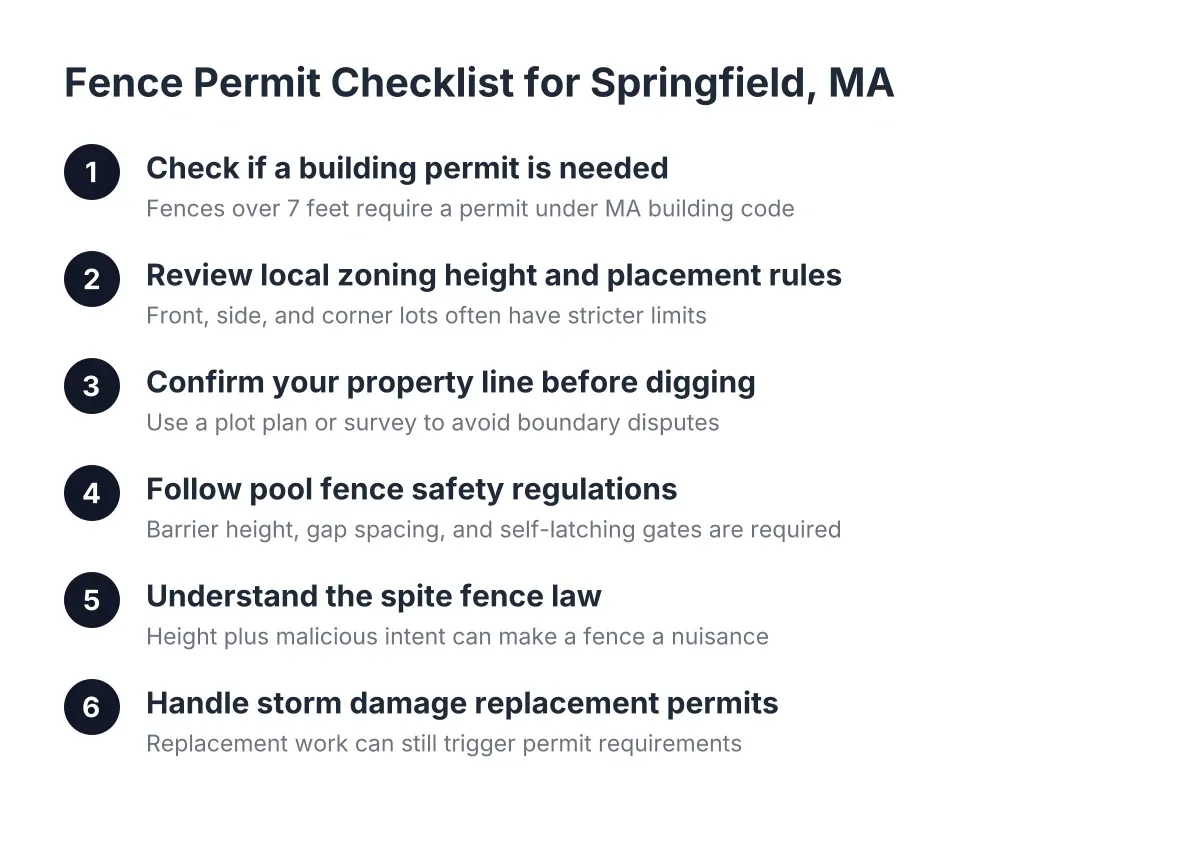
Step 4: Settle the Property Line Before Anyone Digs
Nothing destroys the savings of a cheap fence faster than installing it in the wrong spot. If your fence is going on or near a contested boundary, resolve placement first.
First, find what documentation you already have. Your deed, a plot plan from your closing paperwork, or a prior mortgage survey may show the line. Existing survey pins or monuments at the corners of the lot are the physical reference points an installer works from.
Next, decide whether you need a current survey. A reputable fence installation company will set the fence where you direct it, but it will not certify where your legal boundary runs; that is a surveyor's job. If the line is genuinely disputed, or a neighbor has already pushed back, a survey is cheap insurance against tearing out a brand-new fence. Many homeowners also set the fence a few inches inside their own line so there is no argument about encroachment later.
In addition, get placement in writing. Ask that your contract or fence estimate note where the fence will sit relative to the pins or the surveyed line. If the neighbor relationship is already tense, or there is talk of legal action, talk to a real estate attorney before installation; a fence company can build the fence, but it cannot settle a legal boundary for you.
Step 5: Get Quotes That Compare Chain Link, Vinyl, and Wood Side by Side
When you search for fence contractors near me, you will get a list of names, but the quotes only help if they compare the same job. Ask each fence company to price the identical fence line in more than one material, at the same height, with tear-out and haul-away either included in all quotes or excluded from all of them.
A useful side-by-side quote should break out:
- Cost per foot or total price for each material option
- Post setting depth and method, which matters given frost in this region
- Gate count, size, and hardware
- Old fence removal and disposal, if any
- Who locates underground utilities before digging
Be cautious about picking purely on the lowest number. Fence pricing reflects construction practices, materials, build style, and expected longevity, not just raw material and labor. A bargain installation with shallow posts can lean within a few winters, and rebuilding it costs more than the difference you saved. Angi puts the national average fence repair at $618, with most homeowners paying between $304 and $948, and a fence that fails early turns those repairs into a recurring bill.
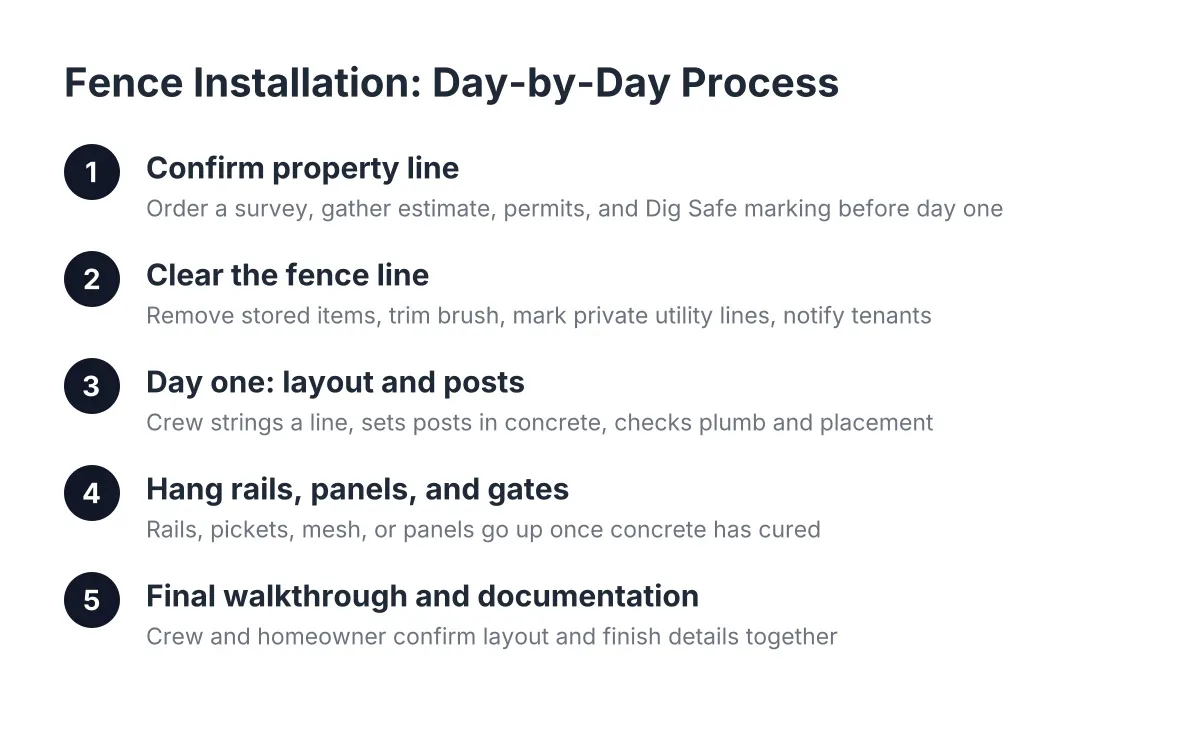
Step 6: Lock In the Decision and Prepare for Installation Day
Once the quotes are in, the decision usually resolves itself. Pick chain link if containment at minimum cost is the whole job. Pick wood if you need privacy now at the lowest price and can commit to upkeep. Additionally, pick vinyl if you want privacy with no maintenance and can absorb the higher upfront cost.
Before the crew arrives, clear the fence line of stored items, brush, and anything a neighbor might claim was damaged. Confirm in writing where the fence sits relative to the line, and let the neighbor know the install date; a heads-up prevents a confrontation over a crew digging near a contested boundary. If you searched for fence replacement near me because an old fence is coming down, confirm which side of it is yours to remove.
One last expectation check: a fence is a functional purchase more than a financial one. Angi estimates a fence returns around 50% of its cost at resale. The real return is the part you cannot price, a marked line, a contained dog, and a yard that is finally yours without the back-and-forth.
If you need fence installation, Western Mass Fence Co can help.
Prefer to talk it through? Call (413) 305-1309 — a quick call is usually the fastest way to get a straight answer for your situation.