Fence Installation Timeline: How Long Does Your Project Actually Take?
If you manage commercial properties or you are planning a residential project, the question is the same: is the fence installation timeline long enough that you need to plan around it, or can you fit it into a normal week? The honest answer is that the install itself is usually fast. The schedule around it, estimates, materials, permits, and site prep, is where most of the calendar time goes.
This guide walks the whole process step by step, from the first site visit to the day the crew packs up. It is written for anyone hiring a fence company in the Springfield area, whether you need a wood fence around a backyard or tall chain link around a storage yard in 2026.
Step 1: Get the Site Visit and Estimate on the Calendar
Start the clock here, because this is where projects stall most often. A fence estimate for a straightforward residential fence usually means one site visit, a walk of the line, and a written quote within days. For a commercial fence, expect the visit to take longer; the estimator needs gate locations, fence height, security requirements, and any code or insurance drivers.
For a facilities manager, consolidating this step saves the most time. Suppose you oversee five Springfield-area sites and three need chain link work. Walking all three with one estimator in a single week gets you three comparable quotes you can take to budget approval at once, instead of chasing separate vendors for months.
One scheduling note for Western Mass specifically: spring and early summer are the busiest months for fence installation. If your project can start in late fall or early spring, estimate-to-install time often shrinks.
Step 2: Confirm Property Lines, Permits, and Utility Marking
Before any post goes in the ground, three things have to happen, and they run on other people's schedules, not yours or the installer's.
- Property lines. Older New England housing stock means lot lines that do not always match the existing fence or hedge. If there is any doubt, a survey settles it, and that can add weeks. A fence set on the wrong line costs far more to move later than a survey costs now.
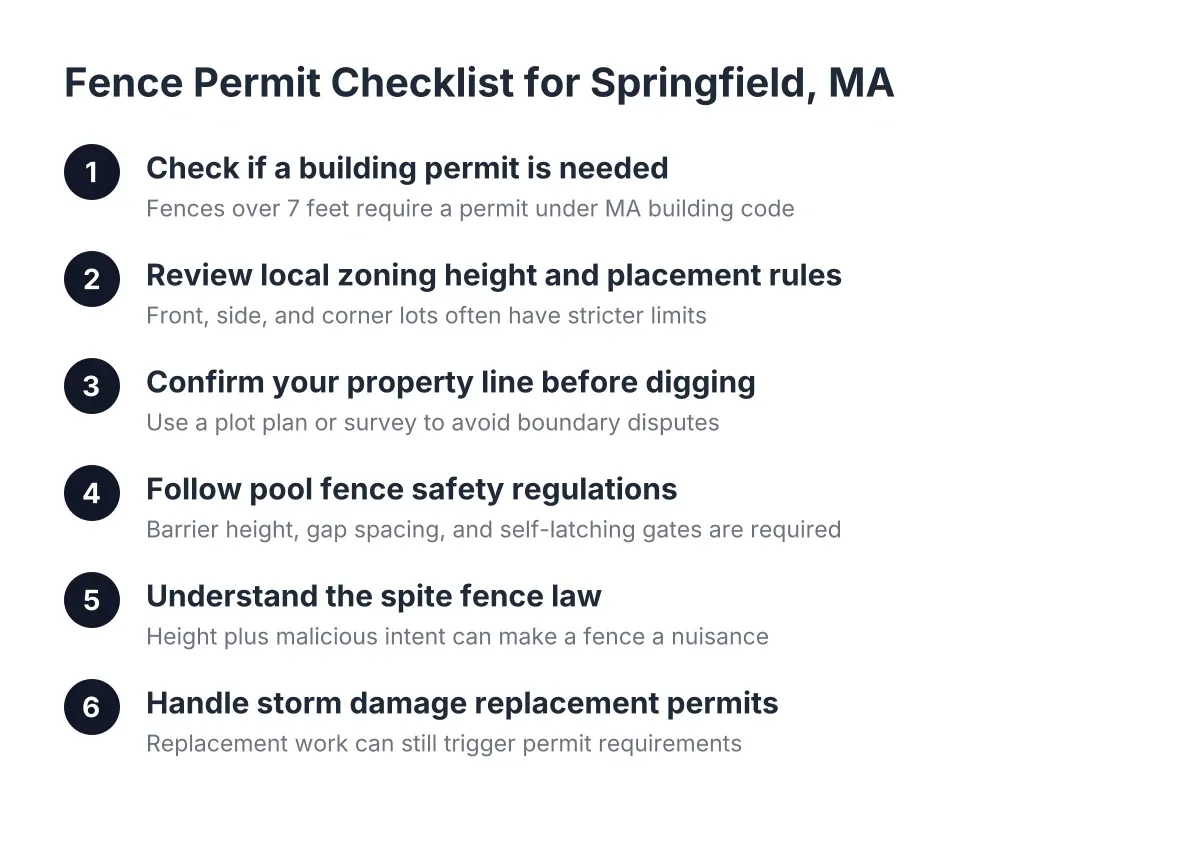
- Permits. Some Springfield-area towns require a permit for fences over a certain height, and commercial fencing often triggers review. Permit turnaround varies by town and season.
- Utility marking. Dig Safe marking is required before digging post holes in Massachusetts. The marking itself is quick, but it has to be requested and completed before the crew can dig.
Therefore, if someone quotes you a start date before these boxes are checked, ask how. These steps are the main reason a fence installation timeline runs long even when the build itself takes two days.
Step 3: Order Materials and Wait for the Lead Time
Material lead time is the quiet middle of every project. Here is how the three common materials compare:
- Chain link fence: framework, fabric, and fittings are often stock items, so lead time is short. Tall commercial heights or specific gauges may need to be ordered.
- Wood fence: standard privacy panels and pickets are usually available quickly. Custom styles, board-on-board, shadow box variations, or horizontal designs, take more material and more shop time, so they add days or weeks.
- Vinyl fence: color and style drive this one. Common white privacy panels move fast; specialty colors or textures can carry multi-week lead times. Ornamental aluminum fence orders often behave the same way.
As a result, the material you choose shapes your calendar as much as your fence cost. If your driver is a security incident or an insurance deadline, chain link fence installation is usually the fastest path from signed quote to finished fence.
How Long Is a Typical Fence Installation Timeline, Start to Finish?
A typical fence installation timeline runs from a couple of weeks to a couple of months, start to finish. The on-site build often takes one to three days for a standard residential fence. The variable stretch is everything before the crew arrives: estimating, permits, utility marking, and material lead time, which together make up most of the elapsed time.
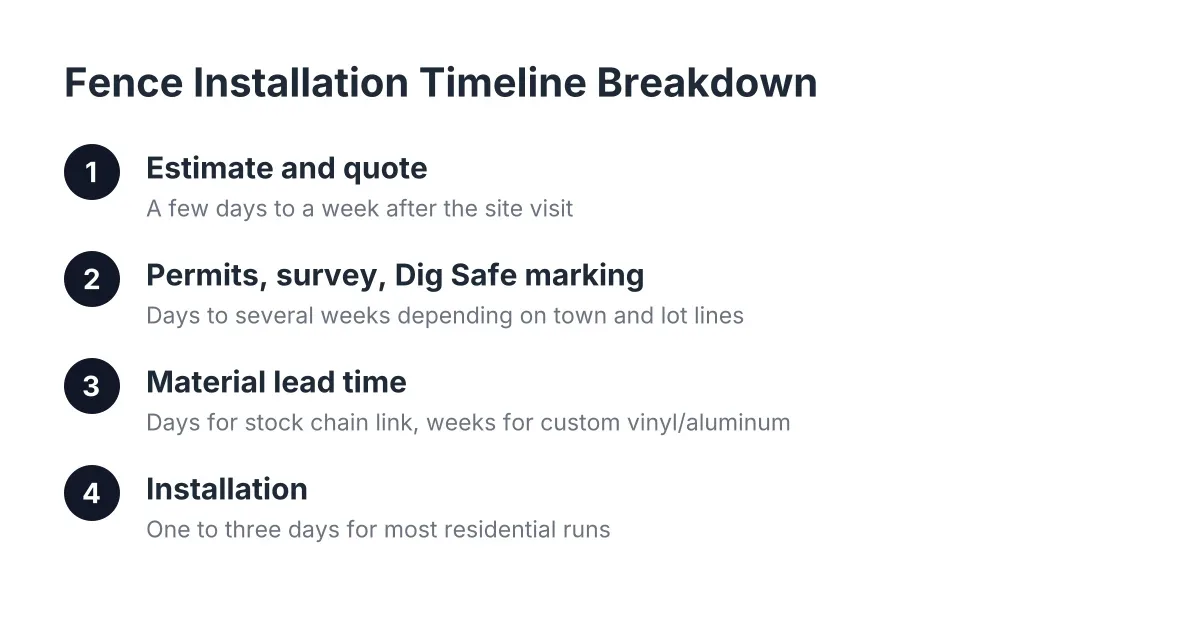
Here is an illustrative breakdown, framed as estimates rather than promises:
- Estimate and quote: a few days to a week after the site visit.
- Permits, survey if needed, and Dig Safe marking: days to several weeks, depending on the town and whether lines are in question.
- Material lead time: days for stock chain link, potentially weeks for custom vinyl or ornamental aluminum.
- Installation: one to three days for most residential runs; longer for large commercial perimeters or multiple gates.
In other words, when people ask whether a fence installation timeline is long, the build is short and the paperwork is not. Plan your budget cycle and tenant notices around the full window, not the install days.
Step 4: Prepare the Site Before the Crew Arrives
Next, clear the fence line. Move vehicles, equipment, pallets, and stored material away from the run. On commercial sites, make sure the crew has gate access and knows where tenants park. On residential jobs, unlock side gates and flag sprinkler lines or landscape lighting the locators will not mark.
Grade changes deserve a conversation before install day, not during it. Springfield-area lots often slope, and the crew has to decide whether panels step down the hill or rack to follow it. On jobs with mixed full and cut sections, good installers put the cut sections in the least visible spots and save full panels for the areas people see. Agreeing on that layout up front prevents a mid-job stop.
Step 5: Installation Days: What Happens and How Long Each Part Takes
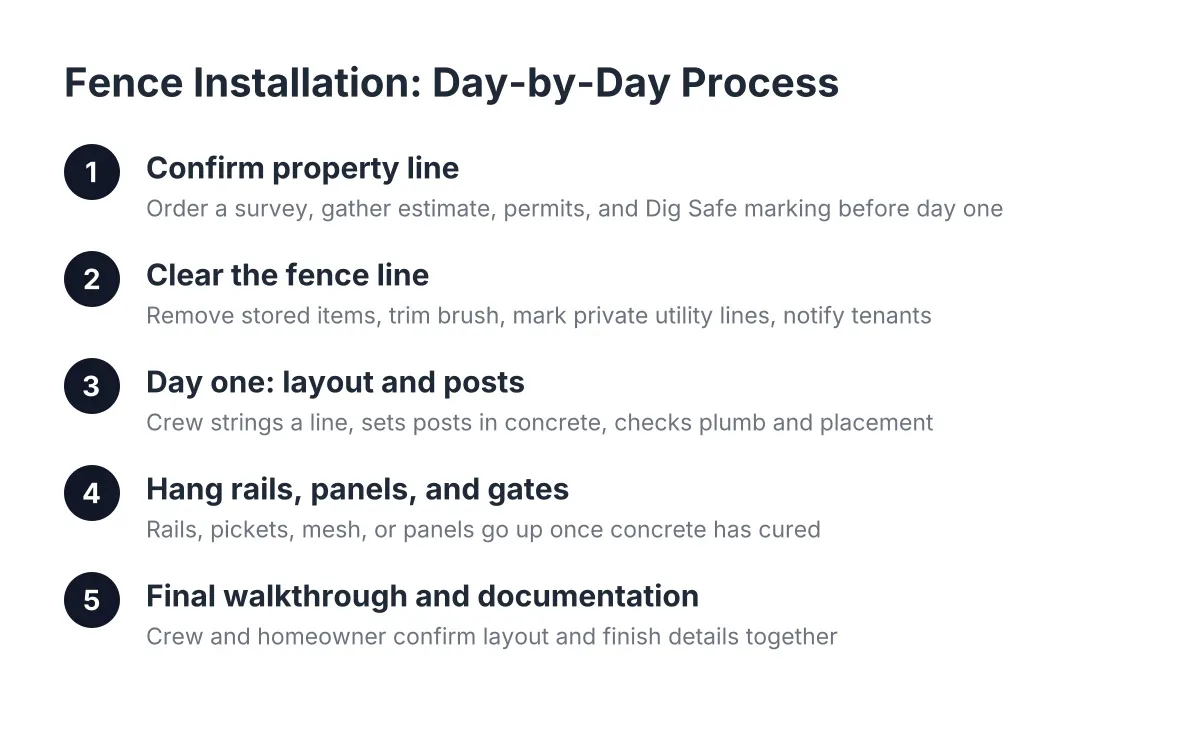
Day one is layout and posts. The crew sets posts at both ends of each run, stretches a string line between them, and digs holes along that line so the fence stays straight. Posts go in with fast-setting concrete, which cures quickly enough to keep the job moving; frost depth matters here, because posts set too shallow in our freeze-thaw ground will heave within a few winters.
Panels, rails, and fabric come next, often the same day or the day after. Chain link fabric gets stretched and tied to the framework. Wood and vinyl panels hang between the set posts, with posts hidden behind the panel on the finished side. Gates and hardware finish the job, and gates are usually the fussiest part, so build in time for adjustment.
However, know when the timeline deserves a professional conversation rather than a guess. Ledge or rocky soil, a shared boundary fence, or a disputed line can stretch any schedule, and no installer can quote those days accurately without seeing the site.
Step 6: Walk the Finished Fence and Close Out the Job
Finally, walk every run before you sign off. Check gate swing and latches, look down the line for straightness, and confirm post caps and ties are in place. On a commercial fence, confirm the installed height matches your compliance or insurance requirement, because that paperwork is the reason the fence exists.
This closeout walk is also where a multi-site manager builds a vendor relationship worth keeping. One fence company that knows your properties, your gate hardware, and your access rules turns the next fence replacement or repair from a new procurement cycle into a phone call. Wood fences last about 15 years on average, with some lasting up to 20 years depending on wood type and maintenance, according to Angi; so if you manage wood fencing across several sites, replacements will come up on a rolling basis.
What Makes a Fence Installation Timeline Longer Than Quoted?
A fence project runs long when something outside the crew's control slips: a permit stuck in town review, a survey dispute on an older lot, a backordered vinyl color, or ledge where the post holes should go. Weather adds days too; frozen ground in a Western Mass January slows or stops digging entirely.
The pattern worth remembering is that cheap and fast quotes often hide these risks instead of pricing them. A contractor who skips the survey conversation or the Dig Safe step can promise a shorter schedule, and you pay for it later when the fence has to move or the posts heave. A realistic timeline from a local installer who knows Springfield-area soil, towns, and lead times is the one that actually holds.
If you need fence installation, Western Mass Fence Co can help.
Prefer to talk it through? Call (413) 305-1309 — a quick call is usually the fastest way to get a straight answer for your situation.