How Much Does Vinyl Fence Installation Cost?
How much does vinyl fence installation cost? The honest answer depends on three things more than anything else: how many feet of fence you need, the style and height of vinyl you pick, and what your property throws at the crew, like slopes, old fence to tear out, or rocky New England ground. Anyone who hands you a single number before seeing your yard is guessing. By the end of this guide you will know which factors apply to your property, what a real quote should include, and how to get an accurate number from a local fence company instead of a made-up figure from the internet.
What Drives the Cost of Vinyl Fence Installation
Vinyl fence pricing comes down to a handful of factors. Here is each one, which way it pushes the price, and how to tell where your project lands.
Linear footage
Fence work is priced largely by the foot. More feet means more posts, more panels, and more labor, so a full backyard perimeter costs more than a short run along one property line. Walk your intended fence line and pace it off, or measure it roughly with a tape or a phone app. You do not need a perfect number; you need to know whether you are fencing 60 feet or 300 feet, because that difference drives the estimate more than any other single factor.
Fence style and height
Vinyl comes in several styles: solid privacy panels, semi-private with spacing between pickets, picket-style, and ranch rail. Taller, solid privacy fencing uses more material per foot than a shorter picket fence, so it costs more per foot. If your goal is blocking the view of a neighbor's yard, you are on the higher end. If you want a decorative border around a front yard, you are on the lower end. Decorative post caps, lattice toppers, and premium colors add to the per-foot price too.
Gates
Every gate costs more than the same width of straight fence. A gate needs its own hardware, heavier posts set to handle the swing, and more careful installation so it latches cleanly for years. One walk gate is normal for most yards. A wide double gate for a mower or a vehicle adds more. Count the gates you actually need before you ask for a fence estimate, because each one moves the number.
Terrain and layout
Flat, open, square yards are the cheap version. Springfield-area properties often are not that. Older New England lots come with grade changes, tight property lines, mature tree roots, and ledge or rocky soil that slows down post digging. Slopes mean the crew either steps the panels or racks them to follow the grade, and both take more time than a flat run. Lots of corners and direction changes mean more posts per foot of fence. Look at your yard honestly: if it slopes, zigzags, or sits on rocky ground, expect the labor side of the quote to reflect that.
Tear-out and site prep
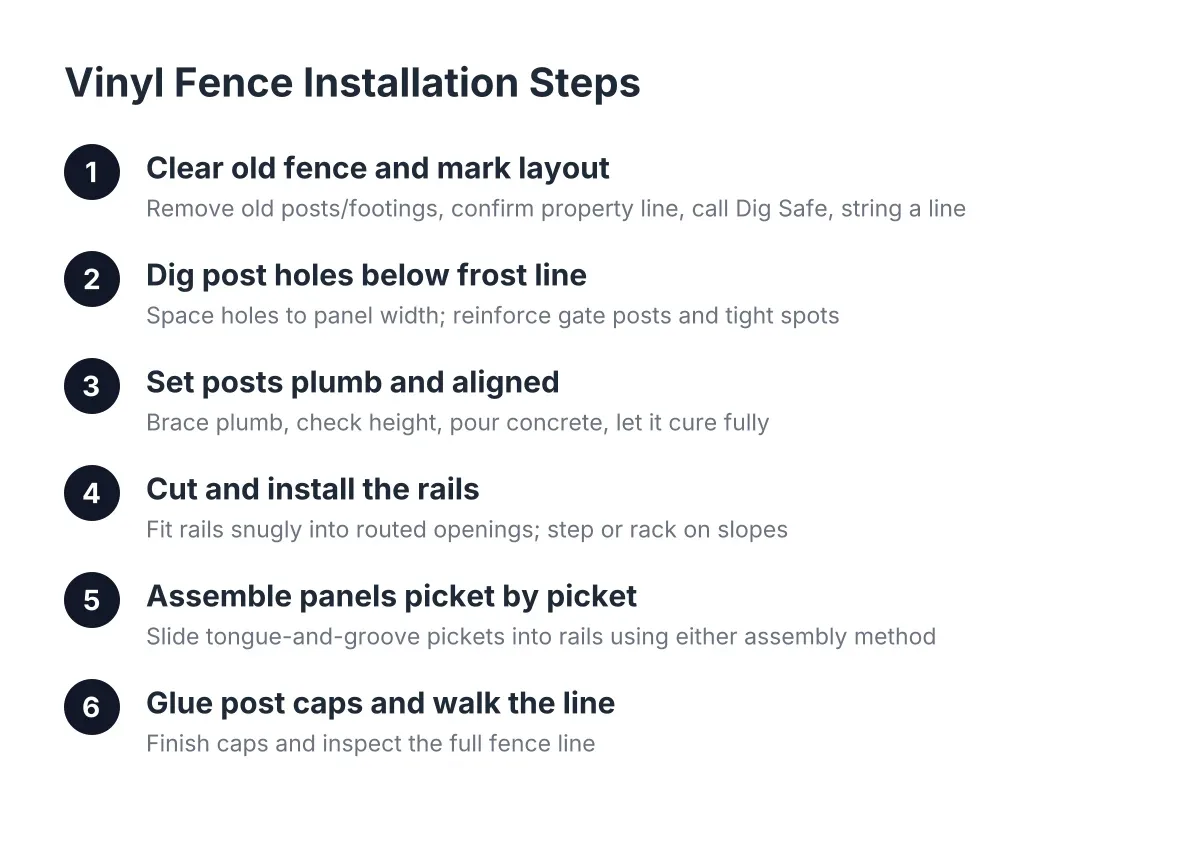
If an old fence stands where the new one goes, someone has to remove it and haul it away, and old concrete footings around the posts make that job harder. Overgrown brush along the fence line needs clearing before posts go in. If your line is clear and bare, you skip this cost entirely. If you are replacing a decades-old wood fence with concrete-set posts, removal is a real line item on the quote, and a good fence company will show it as one.
Post setting and local ground conditions
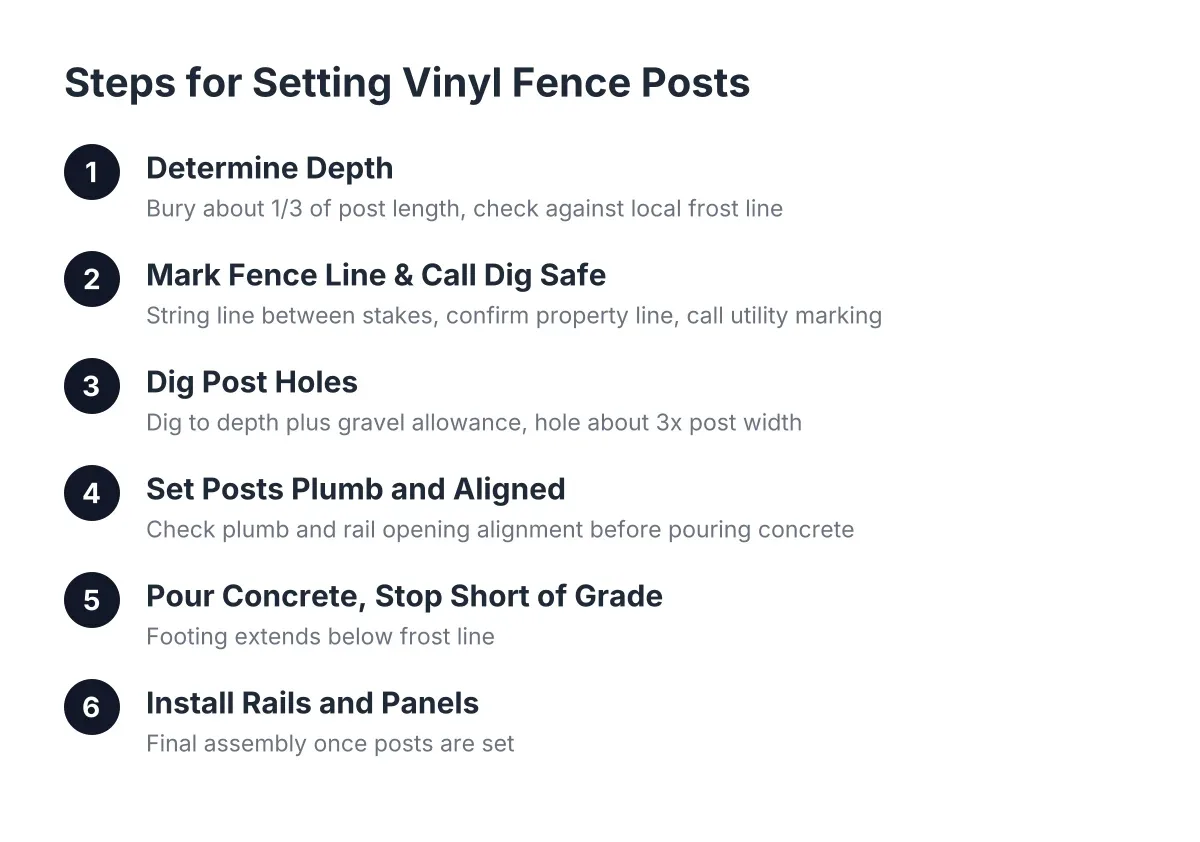
This one is specific to our region. Frost in western Massachusetts moves the ground every winter, and posts that are not set deep enough heave out of plumb within a few seasons. Setting posts below the frost line takes deeper holes and more concrete than a shallow job, which costs more up front and saves you a leaning fence later. A low quote that skimps here is not a bargain. Ask any installer how deep they set posts and why; the answer tells you a lot about what you are paying for.
Cost Factor Table
| Factor | Pushes the price down when… | Pushes it up when… |
|---|---|---|
| Linear footage | You fence one short run or a partial yard | You enclose a full perimeter or a large lot |
| Style and height | You choose a shorter picket or ranch rail style | You want tall, solid privacy panels or premium finishes |
| Gates | You need one standard walk gate or none | You add multiple gates or a wide double gate |
| Terrain and layout | Your yard is flat, open, and roughly square | The line crosses slopes, corners, or rocky ground |
| Tear-out and prep | The fence line is clear and bare | An old fence with concrete footings must come out first |
| Post setting | Soil digs easily and access is good | Ledge, roots, or frost-depth requirements slow the digging |
How to Get an Accurate Vinyl Fence Installation Cost Estimate
Online cost figures are averages of other people's yards. Your number comes from your yard. Here is how to get it without wasting anyone's time.
Have this ready before you call: a rough measurement of the fence line, the style and height you are leaning toward, the number of gates you want, and a note about anything on the line, like an old fence, a slope, or heavy brush. Photos help. If you are not sure where your property line sits, say so; on older Springfield-area lots that question comes up often, and it is better to raise it early than to move a fence later.
A good vinyl fence installation quote is written, itemized, and specific. It should state the footage, the exact product and height, the number and size of gates, how deep the posts get set, who handles tear-out and haul-away, and what happens if the crew hits ledge or buried obstacles. If a quote is one number on a text message, you cannot compare it to anything, and you cannot hold anyone to it.
Estimates differ between providers for real reasons: product quality varies between vinyl lines, post-setting depth varies, and some quotes include tear-out and permits while others quietly leave them out. When two quotes are far apart, the difference is usually in what each one includes, not in one company being generous. Read the line items before you read the total. For details on how we handle these projects locally, see our vinyl fence installation service page, and request an estimate from there.
Ways to Keep the Cost Down
You cannot change your lot, but you control more of the price than you might think.
- Fence only what you need. Enclosing the backyard instead of the full perimeter cuts the footage, and footage is the biggest driver of fence cost. You can always extend later.
- Match the style to the purpose. If you only need privacy along one neighbor's side, run tall solid panels there and a shorter, cheaper style elsewhere instead of paying privacy prices on all four sides.
- Clear the line yourself. Removing brush, moving planters, and hauling away a simple old fence before the crew arrives takes prep labor off the quote. Leave concrete-set posts to the pros, though.
- Get two or three itemized quotes. Comparing line items, not totals, shows you where each fence company stands on materials, post depth, and what is included. That knowledge is worth more than any discount.
- Ask about scheduling flexibility. If your project can wait for a gap in the installer's calendar instead of demanding a peak-season slot, say so. Flexibility sometimes helps the price, and it never hurts.
Cost Questions People Ask
Is vinyl more expensive than wood fencing?
Per foot, vinyl usually costs more than a comparable wood fence up front. The trade-off shows up over time: vinyl does not need staining, sealing, or painting, and it shrugs off the moisture that rots wood posts in our climate. Which one costs less over its lifetime depends on how long you stay in the home and how much upkeep you would honestly do on wood.
Does replacing an old fence cost more than installing a new one?
Often, yes. Fence replacement adds tear-out and haul-away on top of the installation itself, and old posts set in concrete take real work to pull. The installation portion is the same either way; the removal is the extra. A clear quote shows the removal as its own line so you can see exactly what the old fence costs you.
Why do vinyl fence estimates vary so much between companies?
Because they rarely price the same job. One quote might use a thicker-walled vinyl product, set posts below the frost line, and include haul-away; another might cut all three to hit a lower number. In western Massachusetts, where frost heave punishes shallow posts, those differences decide whether your fence stands straight in ten years. Compare what is included before you compare the totals.
Will my yard's slope change the price?
It can. A sloped fence line means the crew steps or racks the panels to follow the grade, which takes more layout time and sometimes extra posts. Springfield-area lots with grade changes are common, so a local installer should walk your line and price the slope into the estimate rather than discovering it on install day.
The Bottom Line
The cost of vinyl fence installation comes down to footage, style, gates, and what your specific yard demands, so no honest number exists until someone measures your line. Get two or three written, itemized quotes, compare what each one includes, and ask how deep the posts go. That is how you land on a fair price for a fence that stays straight through a Springfield winter.
Prefer to talk it through? Call (413) 305-1309 — a quick call is usually the fastest way to get a straight answer for your situation.