Vinyl Fence Installation Terms Explained: A Plain-English Glossary
If you're reading fence quotes and running into words like "picket," "rackable," or "frost heave," this page is for you. This vinyl fence installation glossary breaks down the terms Springfield-area homeowners meet when they research a new fence or compare estimates. Each entry gives you a plain definition first, then explains why the term matters to your project and your budget. Use it to read a fence estimate line by line and ask better questions before you sign anything.
- Post: the vertical anchor of the fence
- Rail: the horizontal pieces between posts
- Picket: the vertical boards that fill each section
- Panel: one pre-built section of fence
- Gate hardware: hinges and latches for your gate
- Post cap: the cover on top of each post
- Post hole: the dug hole that holds each post
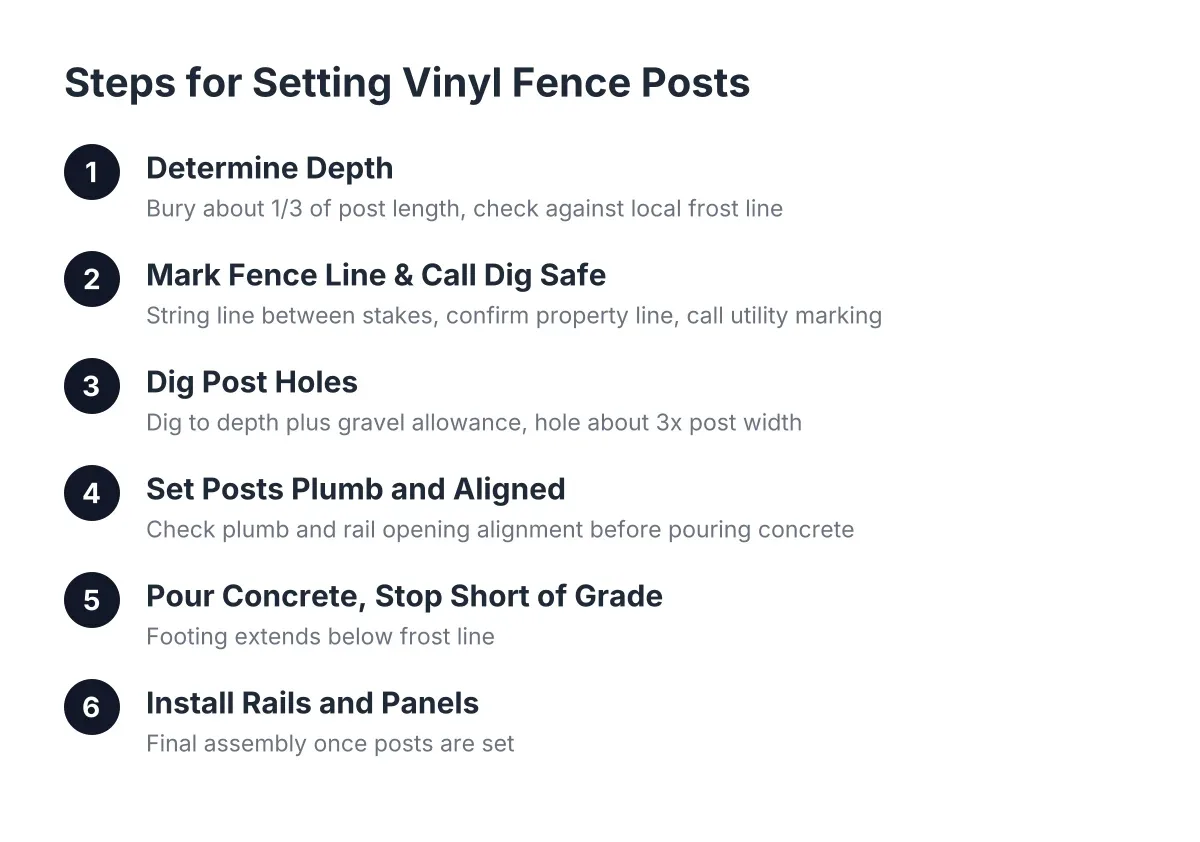
- Setting posts: anchoring posts in the ground, usually with concrete
- Frost heave: winter ground movement that can push posts up
- Grade: the slope of your yard along the fence line
- Racking: angling panels to follow a slope
- Stepping: dropping panels like stairs down a slope
- Property line: the legal boundary your fence must respect
- Setback: required distance between fence and boundary
- Linear foot: how fence length is measured and priced
- Cost per foot: the per-foot price on your estimate
- Fence estimate: the written quote for your project
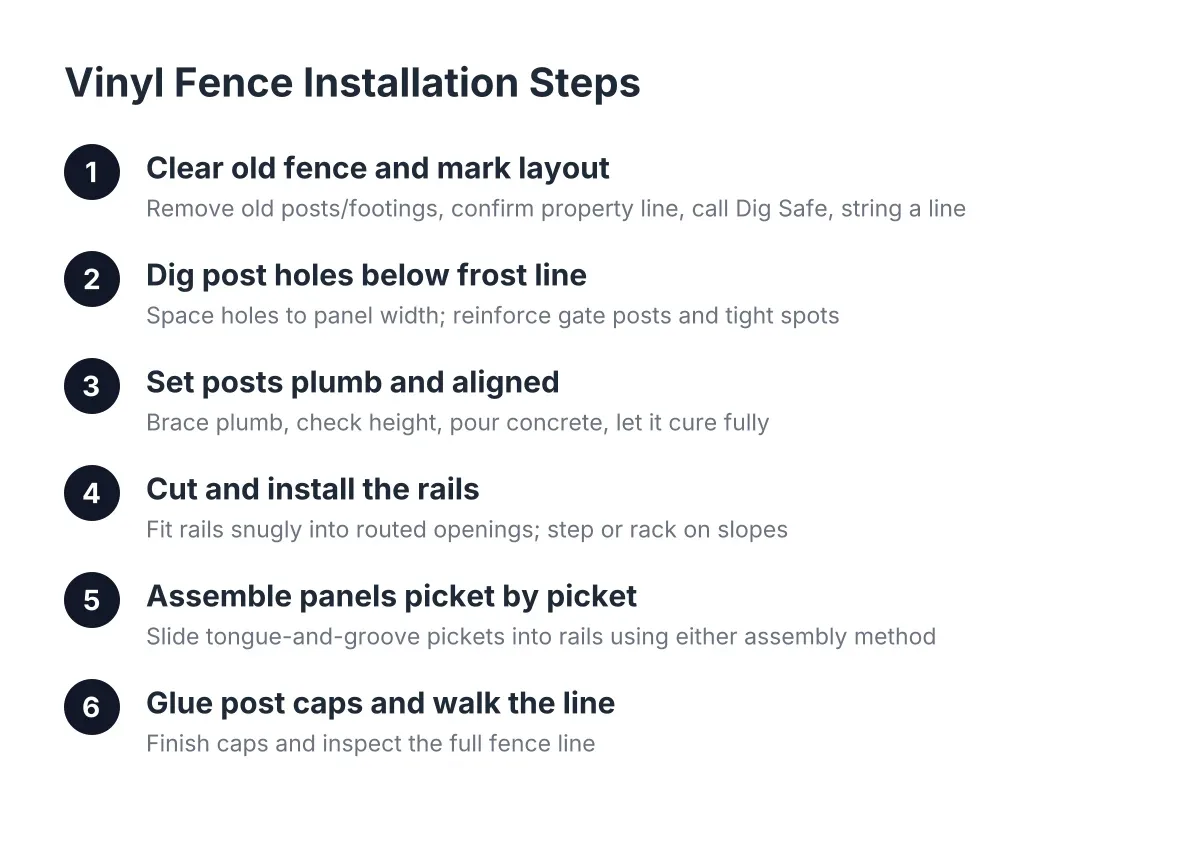
- Tear-out: removing an old fence before the new one goes in
Vinyl Fence Installation Glossary: Fence Parts and Materials
These are the pieces that make up the fence itself. Once you know them, a vinyl fence installation glossary like this one turns a confusing quote into a simple parts list.
Post
A post is the vertical support that anchors a fence to the ground. Everything else, including rails, pickets, and gates, hangs off the posts, so they do the structural work. On a vinyl fence, posts are hollow sleeves that get set in the ground, often with concrete, and sometimes reinforced where strength matters, like at gates. If a fence fails in a New England winter, the posts are usually where the trouble started.
Rail
A rail is a horizontal piece that runs between posts and holds the pickets or panels in place. Most vinyl fences have a top rail and a bottom rail, and taller privacy styles may add a middle rail for stiffness. If an estimate mentions reinforced rails, the installer is adding strength, which matters on long runs or windy sites.
Picket
A picket is one of the vertical boards that fill the space between rails. Pickets set the look of the fence: spaced pickets give you an open, traditional style, while tight pickets create privacy. On vinyl fences, pickets usually lock into the rails rather than being nailed on like a wood fence, which is part of why vinyl needs little upkeep.
Panel
A panel is a pre-built section of fence that spans from one post to the next. Vinyl fences are typically sold and installed as panels, so your quote may count panels instead of individual boards. Panel width matters on sloped or tight yards, because shorter panels follow the ground more closely. Knowing your panel count helps you check the math on a fence estimate.
Gate Hardware
Gate hardware means the hinges, latches, and locks that let a gate swing and close. It sounds minor, but hardware quality decides whether your gate still latches cleanly in five years. Self-closing hinges and lockable latches are common upgrades, and some uses, like pool enclosures, may require them, so check your local code. If a quote lists hardware separately, that is normal and worth a question about what grade you are getting.
Post Cap
A post cap is the fitted cover that sits on top of each fence post. On vinyl fences, caps keep water out of the hollow post and finish the look. Flat, pointed, and decorative solar-light caps are all common options. Caps are a small line item, but they are one of the easiest places to customize a residential fence.
Vinyl Fence Installation Glossary: Site Work and the Installation Process
This is what the crew actually does in your yard, and where most of the labor cost on a vinyl fence installation lives. Springfield-area yards bring their own challenges here: older lots, uneven grade, and ground that freezes hard every winter.
Post Hole
A post hole is the hole dug in the ground to hold each fence post. Depth and width matter because the hole has to get the post below the frost line, the depth where soil stops freezing in winter. Rocky or root-filled New England soil can slow digging, which is one reason two similar fences can carry different labor costs. If an installer talks about hole depth, that is a good sign they are planning for winters here.
Setting Posts
Setting posts means anchoring fence posts in their holes, most often by pouring concrete around them. How well the posts are set decides how straight and solid the fence stays over time. Poorly set posts lean, wobble, or pop up after a few freeze-thaw cycles. When you compare quotes, ask how posts will be set and how deep; the cheapest answer is not always the one that survives a Springfield winter.
Frost Heave
Frost heave is the upward push of soil when the water in it freezes and expands. In Massachusetts, frost heave is the main reason fence posts shift, lean, or lift over the winter. Installers fight it by setting posts below the frost line and shaping concrete so ice cannot grab it. If a fence company never mentions frost when quoting your job, ask how they handle it.
Grade
Grade means the slope of the ground along your fence line. A flat yard is the simplest install; a sloped one forces choices about how the fence follows the ground. Grade changes are common on older Springfield-area lots, and they affect layout, labor, and sometimes material choice. Expect your installer to walk the line and talk about grade before giving a firm number.
Racking
Racking means angling a fence panel so it follows a slope without gaps underneath. A rackable vinyl panel is built so its pickets can tilt while the rails stay parallel to the ground. Racking keeps the fence line smooth on gentle hills and closes the gaps pets love to escape through. Not every vinyl style racks well, so a sloped yard can narrow your choices.
Stepping
Stepping means installing fence panels level but dropping each one down the slope like stair steps. It is the alternative to racking on steeper ground or with panels that cannot flex. Stepping leaves triangular gaps under each panel, which may matter if you are fencing in a dog. Your installer should tell you whether your yard calls for racking, stepping, or a mix of both.
Pricing, Paperwork, and Property Lines
Property Line
A property line is the legal boundary between your lot and your neighbor's. Your fence has to sit on your side of it, and on older New England lots the line is not always where the old fence stands. A survey or your plot plan settles the question before anyone digs. Sorting this out early prevents the most expensive fence problem there is: moving a finished fence.
Setback
A setback is the minimum distance your town requires between a fence and a boundary, sidewalk, or street. Setback rules vary by town and sometimes by fence height, so check your local code before finalizing a layout. A good local fence company will flag setback issues during the estimate visit. Ignoring setbacks can mean fines or a forced do-over.
Linear Foot
A linear foot is a straight-line foot of fence length, measured along the ground. Fencing is measured and priced by the linear foot, not by area, so a 100-foot fence line is 100 linear feet no matter how tall the fence is. Height changes the price per foot, not the foot count. Measuring your own fence line gives you a rough sanity check on any quote.
Cost Per Foot
Cost per foot is the price of your fence divided by its length in linear feet, and it is the number most quotes are built on. It bundles materials, labor, and site conditions into one figure, which is why the same vinyl style can cost more per foot on a rocky, sloped lot than on a flat one. Gates, tear-out, and corners usually show up as separate lines. For a fuller breakdown of what drives the number, see our guide to vinyl fence installation cost.
Fence Estimate
A fence estimate is the written quote describing what a fence company will build and what it will cost. A solid estimate lists fence style, height, length, gate count, post setting method, and whether old fence removal is included. Vague one-line estimates make surprises likely; detailed ones protect both sides. If you want to see how we scope a project, our vinyl fence installation service page walks through what we cover in a Springfield-area quote.
Tear-Out
Tear-out means removing and hauling away an existing fence before the new one goes in. Most fence replacement projects include it, but it is not free: old posts set in concrete take real labor to pull. Check whether your estimate includes tear-out and disposal, or lists them separately. If you plan to remove the old fence yourself, say so up front so the quote reflects it.
Using These Terms
This vinyl fence installation glossary gives you the working vocabulary to read a fence estimate line by line instead of skimming to the total. You can now ask how deep the posts go, whether your slope calls for racking or stepping, and what the cost per foot does and does not include. Those questions tell any fence company you have done your homework, and they tend to get you straighter answers.
If you need vinyl fence installation, Western Mass Fence Co can help.
Prefer to talk it through? Call (413) 305-1309 — a quick call is usually the fastest way to get a straight answer for your situation.