Vinyl vs. Wood Fence Durability: A Step-by-Step Way to Compare Long-Term Cost
If you manage fencing across several Springfield-area properties, the vinyl wood fence durability question comes down to one thing: which material costs you less over the next 20 years, including the maintenance visits you have to schedule and the replacements you have to budget for. Wood is cheaper on the front end. Vinyl holds up longer with less attention. The right answer depends on the site, the exposure, and how much time you want to spend managing fence upkeep.
This guide walks through the comparison the way a facilities manager should actually run it: step by step, with the decision criteria at each stage. Work through it once and you will have a defensible answer for budget approval, not just a gut feeling.
Step 1: Define the Job Each Fence Has to Do
Start with the function, not the material. A privacy screen around a daycare play yard, a boundary fence between a rental duplex and its neighbor, and a perimeter fence at a small warehouse are three different jobs with three different durability requirements.
Write down, for each property, what the fence must do:
- Privacy or screening: blocks sightlines, usually 6 feet tall, solid panels
- Boundary marking: defines the property line, appearance matters more than strength
- Security: resists climbing and impact; this often points to chain link fence or ornamental aluminum fence instead of either wood or vinyl
- Code or insurance compliance: a required height or enclosure, often around pools or equipment
Vinyl and wood compete directly on the first two jobs. For true security fencing at a commercial site, a tall chain link fence is usually the more practical choice, and a good fence company will tell you that up front rather than sell you a privacy panel that does not solve the problem.
Step 2: Compare Vinyl and Wood Fence Durability Head to Head
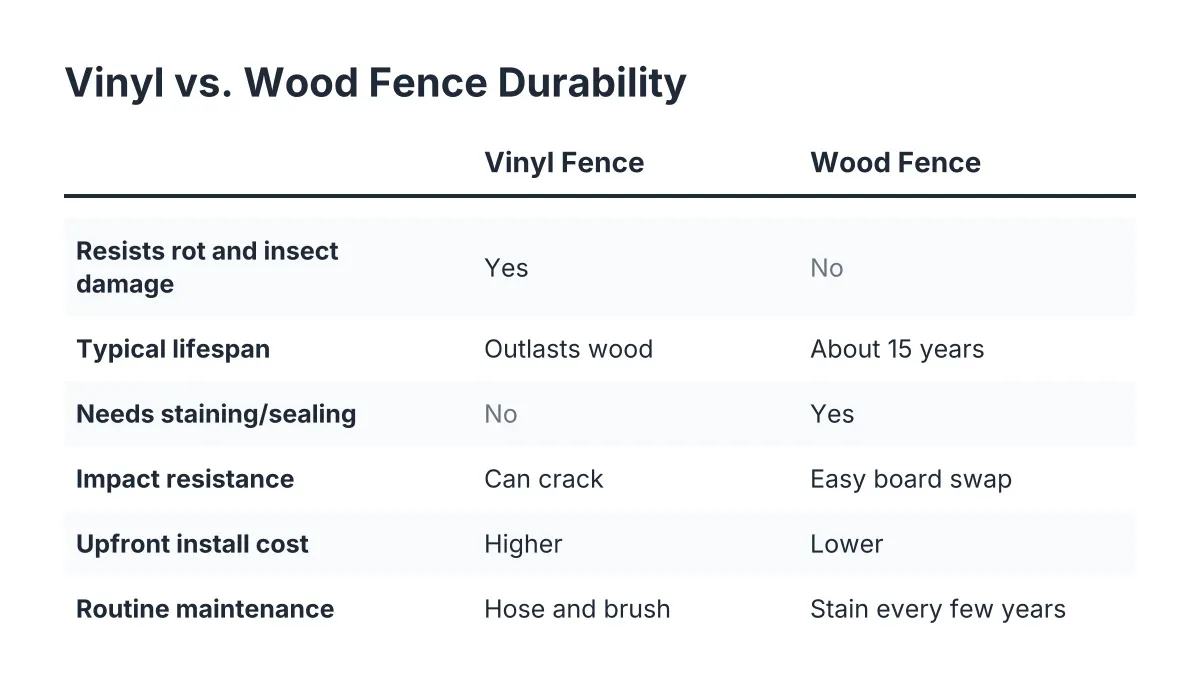
Does vinyl fencing last longer than wood? In most Springfield-area conditions, yes. Vinyl resists rot, insect damage, and fading, which are the three things that kill wood fences in New England. Wood fences last about 15 years on average, with some reaching 20 years depending on wood type and maintenance, according to Angi. A well-installed vinyl fence typically outlasts that without staining or sealing.
Here is the mechanism that matters. Wood fence posts fail from the ground up. Even when an owner repaints or restains the panels on schedule, the posts sit in wet soil through freeze-thaw cycles and rot where you cannot see it. The fence looks fine until a windstorm lays a section over. Vinyl posts do not rot, and in a properly built fence they act as the foundation of the whole system, carrying the panels for the long haul.
Wood has one durability edge worth noting: impact resistance. A wood picket that takes a hit from a mower or a delivery truck often just needs one board replaced. Vinyl panels can crack on hard impact, especially in cold weather, and a cracked panel usually means replacing the full panel rather than a single board. On a site with vehicle traffic near the fence line, that trade-off is real.
One honest caveat on vinyl: it is still PVC. It will not rot, but it can burn in extreme conditions, and it is not the right product everywhere. Neither material is a security barrier the way commercial chain link is.
How Vinyl Wood Fence Durability Plays Out in a Springfield Winter
Seasonal frost and ground movement are the local stress test. Posts set too shallow heave out of plumb regardless of material; that is an installation problem, not a material problem. Where the materials diverge is moisture. Wood absorbs water, swells, dries, and cracks through repeated freeze-thaw cycles. Vinyl sheds water and moves with temperature instead of absorbing it.
Therefore, on older Springfield-area lots with grade changes and wet soil, vinyl's durability advantage widens. The fence that needs the least from you in year 12 is almost always the one whose posts are still sound, and vinyl posts set below frost depth in proper footings tend to still be sound.
Step 3: Run the Maintenance Math, Not Just the Install Quote
Next, put the ongoing costs on paper, because this is where the comparison flips for most property managers. Wood needs staining or sealing every few years to reach its full lifespan; staining both sides, not just the street side, is what actually extends a wood fence's life and protects the money you spent on it. Skip that work and the fence ages fast.
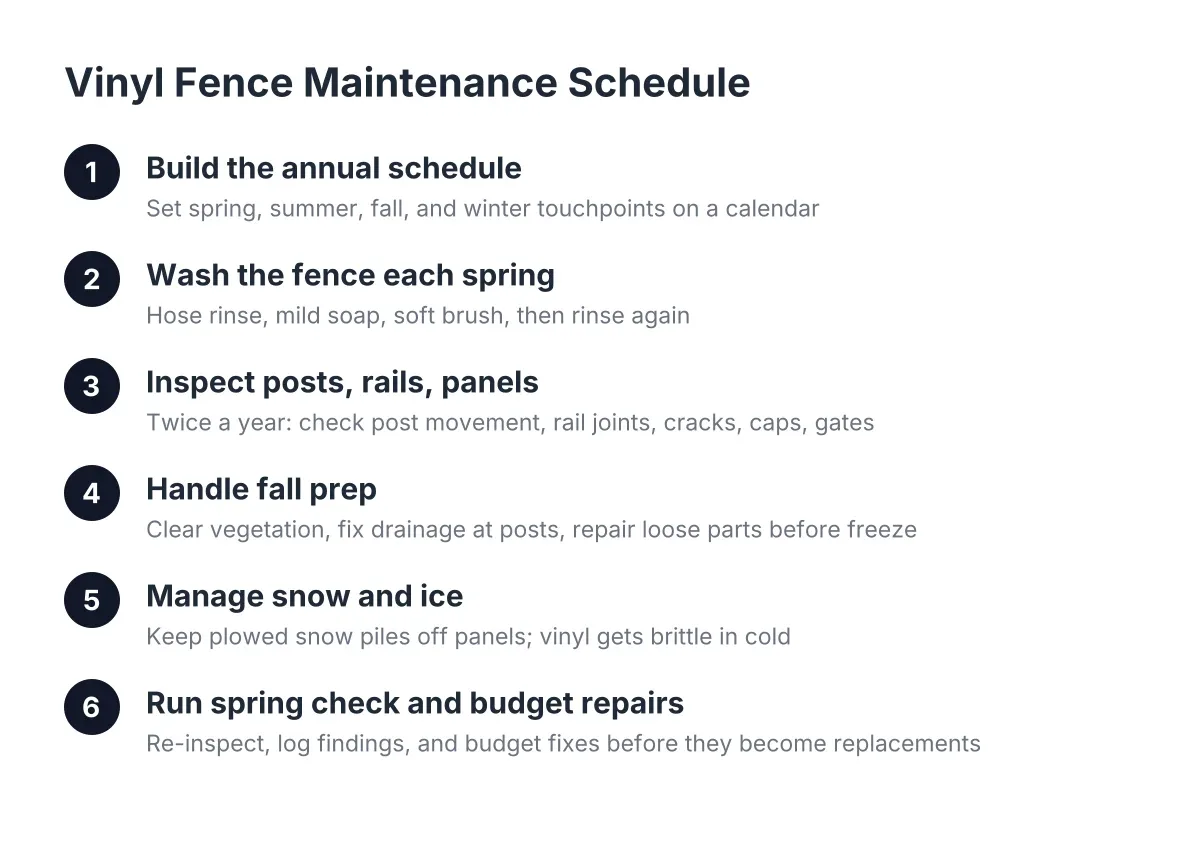
Vinyl privacy fence maintenance is a different category of task. It amounts to washing off dirt and the occasional mildew, which a maintenance crew can do with a hose and a brush. There is no staining cycle to schedule, no contractor to book every third spring, and no faded panels for a tenant to complain about.
For a multi-property portfolio, the hidden cost of wood is coordination. Suppose you manage five sites with wood fencing on different install dates. You are now tracking five staining schedules, approving five small invoices, and fielding calls when one gets missed. Multiply that over 15 years and the labor of managing the fence often costs more attention than the fence itself. Vinyl removes most of that calendar.
Repairs cut the other way. The national average fence repair cost is $618, with most owners paying between $304 and $948, according to Angi. Wood repairs tend to be smaller and more frequent; vinyl repairs are rarer but can cost more per incident because panels replace as units.
Step 4: Compare Long-Term Cost per Foot, Not Sticker Price
The install quote is the start of the cost comparison, not the end. Vinyl fence installation costs more per foot up front than a comparable wood fence; the material is pricier and the posts demand careful setting. Wood wins the day-one number almost every time.
However, total cost of ownership tells a different story. For context on scale, overall fence installation costs average $3,277 nationally, with most homeowners paying between $1,860 and $4,843, according to Angi; commercial runs and tall privacy fencing land higher. To compare fairly, estimate each option over a 20-year window:
- Install cost per foot for each material
- Maintenance cost per cycle, times the number of cycles (staining for wood, washing for vinyl)
- Expected repairs, more frequent for wood, less frequent but pricier per event for vinyl
- Replacement, a wood fence over 10 years old that needs frequent repairs is signaling replacement, according to Angi; vinyl usually clears the 20-year window
As a result, vinyl frequently comes out cheaper over 20 years even though it loses on day one. There is also a quality trap worth naming: the cheapest fence estimate often becomes the most expensive fence, because a rebuilt fence at year 8 costs more than a proper install would have at year 1. Pricing reflects construction practices and expected longevity, not just material and labor. If one quote is far below the others, ask what is different about the posts, footings, and panel grade.
For what it is worth on resale properties, installing a fence returns around 50 percent of project cost on average, according to Angi. Durability is what protects that value past the first decade.
Step 5: Check Installation Quality Before You Sign Anything
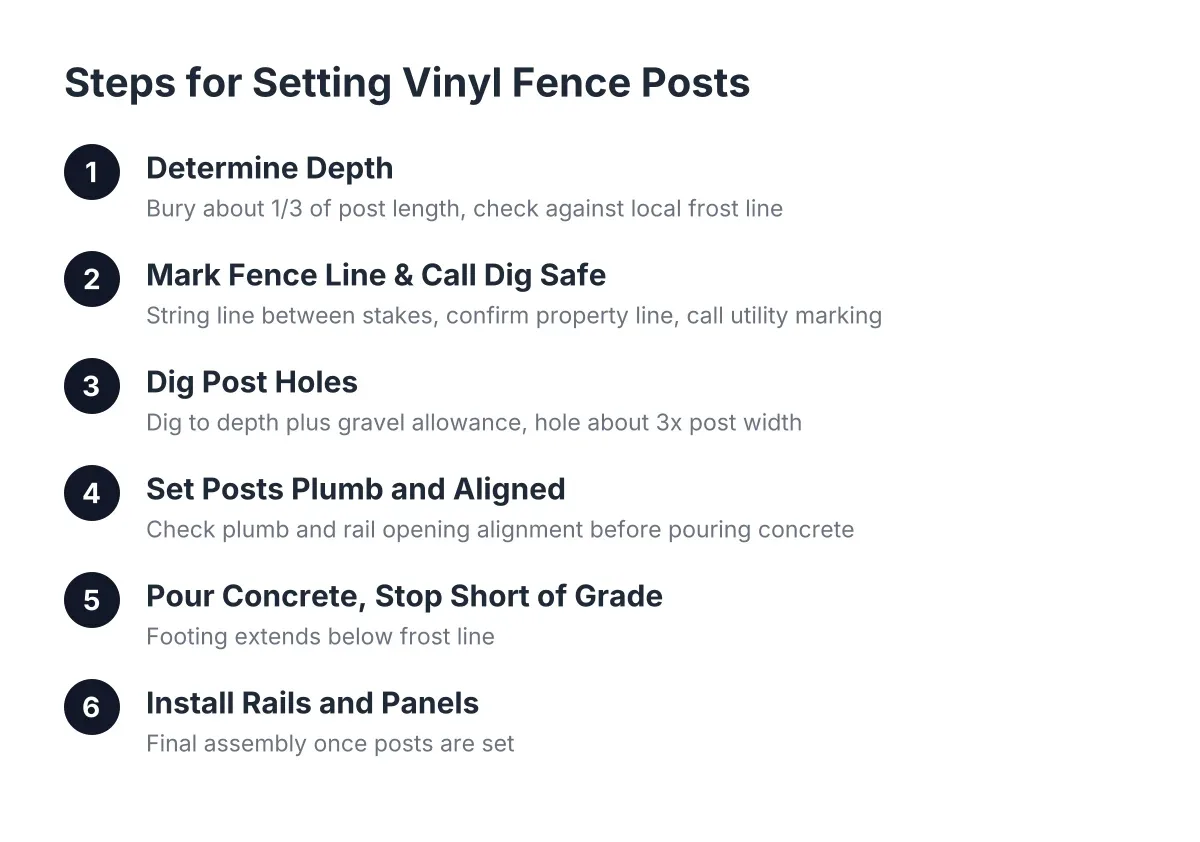
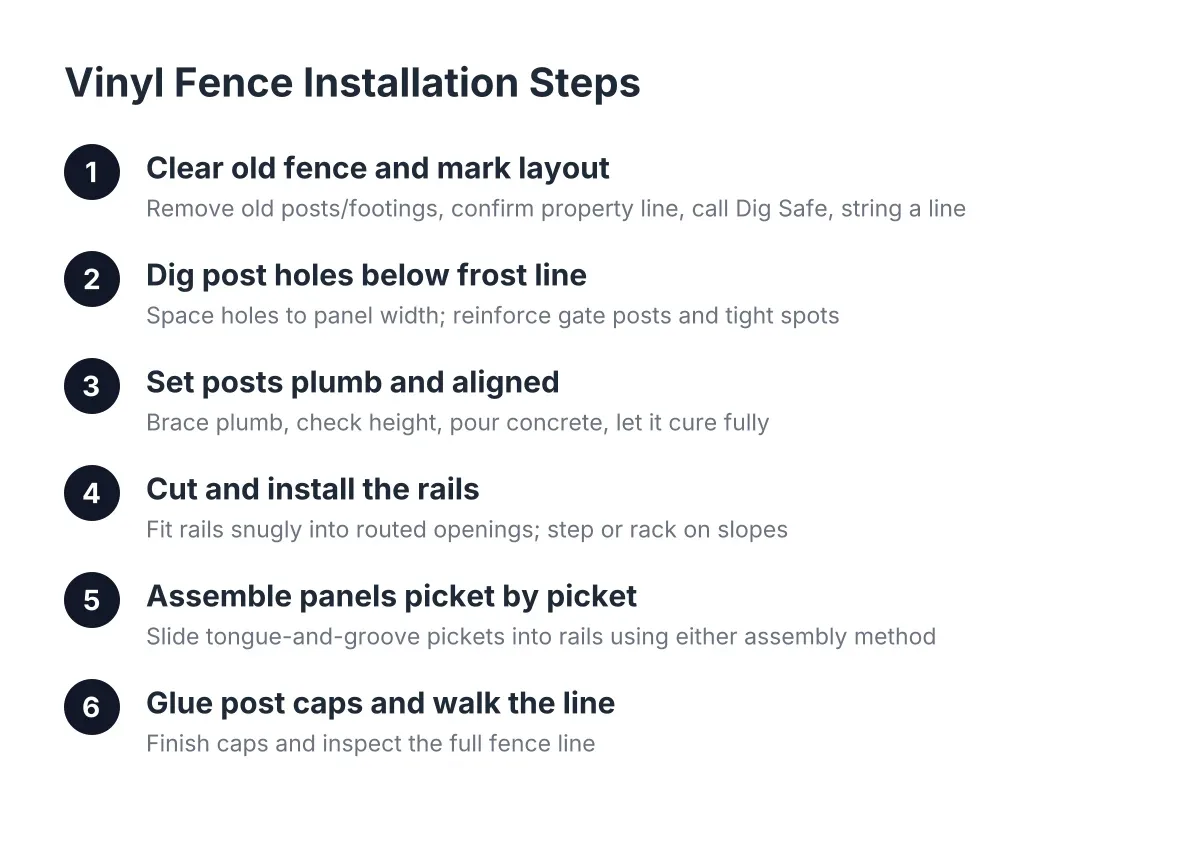
A vinyl fence is only as durable as its posts. Before you approve a fence estimate, confirm how the installer handles the details that decide whether the fence is still straight in year 15:
- Post depth below local frost line, non-negotiable in western Massachusetts
- Footing method and concrete practices for your soil conditions
- How slopes are handled; grade changes are common on older Springfield-area lots, and panels can be stepped or racked to follow them
- Reinforcement in tough spots; where a run butts against an existing fence or works around a tree, a metal pipe inside the vinyl post sleeve adds strength where a standard post would struggle
- Gate hardware and hinge posts, the first failure point on most fences of either material
In addition, if you are searching for vinyl fence installation near me and screening companies for multiple commercial or rental sites, ask each one directly about commercial fence installation experience, scheduling across properties, and whether their fence estimate holds up for budgeting. A fence company that works on both residential fence and commercial fence projects should be able to answer all three without hedging.
Step 6: Match the Material to Each Property and Decide
Finally, make the call site by site rather than portfolio-wide. A single vendor can still handle the whole portfolio; the material just does not have to be uniform.
Vinyl is the stronger choice when the fence is a long-term asset you want off your maintenance calendar: privacy fencing at rental properties, enclosures at a daycare, or street-facing runs where faded, peeling wood generates tenant complaints. Wood makes sense when the up-front budget is tight, the fence may change in a few years, or the site has impact exposure where board-by-board repair is an advantage. Chain link or ornamental aluminum remains the right answer for security perimeters.
One more limitation worth stating plainly: no article can see your soil, your grade, or your property lines. Older New England lots carry surprises, and a site walk with a local installer is worth more than any comparison chart before you commit a budget number. On vinyl wood fence durability, the pattern is consistent; vinyl usually wins the long game, wood wins the opening bid, and the installation quality underneath either one decides whether you ever think about the fence again.
Prefer to talk it through? Call (413) 305-1309 — a quick call is usually the fastest way to get a straight answer for your situation.