How Wrought Iron Fences Perform in New England Freeze-Thaw Cycles: FAQ
If you manage properties around Springfield, MA, you already know what our winters do to fencing. Frost heave pushes posts, snow load bends rails, and road salt eats finishes. So the real question before you commit is how wrought iron fences perform through New England freeze-thaw cycles, and whether an ornamental metal fence is the right call for your sites. Understanding wrought iron freeze-thaw performance is essential when weighing ornamental metal options for your properties. This FAQ gives direct answers on performance, cost factors, installation, and the trade-offs between true wrought iron and ornamental aluminum.
How Do Wrought Iron Fences Perform in Freeze-Thaw Climates Like Springfield, MA?
Wrought iron fences perform well structurally in freeze-thaw climates, provided the posts are set below the frost line in properly sized footings. The metal itself does not warp, rot, or twist the way wood does. The weak points are the footings and the finish, not the fence panels themselves. Wrought iron freeze-thaw performance depends heavily on proper footing installation and protective coatings.
Here is what that means in practice. When ground moisture freezes, it expands and can lift anything anchored in the soil. A post set in a shallow footing gets pushed up a little each winter until the fence line starts to wave. A post set below frost depth, in a footing that sheds water instead of trapping it, stays where it was installed.
The finish is the other seasonal factor. Iron rusts when its protective coating is scratched or chipped, and Springfield-area winters add road salt spray along street-facing fence lines. That is a maintenance issue, not a structural one, but it is the main reason buyers compare iron against ornamental aluminum.
What Actually Fails on a Wrought Iron Fence in Winter?
The most common winter failures on a wrought iron fence are heaved or cracked footings, rust at welds and ground level, and gates that go out of alignment as posts shift. The panels and pickets rarely fail on their own. Almost every service call traces back to the base of the fence.
A few specifics worth knowing before you buy:
- Frost heave at the posts. Shallow or undersized footings move with the ground. Once a post tilts, the rigid panels it carries put stress on neighboring posts too.
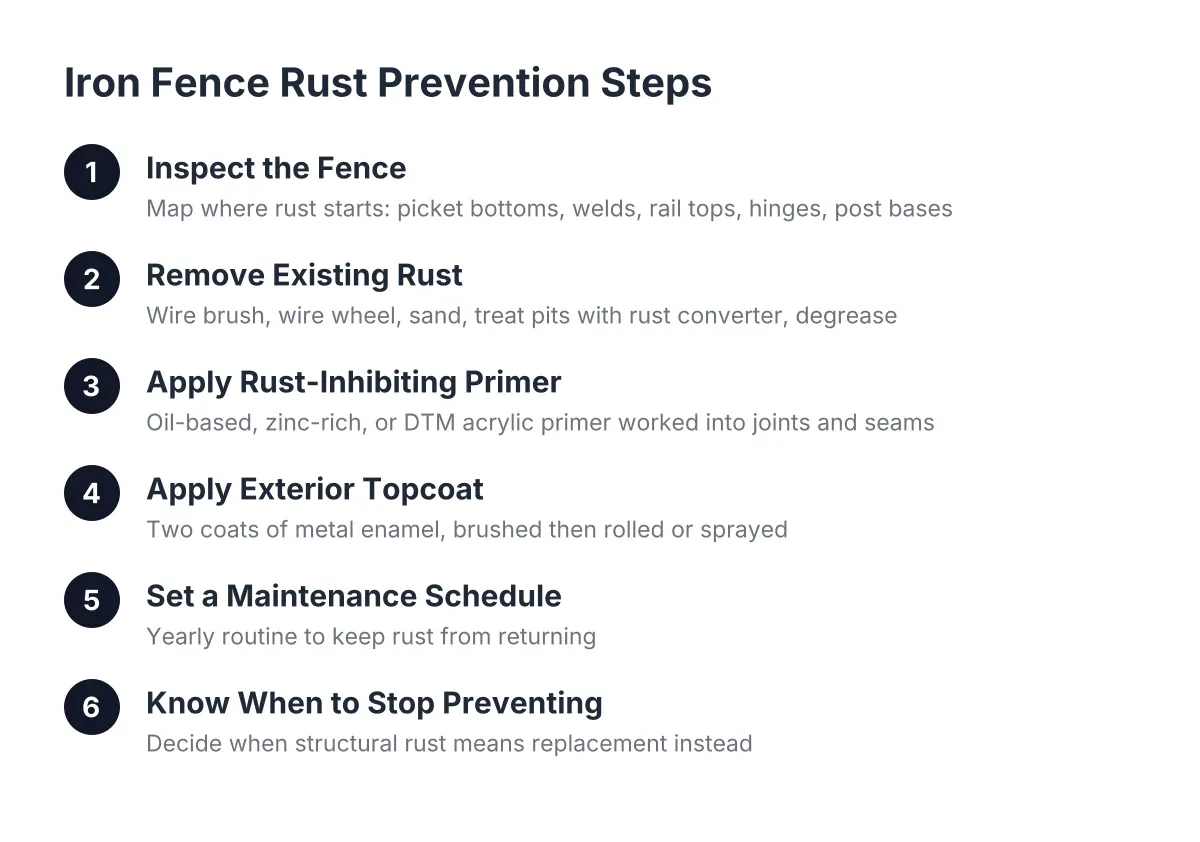
- Rust at the base and at joints. Snow piled against the bottom rail holds moisture against the metal for months. Scratches from plows, trimmers, or salt exposure open the coating.
- Gate sag and latch misalignment. Gates concentrate weight on two posts. If either one moves even slightly over a winter, the latch stops catching cleanly.
- Water trapped inside hollow sections. On some fabricated panels, water that gets inside tubing and freezes can split it. Good fabrication includes drainage.
Therefore, if you are evaluating an installer, ask about footing depth relative to local frost, how they handle drainage around posts, and what coating the panels carry. Those three answers predict how the fence holds up more than any brochure does.
Comparing Ornamental Aluminum and Wrought Iron Through Freeze-Thaw Cycles
Ornamental aluminum handles New England moisture and salt better than iron because aluminum does not rust, while iron offers more raw strength and a heavier, traditional look. For most Springfield-area residential and commercial properties, ornamental aluminum fence installation delivers the iron appearance with far less finish maintenance. That is why it has become the default choice here.
However, the decision is not one-sided. Iron makes sense where impact resistance matters, such as a commercial perimeter where vehicles or equipment operate near the fence line. Aluminum makes sense where the priority is a clean decorative look that does not need repainting, such as a pool enclosure, a storefront, or the front yard of an older New England home.
For a facilities manager, the maintenance math usually decides it. Suppose you oversee five rental properties and want matching ornamental fencing across all of them. With iron, you are budgeting for periodic rust treatment and repainting at every site. With powder-coated aluminum, you are mostly budgeting for occasional panel or gate repairs. Fewer recurring line items, fewer site visits.
What Drives Wrought Iron Fence Cost in the Springfield Area?
Wrought iron fence cost per foot depends on panel style, fence height, gate count, footing requirements, and site conditions, not just material price. Decorative scrollwork, taller security heights, and sloped or rocky ground all push the number up. A straight run of standard panels on level ground sits at the low end.
As of 2026, iron and ornamental metal remain premium options compared to a wood fence or chain link fence. For context on fencing generally, overall fence installation costs average $3,277 nationally, with most homeowners paying between $1,860 and $4,843, according to Angi. Ornamental metal typically lands above the midpoint of comparable wood projects because of material and fabrication costs.
The site itself matters as much as the product. Older Springfield neighborhoods bring grade changes, tight property lines, tree roots, and sometimes existing footings from a previous fence. Each of those affects layout, labor, and the final cost per foot. A written fence estimate after a site walk is the only number worth taking to a budget meeting.
Should I Repair a Damaged Iron Fence or Replace It?
Repair a wrought iron fence when the damage is limited to a bent panel, a sagging gate, surface rust, or one or two heaved posts. Replace it when posts are rusted through at ground level, footings have failed along the run, or repairs keep recurring every season. The base of the fence tells you which situation you are in.
For scale, the national average cost of fence repair is $618, with most homeowners paying between $304 and $948, according to Angi. A single storm-damaged section or a plow-clipped corner post usually falls in repair territory. A fence line that waves down the block after years of frost heave usually does not.
In addition, a repair-first approach can preserve value. If the footings are sound, resetting or replacing individual posts keeps the rest of the structure working while you plan. That said, iron repairs sometimes involve welding and fabrication that go beyond what a general handyman handles; have a fence company assess structural rust before you spend on cosmetic fixes.
How Installation Quality Affects Wrought Iron Freeze-Thaw Performance Long Term
Installation quality determines most of how wrought iron fencing performs over its life in this climate. The same panels can last decades or start leaning in three winters depending on footing depth, drainage, and layout. In freeze-thaw ground, the install is the product.
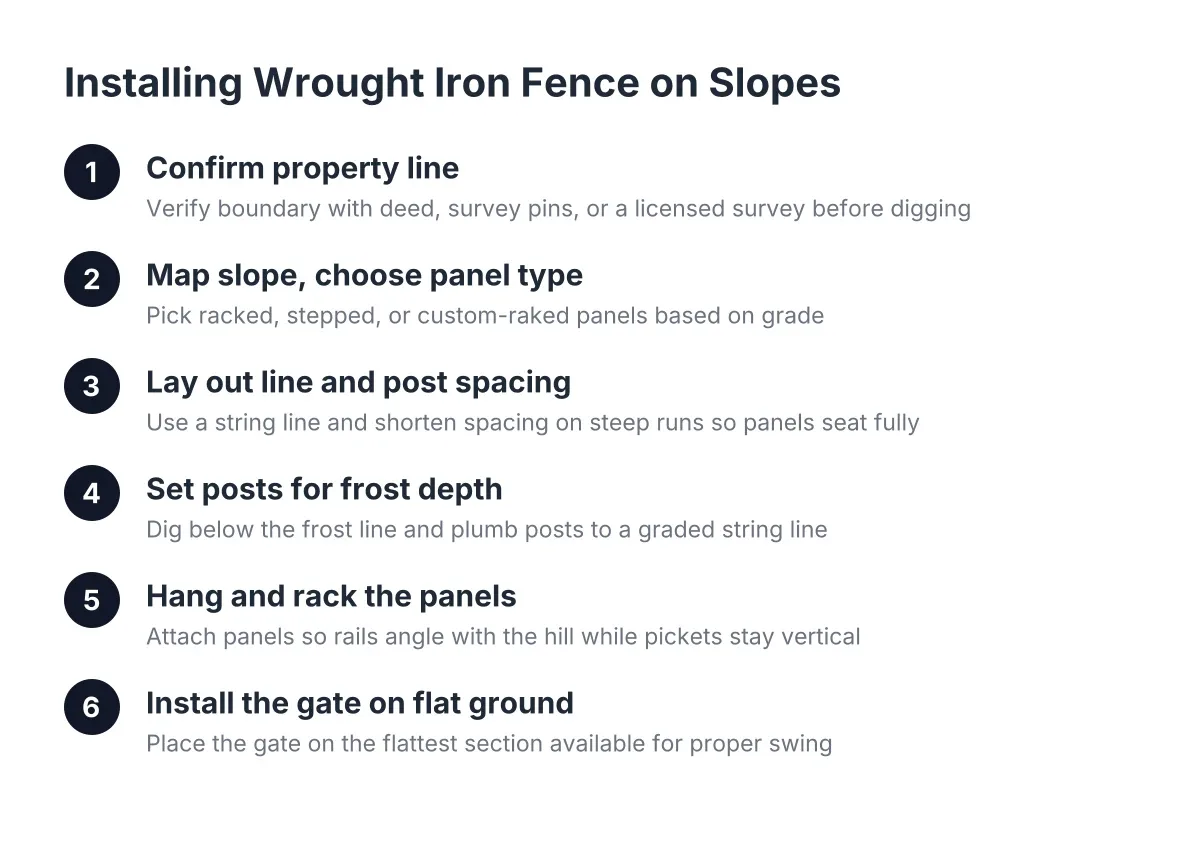
A sound installation in the Springfield area generally follows this sequence:
- Site walk and layout. Confirm property lines, mark utilities, and plan for grade changes so panels step or rack cleanly on slopes.
- Footings below frost depth. Dig and pour footings sized for the post load, deep enough that freezing ground cannot lift them.
- Post setting and alignment. Set posts plumb and let footings cure before hanging panels, so nothing shifts under load.
- Panel and gate installation. Hang panels, mount gates on reinforced posts, and check swing and latch alignment.
- Finish inspection. Check coatings for shipping or handling damage and touch up before the fence sees its first winter.
Searches for a wrought iron fence near me will surface plenty of panel suppliers, but panels are only half the project. The installer who sets your footings is the one deciding how the fence rides out the next twenty freeze-thaw seasons.
What Should Commercial Property Managers Ask Fence Installers Before Signing?
Before hiring from a list of wrought iron fence installers near me, a commercial property manager should confirm the company handles commercial fence installation, ask how footings are specced for frost, and request per-site written estimates that hold up for budget approval. Clear answers on those three points separate commercial-capable installers from residential-only crews.
A few more questions worth asking across a multi-property portfolio:
- Can you quote iron, ornamental aluminum, and chain link fence options side by side for the same perimeter?
- How do you schedule work across several sites to limit tenant disruption?
- How do you handle winter damage calls on fences you installed?
- What coating system do the panels carry, and what maintenance does it need here?
One honest limitation: no fence, iron or otherwise, is maintenance-free in this climate, and no installer can promise the ground will never move. What a local fence company can do is build for the conditions, set posts below frost, plan drainage, and give you straight answers on the cost factors before you commit. In Springfield, MA weather, that is what makes the difference between a fence that performs and one that becomes a recurring repair ticket.
If you need fence installation, Western Mass Fence Co can help.
Prefer to talk it through? Call (413) 305-1309 — a quick call is usually the fastest way to get a straight answer for your situation.