Fence Company Terms Explained: A Plain-English Glossary
If you're getting fence quotes in the Springfield area and keep running into words like "picket," "grade," or "scalloped," this fence company glossary is for you. It explains the terms you'll see on estimates and hear during site visits, in plain English. Use it to read a quote line by line, ask better questions, and spot the details that change your fence cost before you sign anything.
- Post: the vertical backbone of your fence
- Rail: the horizontal pieces between posts
- Picket: the boards or slats you actually see
- Gauge: how thick chain link wire is
- Mesh: the size of chain link openings
- Frost line: how deep the ground freezes
- Post hole depth: how deep posts get set
- Grade: the slope of your yard
- Racking vs. stepping: two ways to fence a slope
- Property line: the legal edge of your lot
- Setback: required distance from the line
- Cost per foot: how fence pricing is usually quoted
- Linear foot: how fence length is measured
- Gate hardware: hinges, latches, and locks
- Privacy fence: solid panels with no gaps
- Fence replacement: tearing out old, installing new
Fence Parts and Materials
These are the words that describe what a fence is made of. Once you know them, every line on a fence company glossary estimate starts making sense.
Post
A post is the vertical support that holds up the entire fence, set into the ground at regular intervals. Posts carry all the load, so how they're set matters more than almost anything else on the job. In Western Massachusetts, posts need to be set below the frost line or winter ground movement can heave them out of plumb. If a quote itemizes posts separately, that's a good sign the installer is thinking about spacing and depth, not just footage.
Rail
A rail is the horizontal piece that runs between posts and gives the fence boards something to attach to. Most wood fences use two or three rails depending on height. More rails mean a stiffer fence and a higher material count, which shows up in your fence cost. If a tall privacy fence is quoted with only two rails, ask why.
Picket
A picket is the individual vertical board or slat that forms the visible face of a wood or vinyl fence. Picket width, spacing, and style (flat top, dog ear, or pointed) drive both the look and the privacy level. Tight or overlapping pickets cost more in material than spaced ones. When an installer asks "spaced or solid," they're asking about picket layout.
Gauge
Gauge is the measure of how thick the wire in a chain link fence is, and lower numbers mean thicker wire. A lower-gauge chain link fence stands up better to dogs, kids, and snow load, but it costs more per foot. Residential and commercial fence quotes often differ mainly on gauge. If two chain link quotes look far apart in price, compare the gauge first.
Mesh
Mesh refers to the size of the diamond-shaped openings in chain link fabric. Smaller mesh means more wire per foot, which makes the fence stronger and harder to climb, and raises the price. Larger mesh is common for simple residential fence runs like marking a yard. A provider who specifies mesh size on the quote is giving you something you can compare apples to apples.
Privacy fence
A privacy fence is a fence built with solid, gap-free panels, usually six feet tall, that blocks the view into your yard. Wood and vinyl are the common choices; chain link with slats is a budget middle ground. Privacy fences use more material than spaced styles, so expect a higher cost per foot. They also catch wind, which is why post setting matters even more on these jobs.
Site and Installation Terms
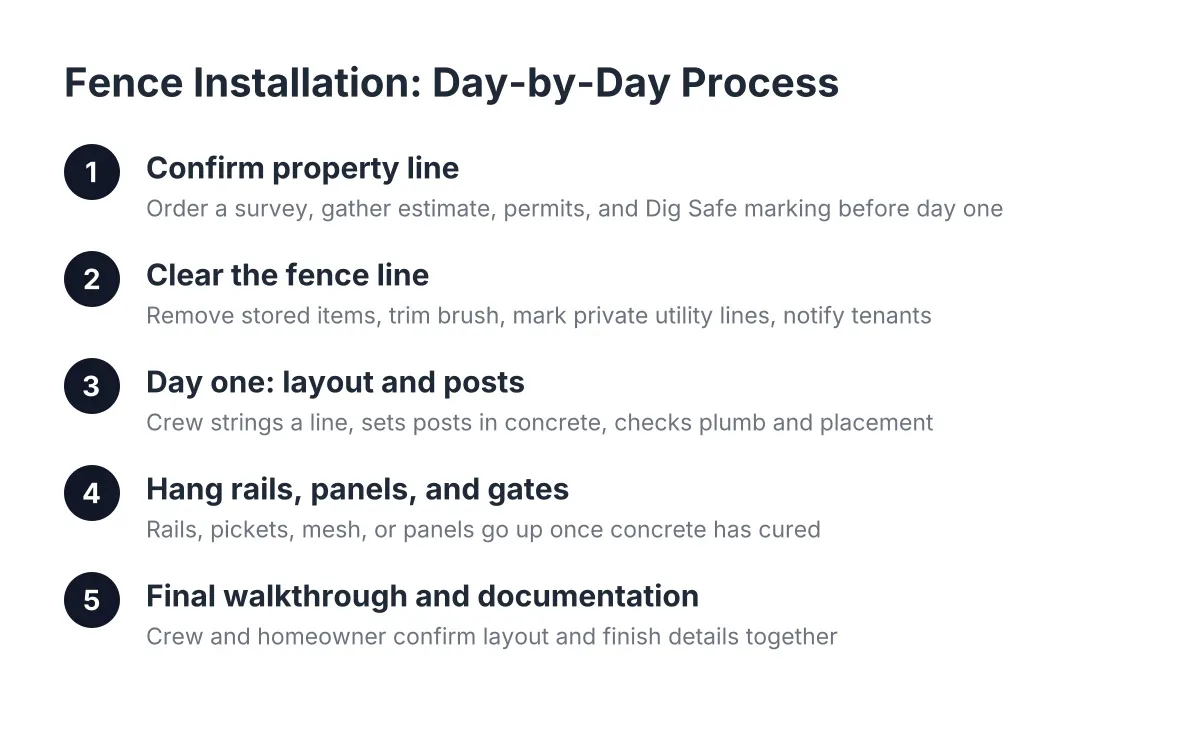
This is where most surprises on a fence installation come from. Springfield-area lots tend to have slopes, old property markers, and frozen winters, and these terms cover all three.
Frost line
The frost line is the depth to which the ground freezes in winter. In New England it runs deep, and any post set above it can be pushed up and tilted when the ground freezes and thaws. That's called frost heave, and it's the main reason older fences around here lean. A local installer who talks about frost depth before talking about fence style is paying attention to the right things.
Post hole depth
Post hole depth is how far down each fence post gets buried, usually with concrete around it. Deeper holes cost more labor but keep the fence straight through freeze and thaw cycles. Rocky or root-filled ground, common in older Springfield-area yards, slows digging and can affect the price. Ask any installer how deep they set posts; the answer tells you how long the fence will last.
Grade
Grade means the slope of the ground where the fence will run. Few yards in this region are flat, and grade changes force decisions about how the fence follows the land. A steep grade adds layout time and sometimes custom-cut panels, which raises labor cost. If your yard slopes and the quote doesn't mention it, raise the question yourself.
Racking vs. stepping
Racking and stepping are the two ways a fence handles a slope: racking tilts each panel to follow the ground, while stepping keeps panels level and drops each one down like stairs. Racking leaves no gaps under the fence, which matters if you're containing a dog. Stepping looks crisp but leaves triangular gaps at the bottom of each panel. Vinyl fence panels rack only so far, so a steep yard can change which material works for you.
Property line
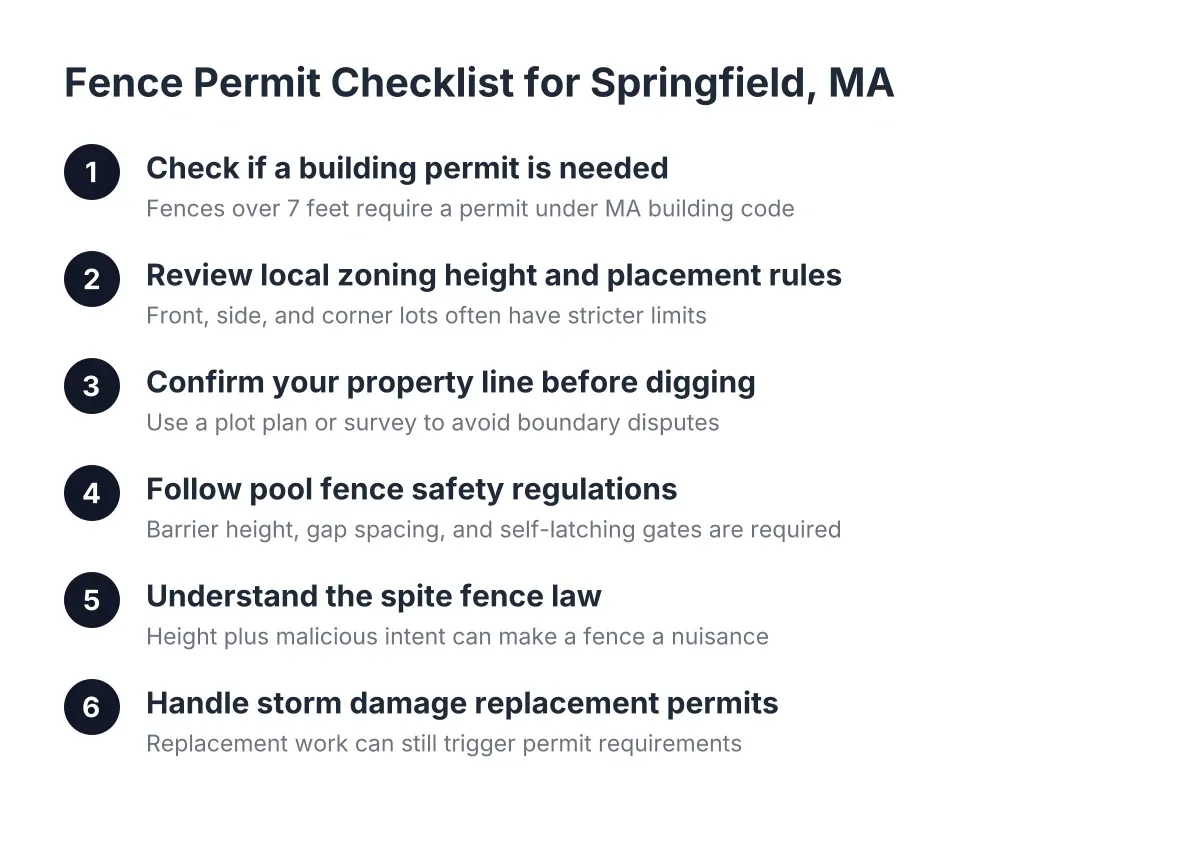
A property line is the legal boundary between your lot and your neighbor's. A fence built even a little over the line can mean disputes or a forced tear-out, so knowing where yours sits is step one of any fence installation. Older New England housing stock often has markers that are buried, moved, or missing. If you're unsure, find your plot plan or have the lot surveyed before anyone digs.
Setback
A setback is a rule requiring the fence to sit a certain distance back from the property line, sidewalk, or street. Setback rules vary by town, so what's fine in Springfield may differ in Agawam or Holyoke. Check your local code or ask your installer what applies on your street. A fence company that asks about your town before quoting is doing the homework that keeps you out of trouble later.
Pricing and Paperwork Terms
Cost per foot
Cost per foot is the price of the fence divided by its length, and it's the most common way fence pricing gets quoted. It bundles material, labor, posts, and concrete into one number you can compare. Material drives it most: chain link usually runs lowest, wood sits in the middle, and vinyl and ornamental aluminum run higher. For the full picture of what moves that number, see our guide to fence installation cost.
Linear foot
A linear foot is a straight-line measurement of fence length along the ground, as opposed to square footage. Fence quotes are measured in linear feet because height is handled separately as part of the style. Walk your yard with a tape measure before calling anyone and you'll know roughly what footage you're buying. It also helps you catch a quote that measured the run wrong.
Gate hardware
Gate hardware means the hinges, latches, and locks that make a gate work, and it's usually priced as a separate line from the fence itself. Gates are the hardest-working part of any fence and the first part to sag or fail when hardware is cheap. Self-closing hinges and lockable latches add cost but matter for pool areas and pets. If the quote lists gates without naming the hardware, ask what's included.
Fence replacement
Fence replacement means removing an existing fence and installing a new one in its place, and it costs more than installation on a bare line. Tear-out, hauling away old material, and breaking out old concrete footings all add labor. Old posts set shallow or snapped off at ground level can complicate the dig. A clear fence estimate will show removal as its own line so you can see what you're paying for.
Using These Terms
That's what this fence company glossary gives you: the vocabulary to read a fence estimate line by line instead of just looking at the total. Now you can ask how deep the posts go, whether the slope will be racked or stepped, and what the cost per foot actually includes. Those questions separate a quote you understand from a number you're hoping is fair.
If you need fence installation, Western Mass Fence Co can help.
Prefer to talk it through? Call (413) 305-1309 — a quick call is usually the fastest way to get a straight answer for your situation.