Wrought Iron Fence Terms Explained: A Plain-English Glossary
If you've been pricing an ornamental metal fence and keep running into terms you half understand, this wrought iron fence glossary is for you. It's written for Springfield-area homeowners and property owners who want to read a fence estimate line by line, talk to a fence company without guessing, and spot problems before they end up in the ground. Each entry gives you a plain definition first, then tells you why the term matters to your project and your fence cost. Nothing here is salesy; it's the vocabulary a local installer would explain over the fence line.
- Picket: the vertical bars in each panel
- Rail: the horizontal bars holding pickets
- Panel: one factory-made fence section
- Post: the vertical support set in the ground
- Finial: the decorative tip on a picket
- Scroll work: curled decorative metal accents
- Wrought iron vs. ornamental aluminum: true forged iron versus modern metal look-alikes
- Powder coating: baked-on protective finish
- Galvanizing: zinc coating that fights rust
- Gauge: thickness of the metal
- Flush-bottom vs. staggered: how the fence follows the ground
- Racking: panels that adjust to slopes
- Footing: the concrete base around a post
- Frost line: how deep the ground freezes
- Gate hardware: hinges, latches, and locks
- Cost per foot: how fence pricing is quoted
- Fence estimate: the written scope and price
- Property line survey: the legal map of where your fence can go
Parts of the Wrought Iron Fence Glossary
These are the pieces an installer names when describing panels and layout. Knowing them turns a confusing quote into a parts list you can actually check.
Picket
A picket is one of the vertical bars that make up the body of a metal fence panel. Picket spacing affects both the look of the fence and what it keeps in or out; tighter spacing matters if you have small pets or a pool. When a quote mentions picket style or spacing, that choice drives material use, which drives cost per foot. Ask to see spacing options before you sign anything.
Rail
A rail is a horizontal bar that runs across a fence panel and holds the pickets in place. Most ornamental panels have two or three rails; a third rail adds stiffness and a different look. More rails mean more metal, so a three-rail panel usually costs more per foot than a two-rail version. If your quote lists "2-rail" or "3-rail", that's what it means.
Panel
A panel is one pre-built section of fence, pickets and rails already assembled, that attaches between two posts. Most modern ornamental fencing is installed panel by panel rather than bar by bar. Panel width matters because your total footage gets divided into panels, and odd leftover lengths may need a cut-down section. A fence estimate that lists panel count and width is easier to verify against your yard than one that only lists total feet.
Post
A post is the vertical support set into the ground that carries the weight and wind load of the fence. Posts do the real structural work; panels just hang between them. Corner posts, end posts, and gate posts are built heavier than line posts, and gate posts especially need solid footings. If a fence leans or sags years later, the posts or their footings are almost always the reason.
Finial
A finial is the decorative tip, often a spear, ball, or flat cap, on top of a picket. Finials are mostly about style, but spear-style tips also discourage climbing, which matters on a commercial fence. They're usually a line item or style choice on your estimate rather than a structural decision. Pick them for looks; they won't change how long the fence lasts.
Scroll Work
Scroll work means the curled, decorative metal shapes added between pickets or along the top of a fence. It's the detail most people picture when they imagine a classic wrought iron fence in front of an older New England home. Scroll work is largely hand-finished or specialty-fabricated, so it adds noticeably to cost and lead time. If your budget is tight, skipping scrolls is one of the easiest ways to bring a metal fence quote down.
Materials and Finishes from the Wrought Iron Fence Glossary
This section covers what the fence is made of and coated with, which is where most of the long-term value hides.
Wrought Iron vs. Ornamental Aluminum
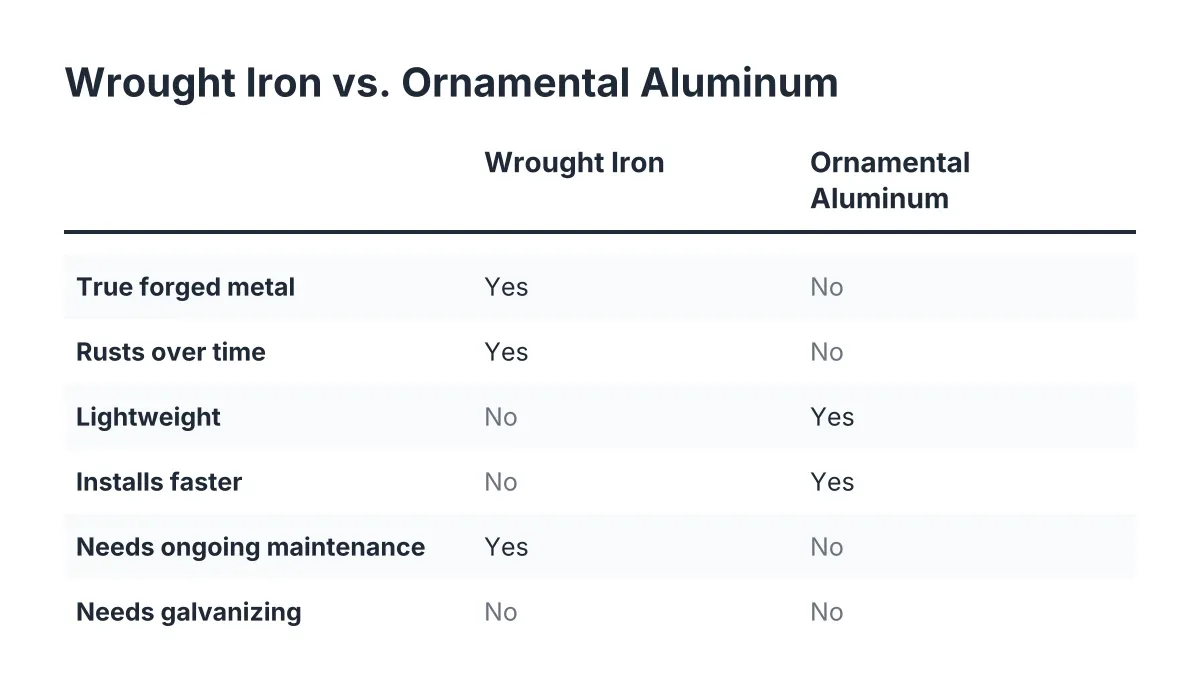
Wrought iron is true forged iron worked by a blacksmith or fabricator, while ornamental aluminum is a modern, lighter metal made to give a similar look. Most new "iron" fences sold today are actually ornamental aluminum or steel, because true wrought iron is heavy, expensive, and needs ongoing rust maintenance. Ornamental aluminum won't rust, weighs less, and installs faster, which matters in a climate like ours with wet springs and freeze-thaw winters. Western Mass Fence Co installs ornamental aluminum fence for exactly this reason: you get the classic look without the upkeep. If a quote says "iron look" or "ornamental", ask which metal it actually is.
Powder Coating
Powder coating is a dry finish applied to metal and then baked on, creating a tougher, more even coat than ordinary paint. It's the standard finish on ornamental aluminum and steel fencing, and it's a big part of why modern metal fences need little maintenance. A chipped or thin coating is where rust or corrosion starts on steel, so finish quality matters more than it sounds. When comparing quotes, a powder-coated product is worth more than a painted one at the same price.
Galvanizing
Galvanizing is a zinc coating applied to steel to protect it from rust. On steel ornamental fencing, the best products are galvanized first and powder coated on top, giving two layers of protection. Aluminum doesn't need galvanizing because it doesn't rust the way steel does. If you're quoted a steel fence, ask whether it's galvanized under the finish; the answer tells you how it will hold up through New England winters.
Gauge
Gauge means the thickness of the metal in the pickets, rails, and posts. Thicker metal costs more but resists bending from kids, snow loads, and the occasional ladder leaned against it. Residential fence lines usually use lighter gauges than commercial fence runs, which take more abuse. Two quotes with the same look can differ in price because one uses heavier material; gauge is often the hidden reason.
Layout and Installation
These terms come up once the crew is measuring your yard, and they matter more on Springfield-area lots with slopes and older property lines than they do on flat new subdivisions.
Flush-Bottom vs. Staggered
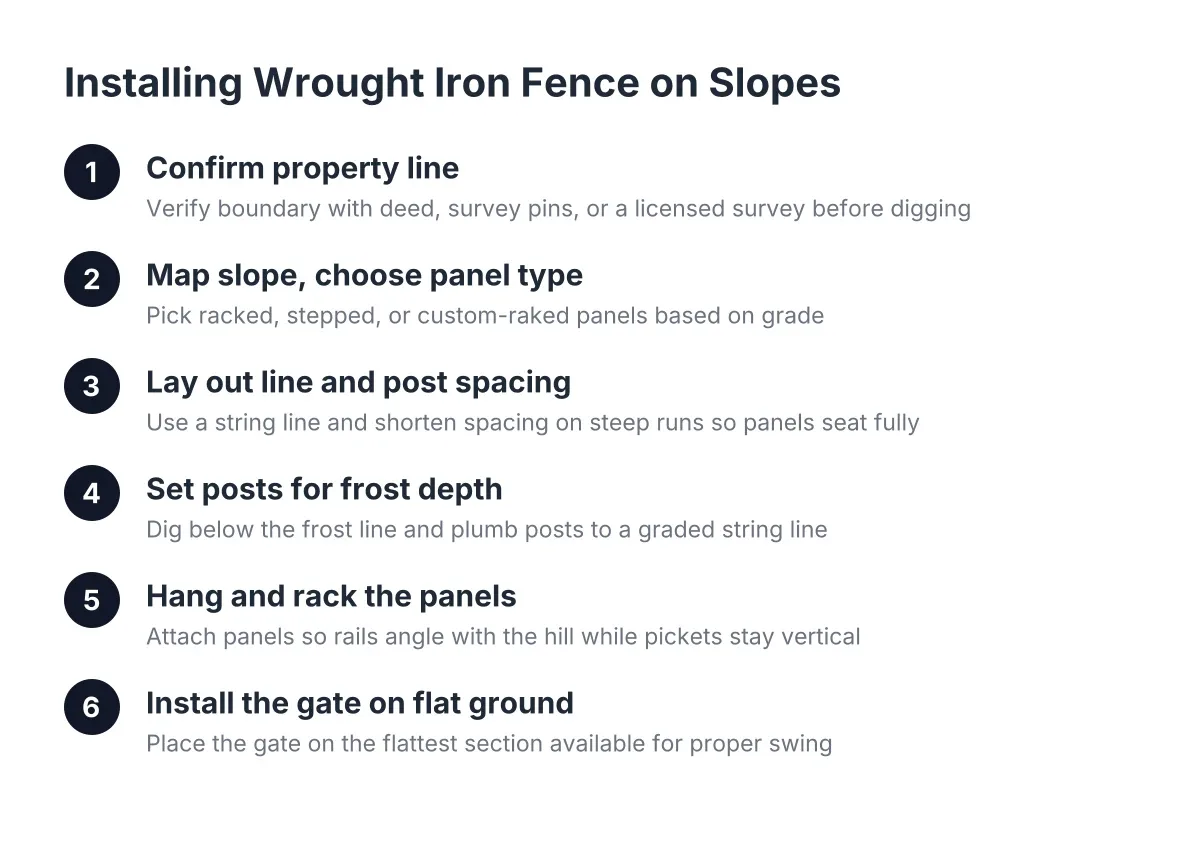
Flush-bottom means the bottom of the fence follows the ground evenly, while staggered (or stepped) means panels drop in level steps down a slope. Stepped installation leaves triangular gaps under panels on hills, which matters if the fence needs to contain a dog. Flush or racked installation closes those gaps but takes more labor and the right panel type. Walk your fence line with the estimator and ask how slopes will be handled before work starts.
Racking
Racking means a fence panel's ability to pivot slightly so its pickets stay vertical while the rails follow a slope. Rackable panels let the fence hug a hill without gaps or steps. Not every panel style racks, and heavily decorated panels often can't. On the grade changes common around older Springfield-area homes, racking capability can decide which product fits your yard, so it's worth asking about early.
Footing
A footing is the concrete base poured around a fence post below ground to hold it upright and stable. Footing depth and width are the difference between a fence that stands straight for decades and one that heaves or leans. Gate posts need the largest footings because gates put constant swinging load on them. If a quote is unusually cheap, shallow footings are one of the first corners that may have been cut.
Frost Line
The frost line is the depth to which the ground freezes in winter. Posts set above the frost line can get pushed up and tilted by freezing and thawing soil, a process called frost heave. In western Massachusetts, frost and ground movement are real factors in how long a fence stays straight, so post depth isn't a detail to skip over. Ask any fence company how deep they set posts for your area; a confident, specific answer is a good sign.
Gate Hardware
Gate hardware means the hinges, latches, locks, and closers that make a gate work. Hardware takes more wear than any other part of the fence because it moves every day. Self-closing hinges and self-latching gates are standard requirements around pools in most places, so check your local code. Cheap hardware is the most common reason a good fence gets annoying to live with, so it's worth a line-item look on the estimate.
Pricing and Paperwork
Cost per Foot
Cost per foot is the standard way fence installation is priced: the total cost divided by the number of linear feet of fence. It bundles materials, labor, and site conditions into one number you can compare across quotes. The same yard can carry different cost per foot depending on gauge, panel style, slope, gate count, and access for the crew. Comparing two quotes only by cost per foot without checking what's included is the most common buyer mistake.
Fence Estimate
A fence estimate is the written document describing the scope, materials, footage, gates, and price for your project. A good one spells out panel style, metal type, finish, post footing approach, and who handles old fence removal if this is a fence replacement. Vague estimates lead to disputes; detailed ones protect both sides. Read every line, and ask about anything that isn't spelled out.
Property Line Survey
A property line survey is a legal measurement, done by a licensed surveyor, that marks exactly where your lot begins and ends. Fences built even slightly over the line can trigger neighbor disputes and expensive do-overs, and older New England housing stock often has property lines that don't match the fences already standing. If there's any doubt about your boundaries, sort it out before installation, not after. A fence company can install to the markers, but establishing the line is the surveyor's job.
Using These Wrought Iron Fence Glossary Terms
That's what this wrought iron fence glossary gives you: the words to read a fence estimate line by line and ask sharper questions, from gauge and footings to racking and cost per foot. If you're in the Springfield area and weighing an ornamental aluminum fence against wood, chain link, or vinyl, you now speak enough of the language to compare quotes on substance, not just price.
Prefer to talk it through? Call (413) 305-1309 — a quick call is usually the fastest way to get a straight answer for your situation.