What Causes Fence Posts to Lean and How to Fix Them for Good
A leaning fence rarely gets better on its own. Whether you own one new home in Springfield or manage chain link across five commercial sites, the question is the same: what causes fence posts to lean, and what fix actually holds? Most leaning posts trace back to a handful of root problems, and the right repair depends on which one you have. Guess wrong, and you will straighten the same post again next spring. Understanding the causes of fence post leaning is the first step toward a lasting fix.
This guide walks through the diagnosis and the fix, step by step. It is written for Western Massachusetts ground, which means frost, clay, slopes, and older property lines that complicate everything.
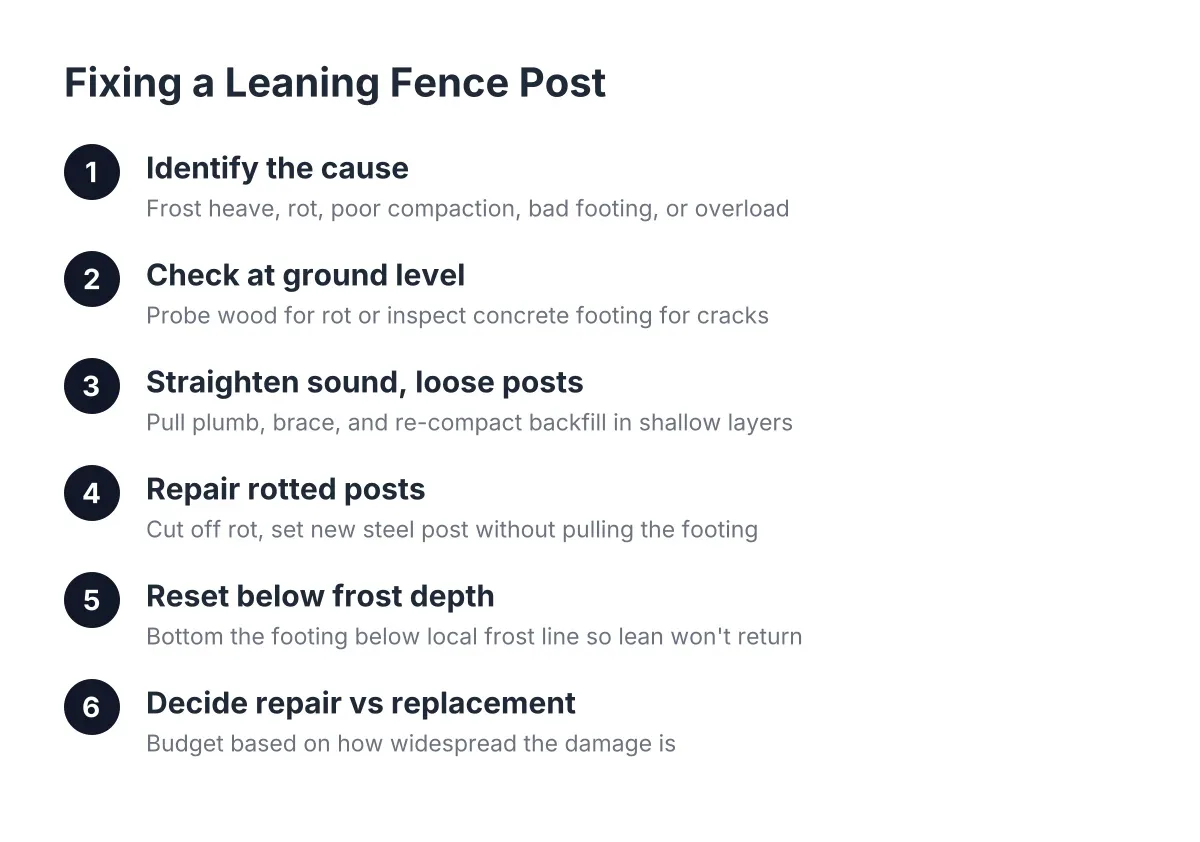
Step 1: Identify What Causes Fence Posts to Lean on Your Property
Before you touch a shovel, figure out why the post moved. The common causes of fence posts leaning fall into five buckets:
- Frost heave. New England ground freezes and thaws every winter. Water in the soil expands as it freezes and pushes shallow footings up and sideways. Posts set above the local frost depth get shoved around year after year.
- Rot at ground level. Wood posts fail where wood, soil, and moisture meet, usually right at or just below grade. The post above and below that line can look fine while the critical few inches turn to mulch.
- Poor compaction at install. A post backfilled with loose dirt or gravel that was never tamped hard will loosen under wind and water loads. Inadequate tamping is one of the most common reasons posts work themselves loose over time.
- Undersized or cracked footings. A post needs generous concrete on all sides. A skinny footing can crack under lateral force, and the break becomes a permanent wobble point even though the post itself is sound.
- Load the fence was never built for. Solid privacy panels catch wind like a sail. Snow piled against chain link, a gate that gets slammed, or a vehicle bump at a commercial site will all tip a post that was set for lighter duty.
Grab the post and push. If the post flexes but the base stays firm, suspect rot. If the whole post rocks in the ground, suspect compaction or a failed footing. Additionally, if the post sits higher than its neighbors, frost heave has likely been lifting it; a post that still sticks up above the intended line usually was not set deep enough in the first place.
Step 2: Check the Post at Ground Level Before Deciding Anything
Scrape away the soil at the base of a wood post and probe it with a screwdriver. If the tool sinks in easily, the post is rotting where it meets the ground, and no amount of straightening will save it. This check decides your whole repair path, so do it on every leaning post, not just the worst one.
For chain link and ornamental aluminum fence posts, look at the concrete instead. A crack running through the footing, or a gap where the post has worked a cone-shaped void into the concrete, means the footing has failed. Also note the slope. On graded sites, posts sometimes get backfilled higher on one side so the top rail runs level, and a lean can be partly an illusion created by the grade.
Commercial managers should walk the full line, not just the reported section. Suppose a tenant flags one leaning post on a chain link perimeter in an industrial lot. A typical crew walking that line will often find three or four more posts with cracked footings from plow strikes and frost, and pricing the repair as one visit beats four callbacks.
Step 3: Straighten and Re-Compact Posts That Are Sound but Loose
If the post is solid and the footing is intact, the fix is mechanical. Dig out one side of the post, pull it plumb with a level on two faces, brace it with diagonal 2x4s, and backfill in shallow layers, tamping each layer hard before adding the next. Compaction is the whole job here. A post tamped properly in lifts will outlast one drowned in loose fill.
However, do not assume more concrete automatically solves the problem. Pouring extra mix into a sloppy hole around an unbraced post just makes a bigger bad footing. What matters is a hole wide enough for concrete on all sides, a post held plumb while it sets, and soil or concrete compacted so there are no voids for water to work through.
Step 4: Repair Rotted Wood Posts Without Pulling the Footing
When a wood post has rotted at grade but the concrete footing below is solid, the first instinct is to rip everything out. That is often the slow, expensive route. Breaking out a buried footing in frozen or clay-heavy Springfield-area soil can take longer than setting the new post.
Instead, a practical interim repair is to cut the post off above the deteriorated section and set a new steel post into or alongside the original footing. This approach preserves the concrete, keeps the fence standing, and lets the repair money effectively roll toward an eventual full fence replacement with steel posts instead of being spent twice. For context, Angi puts the national average cost of fence repair at $618, with most homeowners paying between $304 and $948, so a footing-preserving repair on two or three posts often stays well under the cost of replacing a full section.
There is a limit, though. If most posts along a run are rotting, or the wood fence is over 10 years old and needs frequent repairs, Angi notes that is the point where replacement makes more sense than another round of patching. A local fence company can tell you in one walk-through whether you are maintaining a fence or slowly rebuilding one post at a time; that judgment call is worth getting from a professional rather than guessing section by section.
Step 5: Reset Posts Below Frost Depth So the Lean Does Not Come Back
Any post you reset in Western Massachusetts needs to account for frost. A footing that bottoms out above the local frost depth will heave again, no matter how carefully you plumbed it. The permanent fix is depth plus mass: a hole that reaches below the frost line, flared or widened at the bottom so frost cannot grip and lift it, and enough concrete surrounding the post on all sides to resist lateral load.
On slopes, adjust the layout too. Steep grade changes shorten the usable span between posts, because full-length rails will not seat into the post routing when the ground drops away. If you are resetting posts on a hill, be prepared to shorten spacing on the steep sections rather than forcing rails that no longer reach.
This is the step where many DIY fixes quietly fail, and where searches for fence builders near me turn into repeat searches a year later. The post looked straight in October; by April the frost had lifted it again because the footing never got below the freeze line.
Step 6: Decide Between Repair and Replacement, Then Budget Accordingly
Once you know what caused the lean, the repair-or-replace decision gets simpler. Use these rules of thumb:
- One or two loose posts, no rot, footings intact: straighten, brace, and re-compact. Lowest cost, same-day work.
- Scattered rot at grade, good footings: steel post inserts that preserve the concrete. Mid-range cost, buys years.
- Widespread rot, heaved footings, or an aging fence failing in multiple spots: plan a fence replacement and price it per foot rather than per patch.
For a new homeowner, say a couple who closed on a Springfield house last spring with a tired cedar fence, the math usually favors option two until the fence crosses into frequent-repair territory, then a full wood fence or vinyl fence replacement wins. Nationally, Angi reports overall fence installation averages $3,277, with most homeowners paying between $1,860 and $4,843, which is a useful sanity check when you are comparing a stack of repair invoices against one replacement estimate.
For a multi-property manager, the calculation shifts toward standardization. If you are collecting fence estimates across several sites, searching for a commercial fence company near me at each property multiplies your vendor management work. One commercial fence installation vendor who understands footing depth, frost, and gate hardware can quote repairs and replacements across the portfolio in a single pass, which makes the numbers hold up for budget approval.
Why Diagnosing the Causes of Leaning Fence Posts Beats Repeated Straightening
The cheapest repair is the one you only do once. Every lean traces back to a cause: frost heave, rot, loose backfill, a cracked footing, or a load problem. Fix the cause and the post stays put. Skip the diagnosis and you are renting straightness one season at a time.
That is also the honest filter for comparing contractors when you are sorting through fence installations near me results. Ask any installer, residential or commercial, how deep they set posts for this region, how they compact backfill, and what they do when they find rot above a sound footing. The answers tell you whether they fix fences or just straighten them.
If you need fence installation, Western Mass Fence Co can help.
Prefer to talk it through? Call (413) 305-1309 — a quick call is usually the fastest way to get a straight answer for your situation.