Wrought Iron vs. Ornamental Aluminum Fence: 8 Tradeoffs to Weigh Before You Buy
If you want the look of a classic metal fence, your real decision in 2026 comes down to wrought iron or ornamental aluminum. When comparing iron vs. aluminum fence options, both give you that open, decorative, picket-and-rail style, but they behave differently once they are in the ground, and they hit your budget in different ways. This list walks through the tradeoffs the way a local Springfield-area installer would explain them over the fence line: durability, cost, maintenance, gates, and the situations where each one actually makes sense.
One note before the list. True wrought iron is rare today. Most "iron" fencing sold now is welded steel, and most of what gets installed on homes and small commercial sites is ornamental aluminum built to look like iron. Keep that in mind as you compare quotes, because the word "iron" on an estimate can mean two different materials at two different price points.
1. How Iron vs. Aluminum Fence Materials Are Built Differently
From the sidewalk, a well-made aluminum fence and an iron or steel fence can be hard to tell apart. Both come in similar wrought iron fence designs: flat-top pickets, spear tops, arched gates, and decorative scrollwork. The difference is in the metal itself.
Iron and steel fencing is heavier, stiffer, and usually welded or fabricated in sections, sometimes custom-built for the property. Ornamental aluminum is lighter and typically arrives as pre-made panels that rack to follow slopes and attach to posts with brackets. That construction difference drives almost everything else on this list, from cost per foot to how the fence handles a hit from a lawn mower.
2. Durability Favors Iron for Impact, Aluminum for Weather
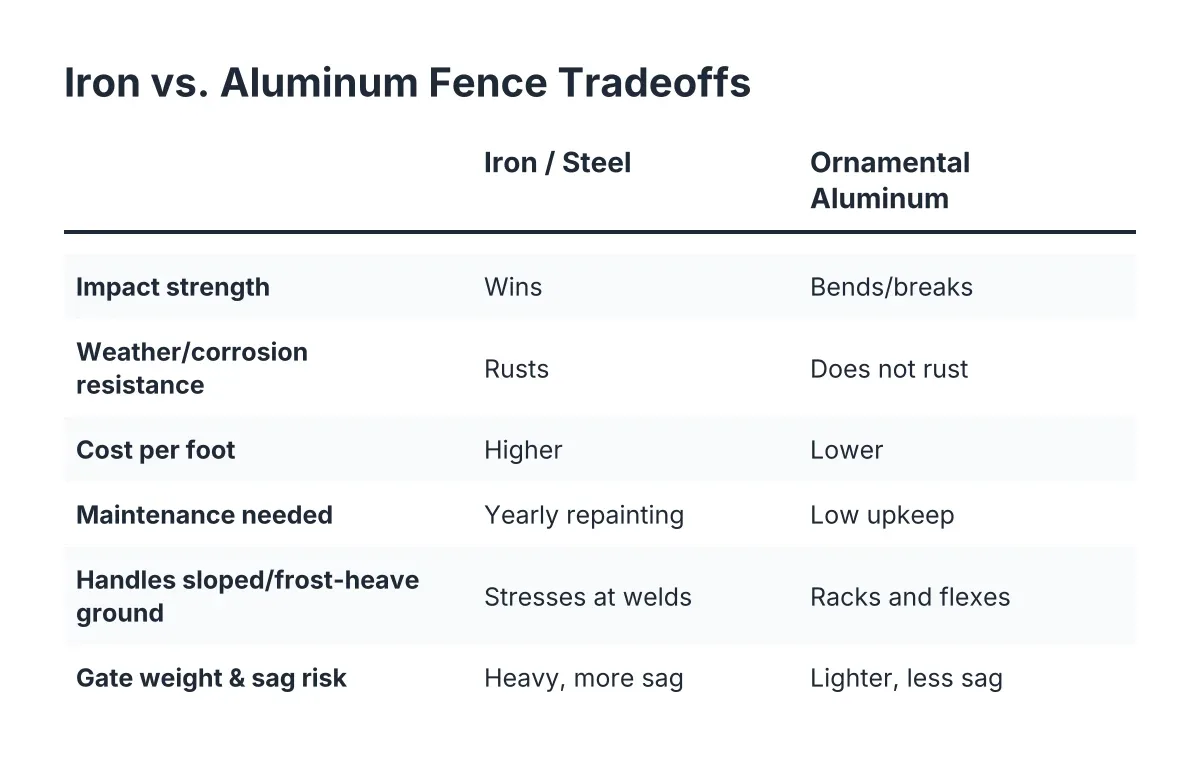
Here is the honest tradeoff. Iron and steel win on raw strength; aluminum wins on corrosion resistance. If a vehicle backs into an iron fence, it may dent or bend but often holds. Aluminum can bend or break at the same impact, though damaged panels are usually easier and cheaper to swap out.
However, weather tells a different story. Iron rusts wherever the paint or powder coating gets scratched, and in a climate like Springfield's, with snow, road salt, and freeze-thaw cycles, rust finds those scratches fast. Aluminum does not rust. For most residential fence projects, and for commercial perimeters that do not face heavy impact risk, that weather resistance matters more than brute strength.
3. Cost per Foot Is the Biggest Gap Between the Two
Expect iron or steel fencing to cost noticeably more per foot than ornamental aluminum, often by a wide margin once fabrication and labor are included. Iron sections are heavy, which means more labor to set and hang them, and custom work adds fabrication time on top of material cost.
Aluminum panels install faster, weigh less, and come in standard heights and styles, which keeps labor down. For context on the broader market, overall fence installation costs average $3,277 nationally, with most homeowners paying between $1,860 and $4,843, according to Angi. A decorative metal fence usually lands above the midpoint of typical fence budgets, so the material choice between iron and aluminum is often what decides whether the project fits your number.
When you compare fence estimates, make sure each quote states the actual material. A low "wrought iron" quote is sometimes an aluminum quote wearing the wrong label, and a high aluminum quote may include site work the other bid left out.
4. Maintenance Is Where Aluminum Quietly Pays You Back
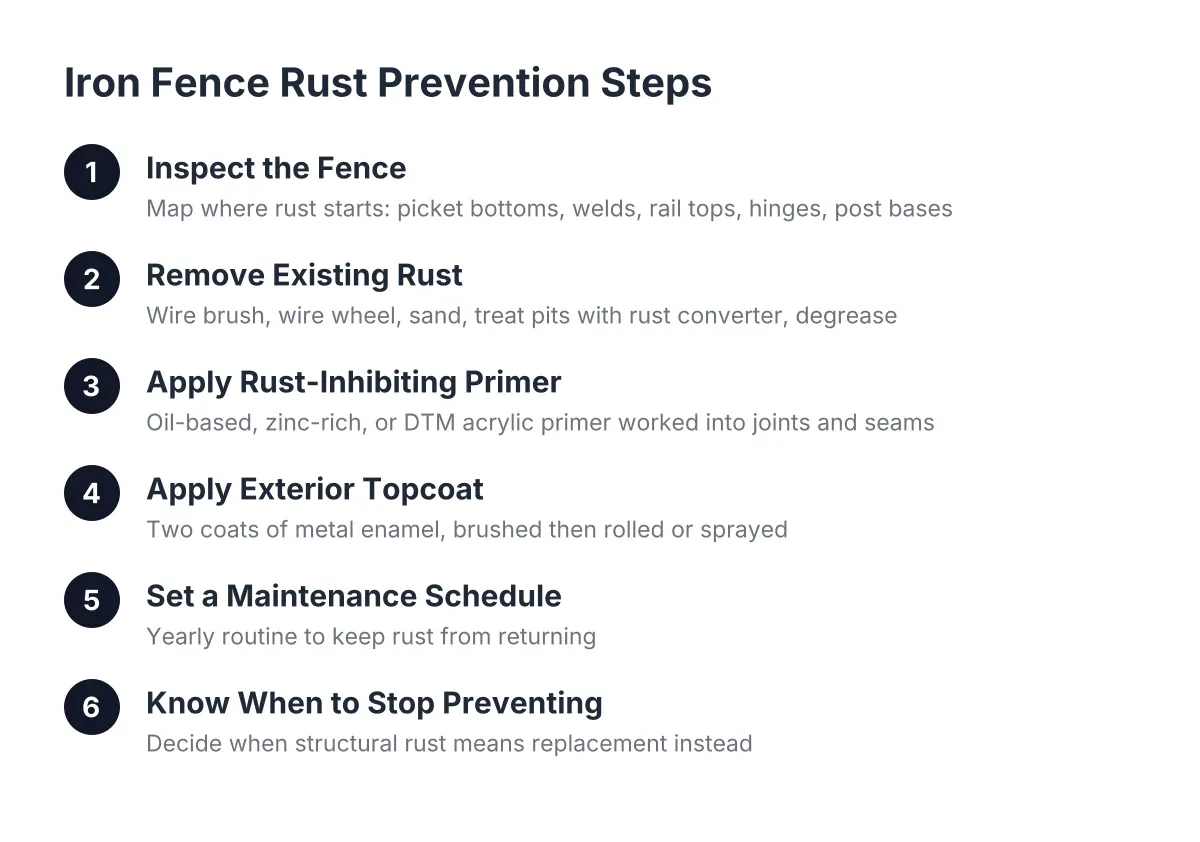
Iron fencing needs ongoing attention. Plan on inspecting it yearly, sanding and touching up rust spots, and repainting sections every several years depending on exposure. Skip that routine and rust works from the surface into the joints, and repairs get expensive.
Ornamental aluminum carries a powder-coated finish that does not need repainting under normal conditions. Washing off dirt and checking gate hardware is about the whole job. For a first-time fence buyer comparing lifetime cost rather than just the install price, that maintenance gap is often the deciding factor. The cheaper fence to own over 20 years is not always the cheaper fence on day one, and when weighing iron vs. aluminum fence long-term ownership costs, aluminum usually wins on both counts.
5. New England Ground Conditions Affect Both, but Not Equally
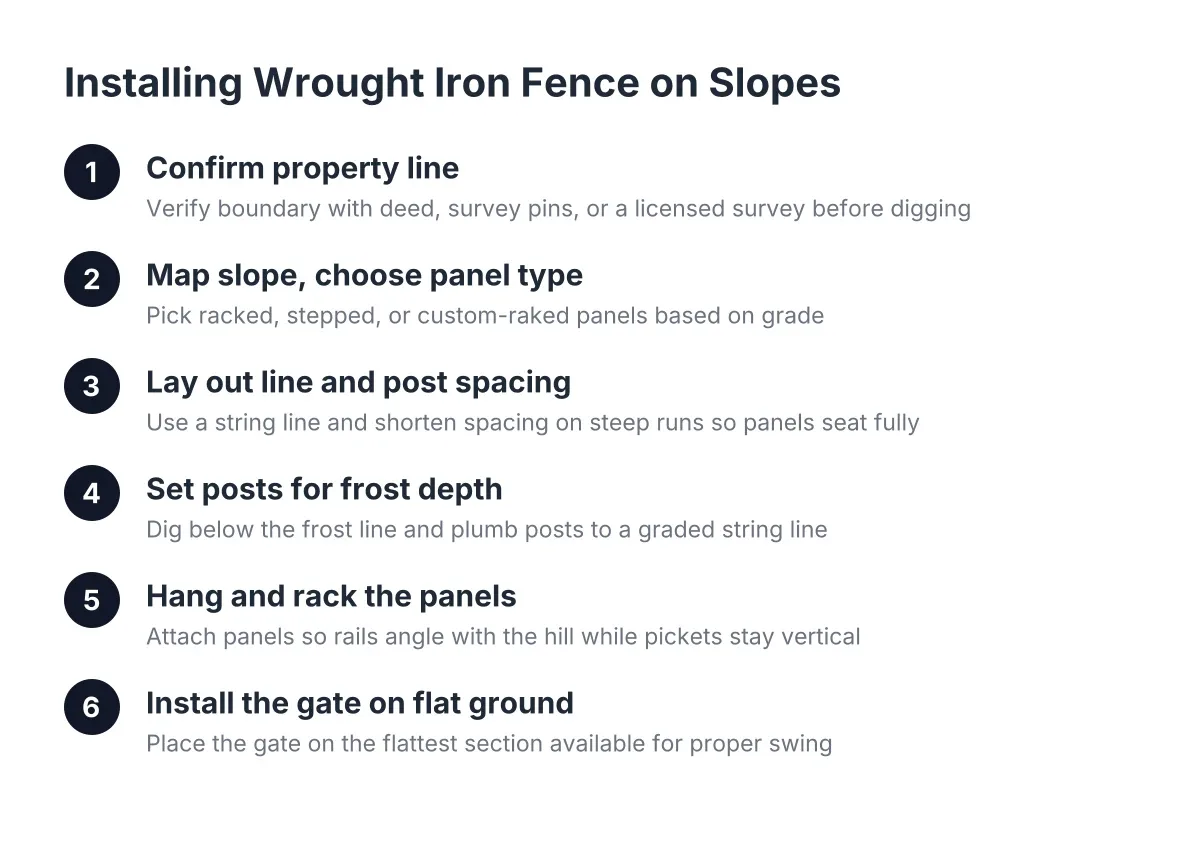
Frost is the hidden cost factor in any Springfield-area fence installation. Posts have to be set below the frost line, or seasonal ground movement will heave them out of plumb. That rule applies to iron and aluminum alike, so do not expect a discount on digging either way.
Where the materials differ is what happens after the posts move. A rigid welded iron section has little give; if posts shift, the section can stress at the welds. Aluminum panels are designed to rack and flex, which forgives minor movement and makes them easier to install on the sloped lots and uneven grades common to older New England properties. On a steep grade, iron often requires stepped custom sections, which adds fabrication cost fast.
6. Gates Deserve Their Own Line on the Estimate
A wrought iron fence gate is often the showpiece of the whole project, and it is also where weight matters most. Iron gates are heavy, so they need stout posts, often set in larger concrete footings, plus hinges rated for the load. Over time, a sagging gate is one of the most common repair calls on any metal fence.
Aluminum gates weigh a fraction as much, which means less post reinforcement and less sag. For a small commercial site, say an auto shop that needs a wide drive gate opened and closed a dozen times a day, that weight difference shows up in both the install quote and the long-term upkeep. Count your gates before you ask for a fence estimate, because each one adds real cost regardless of material.
7. For Commercial Properties, Match the Metal to the Job
Suppose a storage yard owner near Springfield needs 300 feet of perimeter fencing after a theft incident, with a budget in the five figures. In that scenario, the choice is rarely iron versus aluminum on looks alone. It is security grade versus curb appeal, and sometimes the right answer is neither; a tall chain link fence delivers more security per dollar when appearance does not matter.
Where appearance does matter, like a daycare frontage, an office entrance, or any street-facing boundary the public sees, ornamental aluminum gives a commercial fence the iron look without the repaint schedule. Heavier steel ornamental fencing exists for sites that need both the look and more impact resistance, and it prices between aluminum and true custom ironwork. A local fence company can walk the site and tell you which grade the situation actually calls for.
8. Panels, Styles, and What You Can Actually Order
Most buyers searching for wrought iron fence panels end up buying one of two things: welded steel panels built to an iron pattern, or aluminum panels styled the same way. Aluminum offers the wider catalog. Standard heights, multiple picket spacings, flat tops for pool code compliance, and spear tops for security all come off the shelf, which shortens lead times.
True custom iron work still has a place. Historic homes, properties where a section of original ironwork needs to be matched, and high-end architectural projects justify the fabrication cost. For everyone else, modern wrought iron ornamental aluminum styling covers the same visual ground at a lower cost per foot.
Quick Comparison: Iron vs. Aluminum Fence at a Glance
Here is the short version to take into your first phone call:
- Strength and impact: Iron and steel win; aluminum bends more easily but repairs cheaper.
- Rust and weather: Aluminum wins outright; iron needs paint maintenance to survive New England winters.
- Cost per foot: Aluminum is the lower-cost option; custom iron is the premium.
- Maintenance: Aluminum needs washing; iron needs inspection, rust treatment, and repainting.
- Slopes and frost movement: Aluminum panels rack and forgive movement; rigid iron sections do not.
- Gates: Iron gates are heavier and sag-prone; aluminum gates stress posts and hinges less.
- Style range: Aluminum offers more stock wrought iron fence designs; iron offers true custom work.
Which One Should a First-Time Fence Buyer Choose?
For most Springfield-area homes and small commercial properties, ornamental aluminum is the practical pick. It delivers the iron look, handles frost and salt without rusting, installs faster on sloped lots, and lands at a friendlier cost per foot. Choose iron or heavy steel when you need maximum impact resistance, a historic match, or custom fabrication that stock panels cannot replicate.
One honest caveat: no article can price your specific yard. Grade changes, gate count, old fence removal, ledge or roots at post locations, and property line questions all move the number, which is why two neighbors can get different quotes for the same length of fence. Walk your fence line, measure it, count the gates, and note the slopes before you call. If your property has unclear boundary lines or significant grade changes, have a professional installer look at the site before you commit to a material, because the iron vs. aluminum fence decision should follow the site conditions, not the other way around.
If you need fence installation, Western Mass Fence Co can help.
Prefer to talk it through? Call (413) 305-1309 — a quick call is usually the fastest way to get a straight answer for your situation.